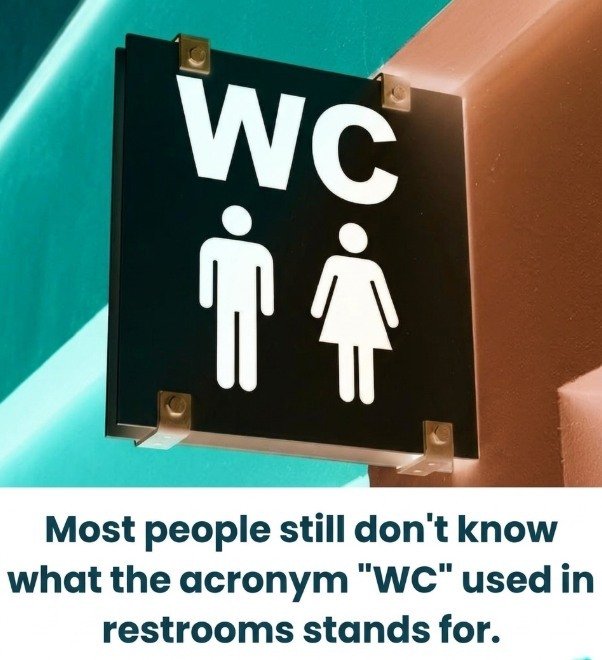
Washrooms, bathrooms, restrooms, and loos are just a few of the names used around the world for a facility dedicated to personal hygiene. The terminology varies by country and culture, reflecting language and social norms. In the United States, people typically say “bathroom” or “restroom,” while in the United Kingdom, “toilet,” “loo,” and “lavatory” are more common. Visitors may find this variety confusing when encountering unfamiliar signs.
One such term is “WC,” which stands for “water closet.” The phrase dates back to the 19th century, when indoor plumbing was still developing. At the time, it referred to a small, dedicated room containing a flushable toilet, separate from bathing areas.
Before modern plumbing, bathing and sanitation were often conducted in different spaces, sometimes requiring water to be carried manually. The water closet offered a compact, practical solution by isolating the toilet in its own room.
As plumbing advanced, the term persisted and became standard in many countries. Today, “WC” is commonly seen in train stations, airports, and public buildings worldwide. While many recognize it as a toilet symbol, few know its historical meaning, which can be a point of curiosity.
Different cultures continue to label similar facilities in ways that reflect language preferences and social etiquette. Despite the variety in terms, the function remains consistent: providing a private, sanitary space for essential needs.
The ongoing use of “WC” highlights how language evolves while retaining elements of history. Even simple signs can carry stories from the past, connecting modern convenience with its origins.
Understanding these terms can be particularly useful for travelers navigating unfamiliar environments, helping avoid confusion and ensuring comfort in public spaces.
Ultimately, whether labeled restroom, loo, or water closet, the facility serves the same purpose worldwide—a quiet, private space for hygiene—while offering a small window into historical practices and linguistic evolution.
Website Disclaimer
The information provided on this website is for general informational and educational purposes only. While we strive to ensure that all content is accurate and up to date, we make no guarantees regarding the completeness, reliability, or accuracy of any information published.
The views and opinions expressed in articles belong to their respective authors and do not necessarily reflect the views of this website. Any action you take based on the information found on this website is strictly at your own risk. We will not be liable for any losses, damages, or inconveniences arising from the use of our content.
Some articles may contain opinions, third-party information, or external links. We do not endorse or guarantee the accuracy of content on external websites and are not responsible for their practices or policies.
All content on this website is provided in good faith and is intended for informational purposes only. Readers are encouraged to verify information independently and seek professional advice where appropriate.