What the First Animal You Notice May Say About Your Personality

The Two-Animal Illusion: What Did You See First?

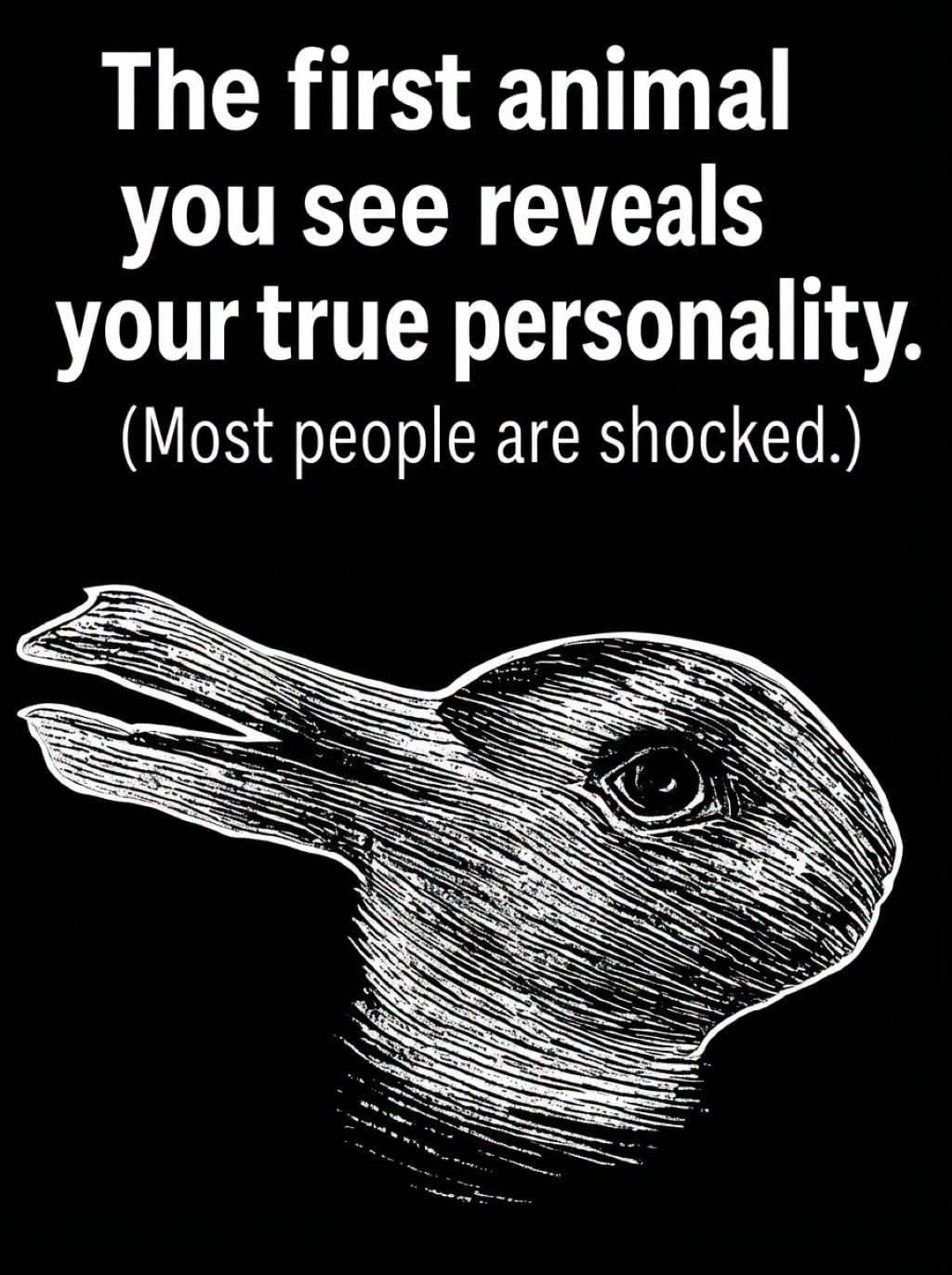
Some images don’t just trick your eyes—they quietly expose how your mind is wired. One famous drawing hides two animals in plain sight, yet most people only see one at first. That instant choice is no accident. It’s your brain revealing what it pays attention to, how it organizes chaos, what it values.

When two people stare at the same picture and swear they see different things, it’s a reminder that reality is not purely “out there”—it’s also built inside our minds. Optical illusions sit in that fragile space between what exists and what we expect to see. Your brain races ahead, filling gaps, imposing patterns, and choosing what feels most natural before you even realize a decision was made.

In the classic two-animal illusion, your first impression can hint at whether you instinctively seek order and structure or gravitate toward symbolism and possibility. One path leans into logic, planning, and clarity; the other embraces imagination, reinterpretation, and fluid meaning. Neither is superior, and most of us move between them without noticing.

But there’s an important catch: seeing one animal first does not scientifically prove that you have a particular personality type. Optical illusions are influenced by attention, visual cues, experience, expectations, and the way the image is constructed. A person’s first answer can change depending on what they were thinking about, what they were told to look for, or even how quickly they viewed the image.

That is precisely what makes these puzzles so fascinating.

Your brain doesn’t passively record everything your eyes encounter. Instead, it constantly interprets incoming information. It searches for familiar shapes, connects incomplete details, and tries to create a coherent picture from limited visual information. In an illusion, that normally useful process can produce two—or sometimes several—reasonable interpretations.

Once someone points out the second animal, something interesting happens. Suddenly, you may be unable to unsee it. The lines that previously looked meaningless begin forming a completely different creature. The picture hasn’t changed. Your interpretation has.

This is one of the simplest demonstrations of how perception works. We don’t simply see with our eyes; our brains help determine what those visual signals mean.

And perhaps that’s the most interesting lesson hidden inside the illusion.

The next time you encounter an image that seems confusing, don’t immediately assume there is only one correct way to see it. Look again. Turn it around. Step back. Search for another pattern. You may discover something that was sitting in plain sight all along.

So, what did you see first?

The first animal—or the second one? And more importantly, could you still see only one after someone showed you the other?

Website Disclaimer

The information provided on this website is for general informational and educational purposes only. While we strive to ensure that all content is accurate and up to date, we make no guarantees regarding the completeness, reliability, or accuracy of any information published.

The views and opinions expressed in articles belong to their respective authors and do not necessarily reflect the views of this website. Any action you take based on the information found on this website is strictly at your own risk. We will not be liable for any losses, damages, or inconveniences arising from the use of our content.

Some articles may contain opinions, third-party information, or external links. We do not endorse or guarantee the accuracy of content on external websites and are not responsible for their practices or policies.

All content on this website is provided in good faith and is intended for informational purposes only. Readers are encouraged to verify information independently and seek professional advice where appropriate.


Related Posts

Leave a Reply

Your email address will not be published. Required fields are marked *