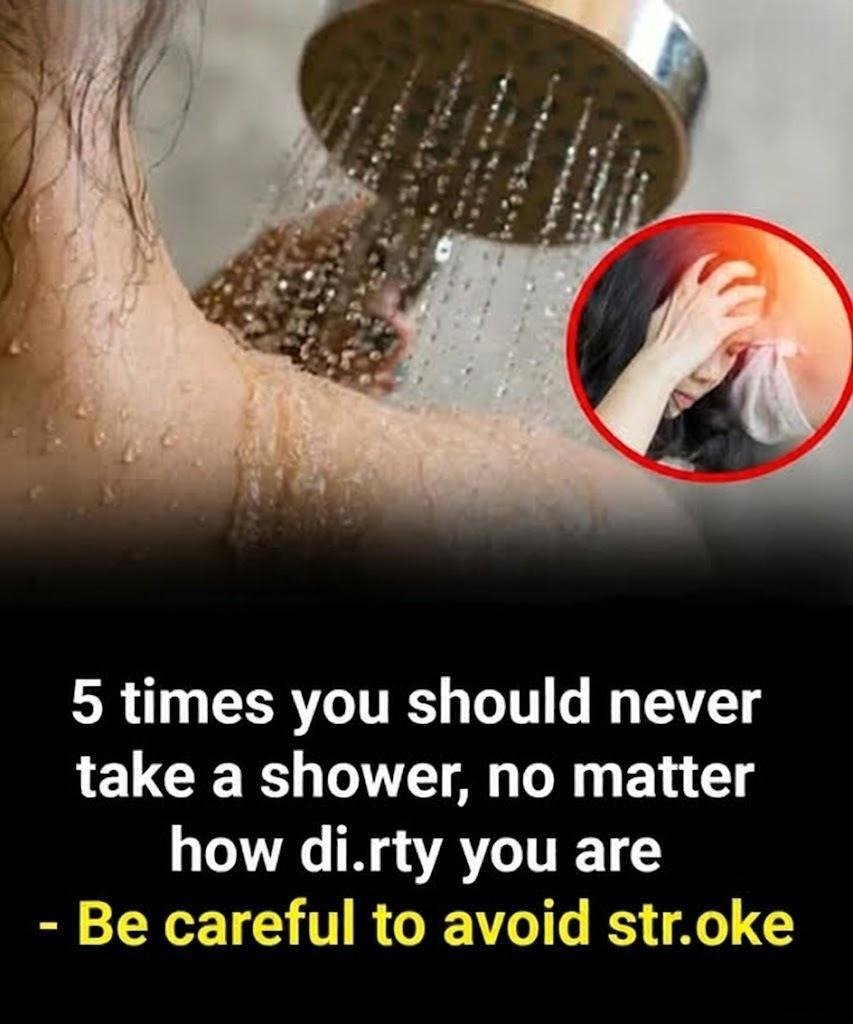
Showering is usually seen as harmless, but certain habits around timing, temperature, and physical condition can affect how your body—especially your circulation—responds. For most people, these risks are mild, but they can matter more for older adults or those with heart or blood pressure conditions.
One concern is showering immediately after waking up. In the morning, your cardiovascular system is still adjusting, and sudden exposure to hot or cold water can temporarily affect blood pressure and circulation. Waiting a short while allows the body to stabilize.
Another common issue is showering right after a large meal. During digestion, blood flow is directed toward the stomach and intestines. A shower can shift circulation toward the skin, which may cause lightheadedness or discomfort in some people.
Showering when very tired or weak can also increase the risk of dizziness. Hot water in particular can lower blood pressure by widening blood vessels, which may lead to faintness if the body is already depleted.
Temperature extremes play a major role. Very hot water can cause a sudden drop in blood pressure, while very cold water can trigger a sharp rise. Both place temporary stress on the cardiovascular system.
A more balanced approach is using lukewarm water, which cleans effectively without forcing the body to make large circulatory adjustments. This is generally the safest option for most people.
Hydration and environment also matter. Being dehydrated or stepping into a very hot bathroom can increase the chance of dizziness. Simple precautions like staying hydrated and moving slowly can reduce risk.
Overall, showering is safe for most people, but paying attention to timing, temperature, and your physical condition can help prevent discomfort and keep your routine both clean and safe.
Website Disclaimer
The information provided on this website is for general informational and educational purposes only. While we strive to ensure that all content is accurate and up to date, we make no guarantees regarding the completeness, reliability, or accuracy of any information published.
The views and opinions expressed in articles belong to their respective authors and do not necessarily reflect the views of this website. Any action you take based on the information found on this website is strictly at your own risk. We will not be liable for any losses, damages, or inconveniences arising from the use of our content.
Some articles may contain opinions, third-party information, or external links. We do not endorse or guarantee the accuracy of content on external websites and are not responsible for their practices or policies.
All content on this website is provided in good faith and is intended for informational purposes only. Readers are encouraged to verify information independently and seek professional advice where appropriate.