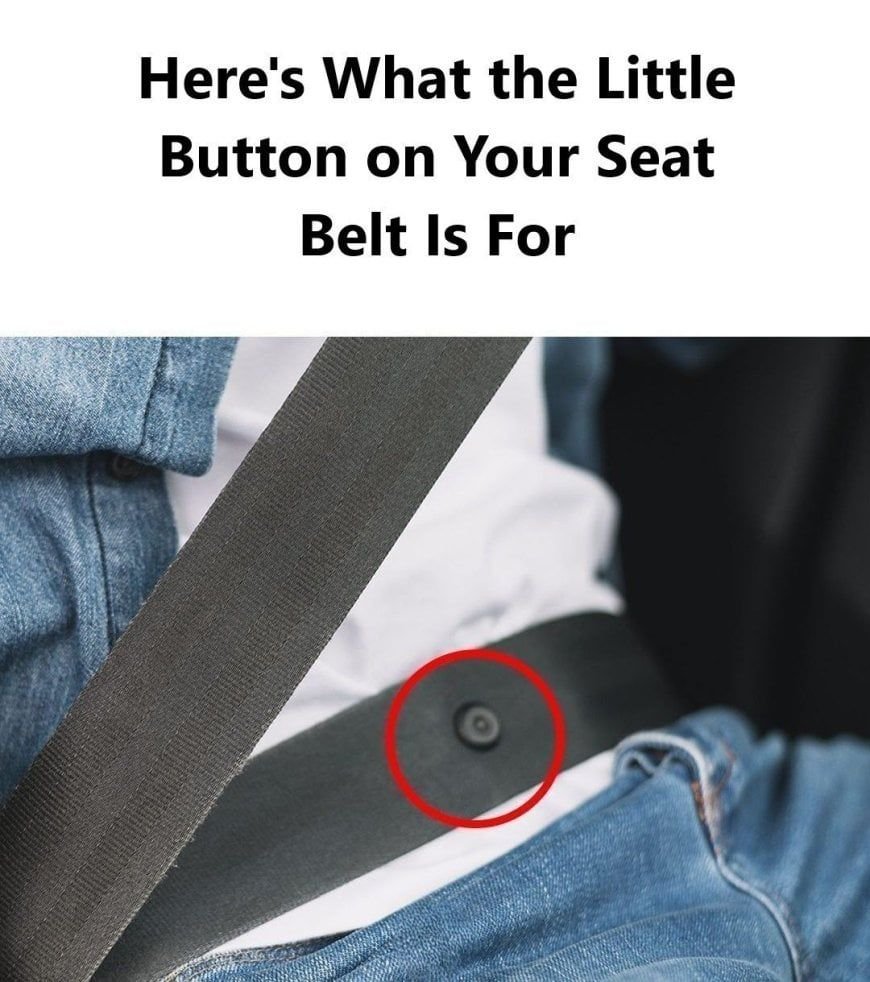
Most drivers barely notice it, yet it’s always within reach—a small plastic piece on the seat belt that quietly makes everyday driving easier.
This part is called a seat belt stop button, and its purpose is simple but important. It keeps the metal latch from sliding all the way down to the bottom when you unbuckle.
By holding the latch in place, it saves you from having to reach down between the seat and door every time you want to buckle up. That small convenience helps make fastening your seat belt quicker and more consistent.
Even though it seems minor, it plays a role in reinforcing a key safety habit. When buckling up is easy and effortless, people are more likely to do it without hesitation.
When the stop button breaks or falls off, the difference becomes obvious. The latch can drop out of reach, making it inconvenient and slightly frustrating to grab.
It can also lead to other issues, like the belt twisting, rattling, or even scratching parts of the car interior over time.
The good news is that fixing it is simple. Replacement buttons are inexpensive, widely available, and can usually be installed in just a few minutes.
In the end, it’s a reminder that small, often overlooked design details can have a real impact—quietly supporting safety and convenience every time you drive.
Website Disclaimer
The information provided on this website is for general informational and educational purposes only. While we strive to ensure that all content is accurate and up to date, we make no guarantees regarding the completeness, reliability, or accuracy of any information published.
The views and opinions expressed in articles belong to their respective authors and do not necessarily reflect the views of this website. Any action you take based on the information found on this website is strictly at your own risk. We will not be liable for any losses, damages, or inconveniences arising from the use of our content.
Some articles may contain opinions, third-party information, or external links. We do not endorse or guarantee the accuracy of content on external websites and are not responsible for their practices or policies.
All content on this website is provided in good faith and is intended for informational purposes only. Readers are encouraged to verify information independently and seek professional advice where appropriate.