PART 1
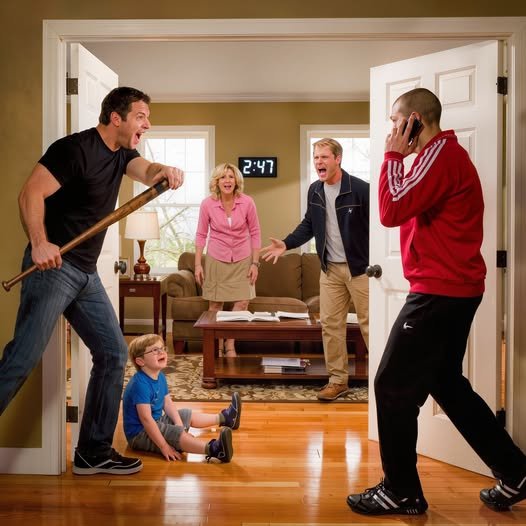
The call came through at 2:47 p.m. on a Tuesday.
I know the time because it burned itself into me—the way certain numbers do when your life splits into “before” and “after.”
My son’s name flashed on my screen.
That alone was wrong.
He was supposed to be with his mother, Melissa, during her custody time. He wasn’t supposed to be calling me in the middle of my workday, while I was half-listening to a client presentation and pretending spreadsheets could matter more than my heart.
I answered expecting a misdial.
“Hey buddy—”
His voice shattered through the speaker, wet with sobs.
“Daddy… please come get me.”
Every muscle in my body went rigid.
I stood up so fast my chair rolled back into the wall.
“Liam. What’s wrong? Where’s Mommy?”
“She went to the store,” he gasped. “Daddy… Trevor—Trevor hurt me. It hurts so bad.”
My brain refused the words for half a second, like it was trying to protect me by delaying reality.
“Buddy,” I said, forcing my voice calm, “listen to me. Are you safe right now?”
“I’m—” he choked. “He said if I cry he’ll hurt me more.”
Then I heard it.
A man’s voice in the background, sharp and angry.
“Get off that phone!”
My blood turned to ice.
“Liam, stay with me,” I said, grabbing my keys with shaking hands. “Do not hang up. I’m coming.”
I started running—out of my office, through the hallway, down the stairs—still holding the phone to my ear.
“Where are you?” I asked. “Are you in your room?”
“Yeah,” he whispered. “I’m scared.”
Another shout in the background—closer.
My son’s breathing turned frantic.
“Daddy hurry—”
A scuffle.
A small cry.
Then the line went dead.
I called back immediately.
Straight to voicemail.
I called Melissa.
No answer.
I called again.
No answer.
My hands shook so hard I could barely hit the buttons.
I was twenty minutes away in traffic.
My brother Garrett lived closer.
And Garrett was the one person I trusted to move fast without freezing.
I called him.
He picked up on the first ring.
“What’s up?”
“Someone’s hurting Liam,” I said, words coming out like bullets. “Melissa’s boyfriend. Liam called me crying. I heard the guy yelling. The phone cut out.”
Garrett’s voice changed instantly—cold, focused.
“Text me the address.”
“I’m heading there now,” I said. “I’m about twenty minutes out.”
“I’m closer,” Garrett said. “I’m going in now.”
“Garrett—don’t—” I started, because part of me was terrified of what he might do.
“I’m getting your son safe,” he said. “That’s it.”
Then the line went dead.
I drove like I wasn’t sure time was real.
Every red light felt personal.
Every slow driver felt like an enemy.
My phone rang.
Melissa.
I answered.
Her voice was frantic and furious.
“What is your brother doing? He just kicked down my door!”
My hands tightened on the steering wheel.
“Where were you?” I said, voice so quiet it scared even me. “Where were you when your boyfriend hurt our son?”
“What are you talking about?” she snapped. “I was at the grocery store for twenty minutes!”
“Liam called me,” I said. “He said Trevor hurt him. He begged me to come. I heard Trevor yelling at him.”
Silence.
Then, weaker:
“That’s not possible. Trevor wouldn’t—he’s good with kids.”
The denial made me sick.
“I’m five minutes away,” I said. “Pray our son is okay.”
I hung up and pushed the accelerator harder.
When I pulled into the apartment complex, Garrett’s truck was parked at an angle like he’d abandoned it mid-turn.
The front door to the unit hung crooked.
I ran up the stairs.
Inside, my brother had Trevor pinned.
Liam was on the couch, shaking, tears streaking his face.
The moment he saw me, he launched himself off the cushions and ran into my arms.
“Daddy!”
I dropped to my knees and wrapped him up so tight I could feel his heartbeat.
“I’ve got you,” I whispered. “You’re safe now.”
Melissa stood frozen, staring at our son like she couldn’t recognize what she’d allowed into her home.
Trevor tried to talk over Garrett’s grip.
“He broke something—”
I didn’t care.
Not then.
Not ever again.
I pulled my phone out and dialed 911.
Because the next part of this story wasn’t going to be handled “privately.”
Not this time.
Not when my child had called me in terror.
Not when he learned that adults can hurt you and call it your fault.
This wasn’t a family dispute.
This was a line.
And once you cross it, you don’t get to step back and pretend it was nothing.
PART 2 — The Ambulance, the Report, and the Moment My Ex Realized This Was Bigger Than Her
The moment I said “911” out loud, everything in the apartment changed.
Trevor’s eyes widened—not with remorse, but with calculation. Like he was running through a list of exits in his head.
Melissa’s face collapsed into panic.
And my brother Garrett didn’t loosen his hold for even a second.
“Don’t,” Garrett warned Trevor quietly. “Don’t try it.”
I held Liam against my chest so tight his little arms were pinned between us. He didn’t complain. He clung to me like he thought if he let go, the world would swallow him again.
The 911 operator’s voice was calm, almost maddeningly normal.
“Tell me what’s happening.”
“My son is four,” I said. “He’s injured. We believe my ex-wife’s boyfriend hurt him. We need police and an ambulance.”
Garrett’s voice cut in from behind us, controlled but deadly.
“And the boyfriend’s right here. Don’t worry. He’s not going anywhere.”
The operator told us to stay calm.
Stay calm.
Like my heart wasn’t trying to break through my ribs.
Liam whispered into my shoulder, voice thin:
“Daddy, am I in trouble?”
That sentence nearly killed me.
“No,” I whispered immediately. “You’re not in trouble. You did the bravest thing. You called me.”
His breath hitched.
“He said I was bad.”
“You are not bad,” I said, slow and firm. “You are safe. You are loved. You are good.”
I felt him tremble.
Garrett didn’t say anything, but I saw his jaw tighten like he was swallowing a rage that could burn down the building.
1) When the Police Walked In
Two squad cars and an ambulance arrived within minutes.
Police came in first, hands near their belts, eyes scanning the room.
They separated everyone immediately—because that’s what trained officers do in volatile scenes.
They didn’t ask for opinions.
They asked for facts.
One officer crouched to Liam’s level and spoke gently.
“Hey buddy. Can you tell me your name?”
Liam didn’t answer at first.
He tucked his face into my shirt.
I said, “It’s Liam.”
The officer nodded, calm.
“Liam, are you hurt?”
Liam’s voice was barely audible.
“Yes.”
“Where?”
He pointed weakly and whispered, “My arm… and my back.”
The officer’s expression didn’t change, but his eyes sharpened in the way they do when something becomes a case.
The paramedics came in next.
They moved fast—checking Liam, stabilizing him, asking questions about pain, carefully supporting his arm, laying him gently onto the stretcher.
Melissa tried to come closer.
The officer stopped her with one hand raised.
“Ma’am, step back. We’re investigating.”
Melissa’s voice cracked.
“I didn’t know,” she said. “I was gone twenty minutes. I didn’t know.”
I looked at her and felt something cold settle in me.
Twenty minutes.
That’s how long it takes for a child’s sense of safety to break.
2) Trevor Opened His Mouth and Made It Worse
Trevor tried to talk his way out.
People like him always do.
He started with the classic line:
“This is being blown out of proportion.”
Garrett laughed once, humorless.
Then the lead officer turned to Trevor and said:
“Sir, stop talking.”
Trevor didn’t.
He tried to explain that Liam “broke something.”
That it was “expensive.”
That he “lost his temper.”
That it “won’t happen again.”
Then he said the sentence that made everyone in the room go quiet:
“He broke my baseball bat. It was worth three grand.”
The officer stared at him.
And in that stare was a question Trevor didn’t understand:
Do you hear yourself?
The paramedic glanced at the officer like, are you serious?
I didn’t even react.
Because the moment Trevor said that, he handed us motive on a silver platter.
Not discipline.
Not parenting.
Possession.
Property.
Control.
And my son was just an object in the way.
3) The Ambulance Ride
I rode in the ambulance with Liam.
Garrett followed behind in his truck.
Melissa tried to come with us.
The officer stopped her again.
“You can follow in your own car,” he said. “We will speak with you separately.”
She looked at me like she expected me to protect her feelings.
I didn’t.
The ambulance was bright and cold and full of beeping.
Liam cried quietly, trying to be brave.
“Daddy,” he whispered, “I didn’t mean to break it.”
I swallowed hard.
“Buddy,” I said, “I don’t care about any object. I care about you. You did nothing that deserves being hurt.”
He stared at me with wide eyes.
“Promise?”
“I promise,” I said. “And you’re not going back there.”
He exhaled like he’d been holding his breath for hours.
4) Hospital Documentation: The Part They Can’t Argue With
At the ER, doctors moved like a practiced storm.
X-ray.
Pain management.
Bruise assessment.
Notes.
Documentation.
The doctor—calm, experienced—sat down with me afterward and said something that still makes me angry when I think about it:
“Your son is brave. But he’s too young to need that kind of bravery.”
She printed documents.
She handed me copies.
She told me they were mandated reporters and CPS would be involved automatically.
“Good,” I said.
Her eyebrows lifted.
Most parents in my position try to avoid CPS. They think it’s punishment.
I didn’t.
CPS wasn’t punishment.
It was protection.
It was leverage.
It was an official system documenting what my ex-wife had refused to see—or worse, refused to admit.
5) Melissa Tried to Stop Me
Melissa finally arrived at the hospital about forty minutes later.
She burst into the waiting area, eyes wild, hair messy, grocery bags gone.
She saw Liam’s cast and her face crumpled.
“Oh my God,” she whispered.
Then she turned to me.
“Please,” she said urgently, grabbing my arm. “Don’t make this bigger than it has to be.”
I stared at her.
Bigger.
My child had called me sobbing.
My child had been threatened into silence.
My child had bruises and a cast.
And she was worried about bigger.
“If you call the police,” she whispered, “this becomes a whole thing. CPS will get involved. There will be a custody war. Liam will suffer.”
I felt my voice go flat.
“Melissa,” I said, “Liam already suffered.”
She flinched.
“I didn’t know,” she said again, desperate. “Trevor isn’t like this. He—”
“He hit our son,” I said, cutting through her denial. “And you’re still protecting him.”
Her eyes filled with tears.
“I’m not protecting him, I’m protecting Liam from trauma.”
I almost laughed.
“This is trauma,” I said. “The trauma already happened. The only question now is whether you want your son protected—or whether you want your boyfriend protected.”
Her mouth opened, closed.
Then she whispered:
“Please. Just… don’t.”
And that’s when I realized something that terrified me more than Trevor:
Melissa would have let it slide.
If Garrett hadn’t kicked down the door…
If Liam hadn’t called me…
If there wasn’t physical proof…
Melissa would have smoothed it over and called it a misunderstanding.
She would have asked Liam to be quiet to keep peace.
That wasn’t motherhood.
That was negligence.
And I wasn’t going to let her rewrite it.
6) CPS Arrived Like a Deadline
CPS came the next day.
Not with drama.
With a clipboard and calm questions.
The investigator—a woman with tired eyes—asked me to walk through:
custody schedule
previous concerns
what Liam had reported
what I had documented
I handed her everything.
Texts between me and Melissa where I’d raised concerns.
My journal.
Dates. Times. Quotes.
Because I’d already been preparing for this escalation.
The investigator nodded slowly.
“Your home is stable,” she said, looking around. “You have a clear safety plan. You have family support. That matters.”
She paused.
“Based on what we’ve seen so far, we will recommend supervised visitation only for the mother pending completion of our investigation.”
Relief hit me so hard I had to sit down.
Melissa was going to call it unfair.
She was going to call me controlling.
But now it wasn’t my opinion.
It was the system.
7) The Emergency Custody Hearing
My attorney filed immediately.
Emergency custody hearing within days.
I didn’t bring Liam into court—he was too young, too shaken—but I brought:
medical reports
photos
police case number
CPS preliminary recommendation
and the 911 call log
Melissa arrived with an attorney who tried to paint her as a victim too.
“She didn’t know,” he argued. “She was deceived by her boyfriend’s true nature.”
The judge looked at the file.
Then looked at Melissa.
“You introduced this man to your child after only weeks,” the judge said. “You left your four-year-old alone with him.”
Melissa tried to cry.
The judge didn’t soften.
“Emergency temporary custody to the father,” she ruled. “Mother’s visitation will be supervised pending CPS completion.”
Melissa broke.
Not because her son was hurt.
Because she was losing control.
8) What Liam Said That Night
Back home, Liam woke up from a nightmare.
He ran into my room, casted arm held close, shaking.
“I don’t want to go back,” he whispered.
“You’re not going back,” I promised.
He stared at me like he needed me to tattoo it into reality.
“I’m staying with you?”
“Yes.”
“How long?”
I hesitated.
“Long enough to be safe,” I said.
He nodded slowly.
Then whispered:
“Thank you for coming.”
I held him close and didn’t let him see my tears.
Because my child had just thanked me for doing what should have been automatic.
That’s what abuse does.
It makes basic protection feel like a gift.
And I swore to myself:
Liam will never have to beg for safety again.
PART 3 — Court, Custody, and the Life We Built After
The weeks after the hospital were the hardest kind of exhausting.
Not the “I stayed up too late” kind.
The kind where your body is running on adrenaline and your brain refuses to turn off because it keeps replaying one sentence:
“If I cry, he’ll hurt me more.”
That line lived in my house for a while.
Not as words anyone spoke.
As a shadow.
In the way Liam flinched when I closed a cabinet too loudly.
In the way he refused to be alone in a room.
In the way he stared at his cast sometimes like it was proof he wasn’t imagining it.
My son had learned something no child should ever have to learn:
Adults can be dangerous.
And sometimes the adults who are supposed to protect you… don’t.
So my job became simple and impossible at the same time:
Make him feel safe again.
1) Trevor’s Charges Didn’t “Go Away”
People like Trevor count on one thing.
That the parent will feel guilty.
That the parent will want to keep things “civil.”
That the parent will be scared of court.
That the parent will be scared of drama.
And that the parent will eventually settle.
Melissa tried.
Her attorney tried.
Even one of Melissa’s friends tried to call me and say things like:
“You don’t want to ruin his life.”
I didn’t respond.
Because here’s what those people never say:
Trevor didn’t worry about ruining Liam’s life.
He worried about a bat.
The prosecutor assigned to the case called me a week later.
“We’re charging him with felony assault of a minor,” she said. “The evidence is strong. We’re not offering a deal that minimizes this.”
When I hung up, I sat at my kitchen table and felt something I didn’t expect:
Relief.
Not joy.
Relief.
Because for the first time since Liam was born, someone with authority was naming the situation accurately.
Not “discipline.”
Not “a moment.”
Not “a misunderstanding.”
Assault.
2) The Court Tried to Make Melissa a “Victim Too”
The custody system is complicated.
Even when something obvious happens, family court has a habit of treating everything like a gray area.
Melissa’s attorney attempted the predictable narrative:
“She was deceived.”
“She had no way of knowing.”
“She’s a good mother who made an unfortunate mistake.”
But CPS didn’t see it that way.
They had my documentation.
They had my texts.
They had my journal entries.
They had the pattern of Melissa’s relationships.
And—most importantly—they had the fact that she tried to stop me from calling police.
That detail mattered.
Because a parent who truly prioritizes her child’s safety does not beg for silence.
She begs for help.
The CPS investigator’s final report landed a month later and it read like a door closing.
It documented:
repeated instability in Melissa’s dating history
rapid introductions to “new father figures”
ignoring warnings
prioritizing relationship comfort over child safety
and attempting to minimize the assault immediately after it happened
My attorney didn’t celebrate.
He simply said:
“This is what accountability looks like in family court. It’s rare to get this kind of clarity.”
3) Liam’s Therapy Was the Real Trial
Court is loud.
But healing is quiet.
Liam started therapy twice a week with Dr. Caroline Webb.
At first, it wasn’t talking.
It was playing.
Drawing.
Building towers and knocking them down.
Dr. Webb explained that kids don’t process trauma the way adults do.
They hold it in their bodies.
In habits.
In silence.
In fear of rooms and doors and voices.
So we built safety again, brick by brick.
We made routines unbreakable:
breakfast at the same time
bedtime stories every night
a nightlight that stayed on
“Daddy checks the locks” ritual every evening
open-door rule for his room
Slowly, Liam stopped waking up screaming.
The nightmares didn’t vanish overnight.
But they loosened.
The fear stopped living in his shoulders.
He started asking for playdates again.
He started laughing at dumb jokes again.
And one night, he asked:
“Daddy… if I call you, you always come, right?”
My throat tightened.
“Always,” I promised.
That promise became the foundation of our life.
4) Trevor Went to Trial and Lost
Trevor’s trial happened four months later.
His defense tried the only move left:
“It was an accident.”
“He didn’t mean to hurt the child.”
“He meant to scare him.”
The judge didn’t look impressed by “I meant to scare a four-year-old.”
The jury didn’t either.
The medical evidence was too clear.
The 911 call timeline was too clear.
Garrett’s testimony sealed it.
Garrett didn’t dramatize.
He didn’t rant.
He just said:
“I heard the kid crying. I went in. I saw injuries. I saw a grown man making excuses. I restrained him so the kid would be safe.”
Then the prosecutor asked:
“Why did you force entry?”
Garrett looked at the jury.
“Because nobody else was protecting him.”
That sentence killed any attempt at sympathy for Trevor.
The verdict came quickly.
Guilty.
Sentencing followed:
Years in prison.
Not life.
But enough.
Enough that he could not haunt my child’s life from the hallway.
Enough that Liam could grow without that shadow.
The judge said something that stuck with me:
“You may have served a sentence one day, but this child will carry the impact longer. That is why the sentence must be real.”
5) Melissa’s Second Chance Came With Conditions
Here’s the part people always want simplified.
“Did you forgive Melissa?”
Forgiveness isn’t a switch.
It’s a slow, painful recalibration of trust.
Melissa spent the first months insisting she was a victim too.
That she didn’t know.
That Trevor fooled her.
But therapy and CPS forced her to face a harder truth:
Even if she didn’t know Trevor would hurt Liam, she ignored signs.
She dismissed warnings.
She introduced him too quickly.
She left Liam alone.
And when it happened, she tried to minimize it to protect her relationship.
Those were her choices.
Over time, she did begin to change.
She completed parenting classes.
Stayed in therapy.
Stopped dating for a while.
Then started dating again but did the one thing she never did before:
She kept her life separate from Liam.
No introductions.
No “new dad” fantasies.
No forcing Liam to adapt to her loneliness.
After a year, CPS recommended moving from supervised visits to unsupervised daytime visits.
Then later, to overnights.
It was slow.
It was cautious.
It was exactly how it should have been.
Liam didn’t immediately run into her arms.
But he stopped being afraid.
And that was progress.
One day after a visit, Liam told me:
“Mommy didn’t cry today.”
He said it like it mattered.
Because it did.
Melissa had finally stopped making Liam responsible for her emotions.
6) The Thing That Actually Saved Liam
It wasn’t the court ruling.
It wasn’t even the prison sentence.
It was this:
Liam learned that speaking up worked.
He called me.
He broke the silence.
He asked for help.
And help came.
That rewired something inside him.
Because abuse relies on one thing:
Isolation.
Silence.
Fear.
Liam learned the opposite:
If you speak, someone can protect you.
If you tell the truth, adults can respond correctly.
That lesson—painful as it came—might be the reason he never becomes the kind of person who accepts harm quietly.
7) Where We Are Now
Liam is seven now.
Second grade.
He’s obsessed with soccer.
He hates broccoli.
He laughs loud.
He still gets nervous sometimes if someone shouts unexpectedly.
But he doesn’t freeze the way he used to.
He sleeps through the night most nights.
He goes to Melissa every other weekend and one evening during the week.
He’s rebuilding that relationship carefully.
On my side, life stabilized.
Work became normal again.
I stopped checking my phone every ten seconds.
I stopped jumping at every unknown number.
Garrett is still close—always will be.
Liam calls him “Uncle Garrett” like it’s the most natural thing in the world.
And some nights when Liam is asleep, I look at his face and think:
We made it.
8) The Last Line
Last month, Liam asked something before bed.
“Daddy… Trevor can’t get me anymore, right?”
I sat on the edge of his bed and brushed his hair back gently.
“No,” I said. “He can’t.”
Liam nodded.
Then he whispered:
“Good. Because I don’t want to be brave like that again.”
I kissed his forehead.
“You won’t have to be,” I promised. “That’s my job now.”
And for the first time in a long time, I believed it completely.
THE END
Website Disclaimer
The information provided on this website is for general informational and educational purposes only. While we strive to ensure that all content is accurate and up to date, we make no guarantees regarding the completeness, reliability, or accuracy of any information published.
The views and opinions expressed in articles belong to their respective authors and do not necessarily reflect the views of this website. Any action you take based on the information found on this website is strictly at your own risk. We will not be liable for any losses, damages, or inconveniences arising from the use of our content.
Some articles may contain opinions, third-party information, or external links. We do not endorse or guarantee the accuracy of content on external websites and are not responsible for their practices or policies.
All content on this website is provided in good faith and is intended for informational purposes only. Readers are encouraged to verify information independently and seek professional advice where appropriate.