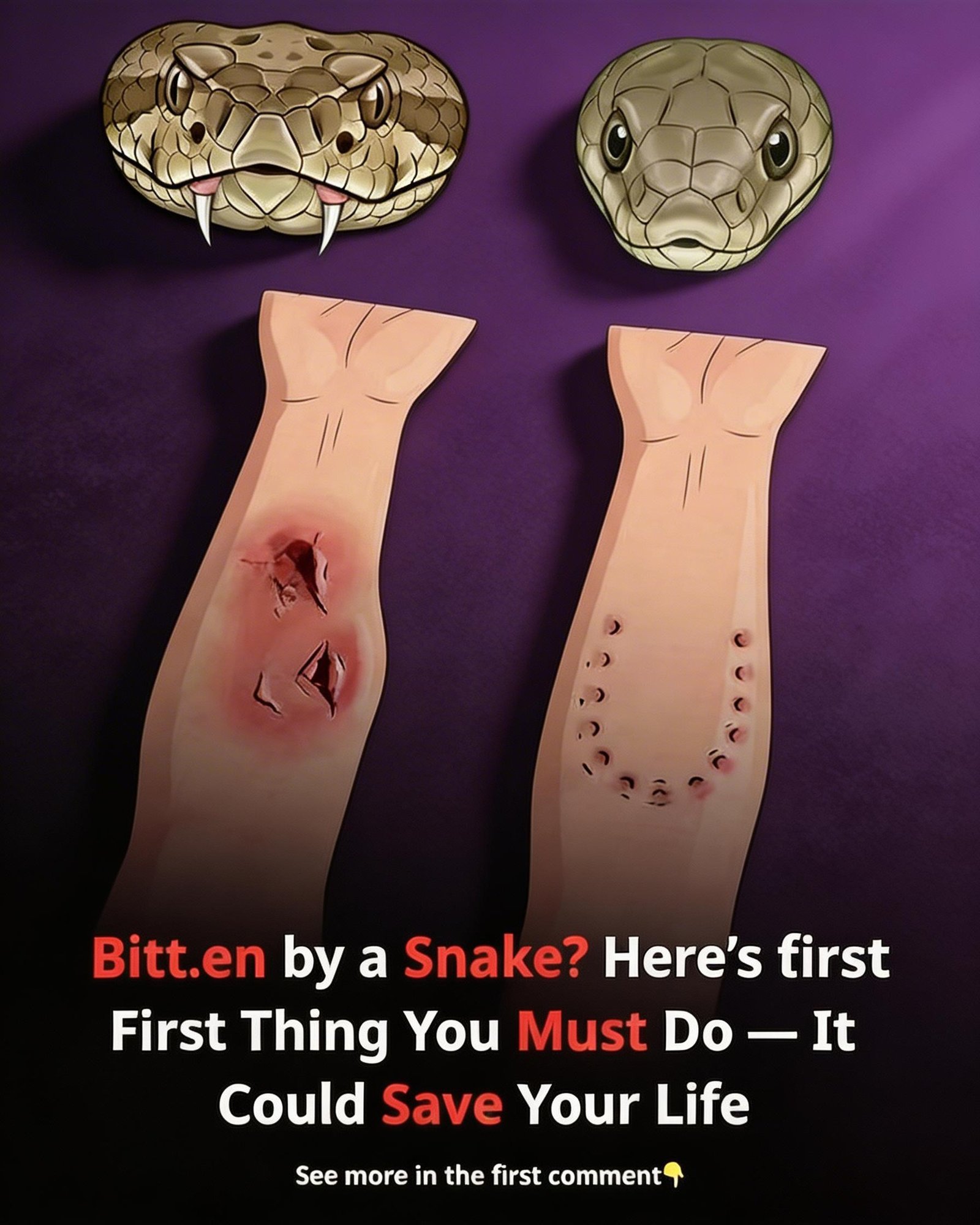
A snakebite can turn an ordinary day outdoors into a moment of urgent uncertainty. Whether you’re gardening in your backyard, hiking a local trail, or working on a farm, knowing exactly what to do in those first critical minutes can make a meaningful difference. While snake encounters are relatively uncommon, they tend to occur more frequently during warmer months when snakes are active. The key is not panic—but preparation. Calm, informed action can reduce complications and greatly improve the chances of a safe recovery.
In countries like Australia, health authorities record thousands of snakebite incidents each year, although only a fraction result in serious outcomes. Data from national monitoring programs show that certain venomous species account for most confirmed cases, particularly in rural and semi-rural areas. Interestingly, many bites happen close to home rather than deep in remote wilderness. Routine activities such as mowing lawns, clearing brush, gardening, or walking through tall grass can bring people into unexpected contact with snakes. Adults engaged in outdoor occupations or recreational activities represent a significant portion of reported cases.
Prevention remains one of the most effective safety measures. Snakes are naturally drawn to environments that provide shelter, water, and food sources such as rodents. Keeping yards tidy, trimming dense vegetation, sealing gaps in sheds or garages, and controlling rodent populations can help make properties less attractive to wildlife. When spending time outdoors, wearing protective clothing—sturdy boots, long trousers, long sleeves, and gloves—adds an important layer of protection. Because many bites affect the arms and legs, covering these areas significantly lowers risk. Simple precautions can dramatically reduce the likelihood of a dangerous encounter.
If a snakebite does occur, treat it as a medical emergency—even if symptoms seem mild at first. Some bites cause immediate pain, swelling, or redness, while others may not show strong symptoms right away. It is impossible to determine whether venom was injected without professional evaluation. Keep the person as still as possible, call emergency services immediately, and apply a firm pressure bandage to the affected limb. Immobilize the limb with a splint if available, and avoid washing the wound, as residue may help medical professionals identify the venom involved. Prompt medical treatment is essential. With awareness, prevention strategies, and correct first aid knowledge, individuals and communities can stay safer while continuing to enjoy outdoor activities responsibly.
Website Disclaimer
The information provided on this website is for general informational and educational purposes only. While we strive to ensure that all content is accurate and up to date, we make no guarantees regarding the completeness, reliability, or accuracy of any information published.
The views and opinions expressed in articles belong to their respective authors and do not necessarily reflect the views of this website. Any action you take based on the information found on this website is strictly at your own risk. We will not be liable for any losses, damages, or inconveniences arising from the use of our content.
Some articles may contain opinions, third-party information, or external links. We do not endorse or guarantee the accuracy of content on external websites and are not responsible for their practices or policies.
All content on this website is provided in good faith and is intended for informational purposes only. Readers are encouraged to verify information independently and seek professional advice where appropriate.