In the quiet town of Seymour, May 2019 began like any other spring.
Sunlight filtered through the windows of the Carriker home, painting gentle patterns on the walls.
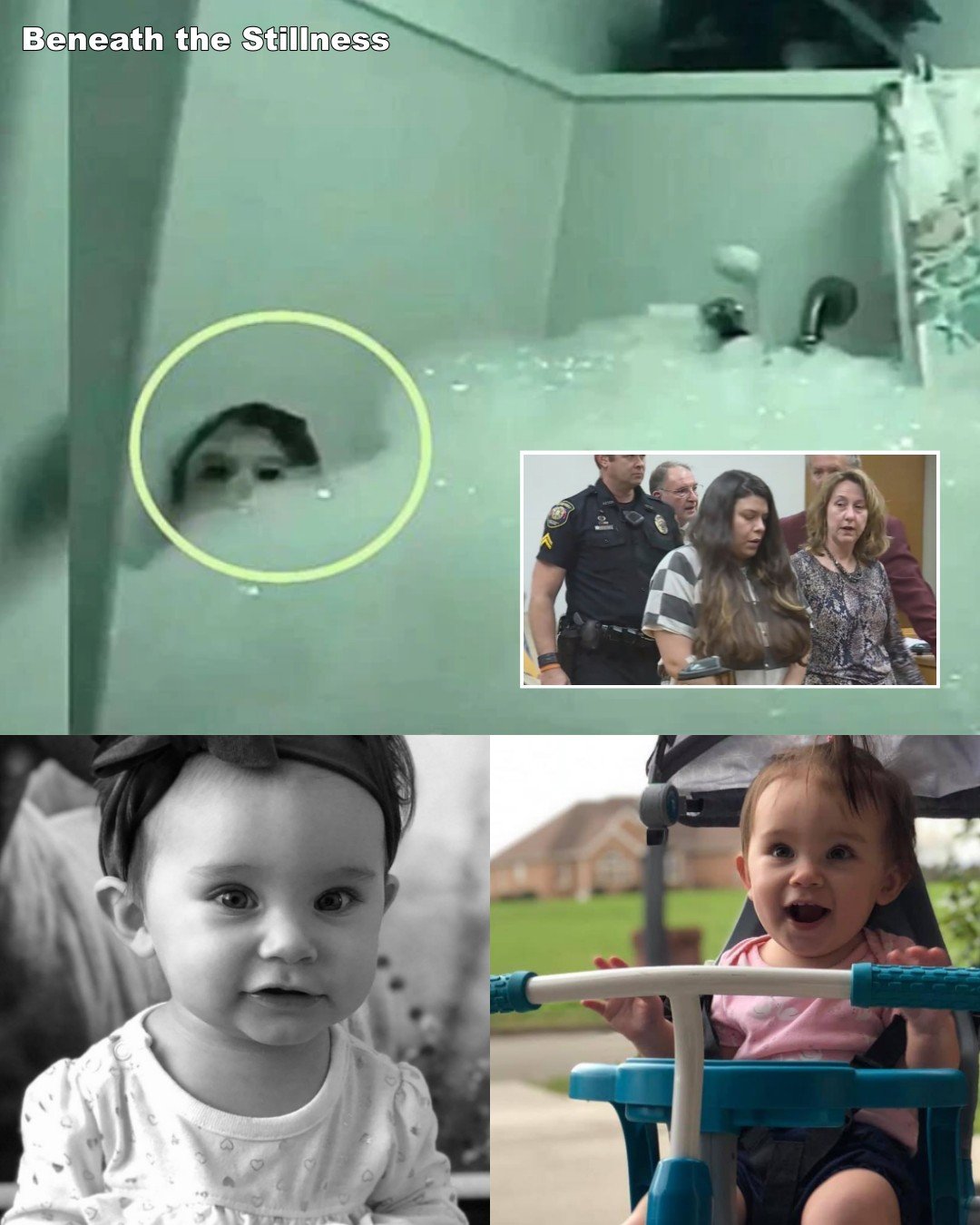
Inside, two lives hung in fragile balance—a 15-month-old girl, Calliope Grace Carriker, and her 20-day-old sister, Penelope Louise Carriker.
Their mother, Bethanie Carriker, went about her morning, unaware of the catastrophe that would soon unfold.
A bathtub, meant for comfort and cleanliness, became a scene of unspeakable tragedy.
On that fateful day, both children were left unattended.
By the time authorities arrived, the horror had already taken its toll.
Firefighters from the Seymour Volunteer Fire Department responded to the frantic 911 call.
Paramedics rushed the two girls to East Tennessee Children’s Hospital, the youngest clinging desperately to life.
Calliope, barely more than a year old, was pronounced dead upon arrival.
Penelope, fragile and new to the world, lay in critical condition, her tiny body struggling against the odds.
The weight of the loss pressed down on the family like an unrelenting storm.
Bethanie Carriker faced the consequences of her actions.
She pleaded guilty to two counts of aggravated child neglect, waiving her right to a trial.
The judge imposed two sentences of twenty-five years, to be served concurrently, a measure of justice, but only a fraction of the pain endured.
Matthew Carriker, the father, stood before the court and delivered a victim impact statement that would echo in hearts long after the words were spoken.
“Caliope Grace Carriker, deceased, is my daughter,” he began, his voice steady despite the anguish in his eyes.
“Penelope Louise Carriker, alive, is my daughter,” he continued, the weight of each word palpable.
“When water evaporates, it leaves behind minerals, and I search for those minerals every day,” Matthew said, his metaphor a bridge between memory and loss.
Sometimes he found them, not in physical form, but in fleeting moments of recollection.
Memories lived everywhere—the mountains, the coast, the lake—places that held fragments of their brief time together.
Penelope would never know her sister the way a sister should, but she would know of her existence, a shadow of love and warmth that could not be erased.
Calliope’s presence lingered in the house, in invisible fingerprints, in the intangible joy and laughter she left behind.
Matthew described the small rituals of their lives—the two car seats, the two mirrors, two reflections of hope and future.
Now there was only one mirror, one car seat, a stark reminder of the lives altered forever.
The father spoke of his struggle to live in a world where one daughter remained and one had been taken.
He recounted the brief overlap of the two girls’ lives, nineteen days of coexistence, a fleeting period where the roles of big sister and little sister were played out instinctively.
Calliope loved Penelope without hesitation.
She kissed her, stroked her hair, handled her delicately, as if understanding instinctively the fragility of her newborn sibling.
Matthew spent two weeks in the hospital, holding Calliope’s lifeless body, rocking her, begging her to wake, apologizing silently for his absence in the moment she needed him most.
Day after day, he watched as medical staff fought to save Penelope, witnessing the harsh reality that life was fragile, precious, and sometimes unfair.
He saw the sadness in nurses’ faces, heard the doctors’ warnings not to harbor false hope, yet he remained steadfast, a pillar for his surviving daughter.
“I support the District Attorney’s decision. I support 25 years at 85% served. It will never be enough,” Matthew declared.
Calliope would never return, but the sentence gave Penelope a chance to grow, to experience life, perhaps even to form her own family, and to have moments that her sister would never know.
Matthew mourned the loss of photographs and videos, treasures of memory that would never be created again.
For Penelope, life would go on, and she would learn about her sister, carry her in stories, in whispered recollections, and in the love of her father.
Matthew spoke of the urn that would hold Calliope, a constant presence, a reminder that life and death coexisted under the same roof, a reality he hoped Penelope would understand without fear.
He admitted he would never find peace in letting go.
Calliope had been his saving grace, a light in moments when despair threatened to engulf him.
She had been there in spirit, lifting him when he faltered, guiding him toward hope, showing a capacity for love beyond her years.
To honor her, Matthew established Caliope Cares Inc., a nonprofit dedicated to supporting families in need, ensuring that Calliope’s legacy would protect and aid other children.
“She would have protected her sister if she could,” Matthew said, his eyes glistening with tears.
“And in her death, she still protects, still gives hope, still inspires.”
Calliope’s story became a beacon, a testament to the enduring power of love, even in the face of unimaginable loss.
Matthew described the continuous search for “minerals” in everyday life, those tiny, beautiful fragments of memory that connected him to his daughter.
Sometimes he found them; sometimes they were fleeting.
Yet, in every memory, every thought, every silent whisper, Calliope lived on.
Her presence became a symbol of resilience, a reminder of the fragility of life and the importance of cherishing every moment.
The courtroom, though filled with judgment and consequence, could not encapsulate the full breadth of grief, nor the depth of love that bound Matthew to his daughters.
Calliope’s death marked a turning point, not only for her father but for the surviving Penelope, who carried forward the light and memory of her sister in her tiny, fragile heart.
Through grief, through heartbreak, and through loss, a story of love persisted.
Matthew’s voice, his memories, and his actions became a living tribute to Calliope’s life and the bond that death could not sever.
Though tragedy had struck, a legacy of care, remembrance, and hope had begun, reaching far beyond the walls of the hospital or the confines of the courtroom.
The echoes of two sisters, one lost and one surviving, reverberated through time, shaping the lives of those who bore witness and ensuring that the memory of love remained unbroken.
Website Disclaimer
The information provided on this website is for general informational and educational purposes only. While we strive to ensure that all content is accurate and up to date, we make no guarantees regarding the completeness, reliability, or accuracy of any information published.
The views and opinions expressed in articles belong to their respective authors and do not necessarily reflect the views of this website. Any action you take based on the information found on this website is strictly at your own risk. We will not be liable for any losses, damages, or inconveniences arising from the use of our content.
Some articles may contain opinions, third-party information, or external links. We do not endorse or guarantee the accuracy of content on external websites and are not responsible for their practices or policies.
All content on this website is provided in good faith and is intended for informational purposes only. Readers are encouraged to verify information independently and seek professional advice where appropriate.