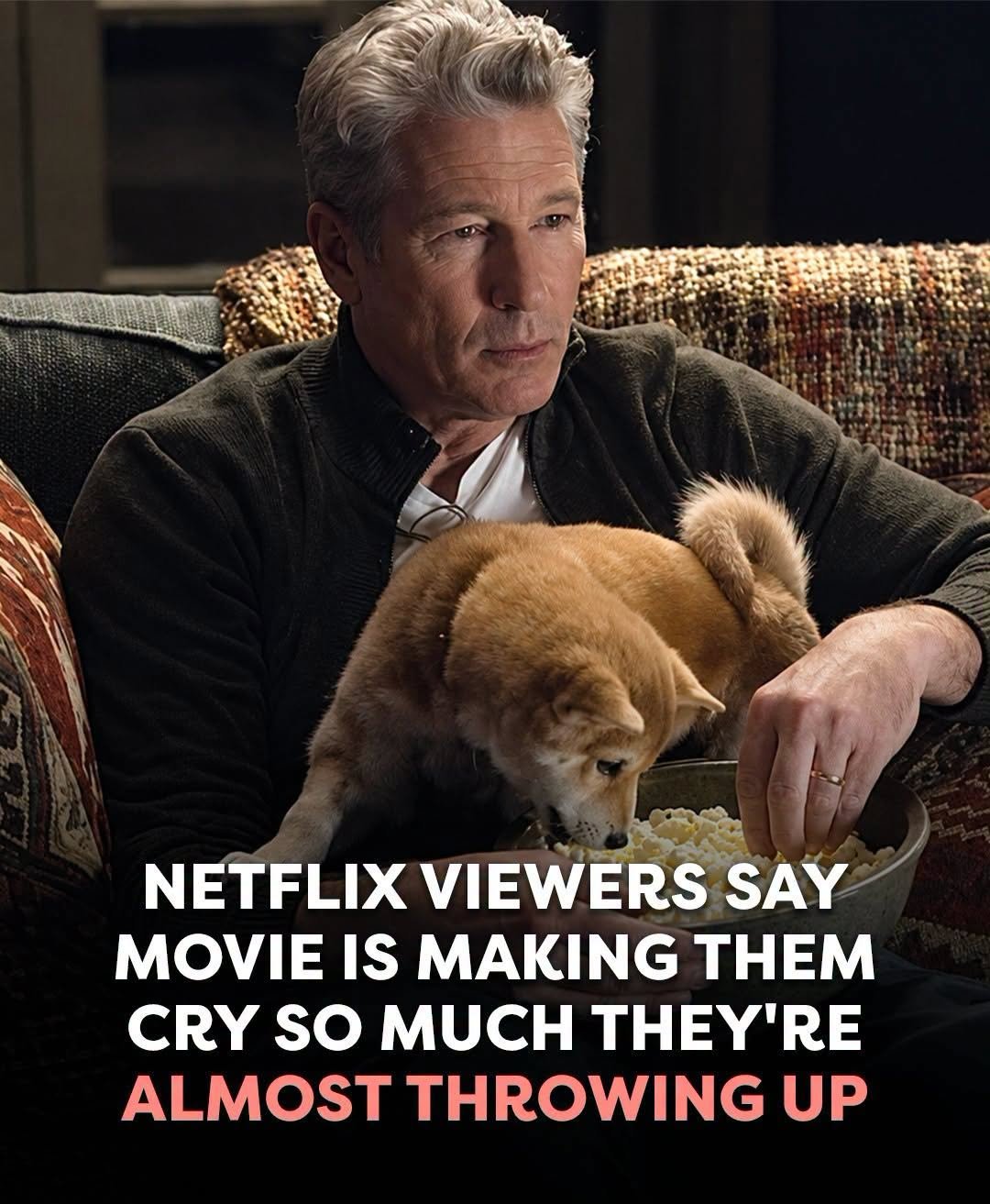
Netflix viewers say one movie is leaving them in tears — and one viewer put it bluntly, saying they cried so hard they almost threw up, then gave the film top marks anyway. The movie is Hachi: A Dog’s Tale, the 2009 drama directed by Lasse Hallström and starring Richard Gere, Joan Allen, Sarah Roemer, Jason Alexander and Cary-Hiroyuki Tagawa.
The film is a remake of the 1987 Japanese film Hachikō Monogatari and is based on a true story: an Akita dog named Hachikō who lived in Japan from 1923 to 1935. The 2009 version moves the story to modern-day America, where a professor finds an abandoned dog, takes him home, and the two form a bond that viewers describe as unbreakable.
The reactions quoted in the piece are strikingly strong. Viewers say they were still emotional the next day, cried until they could barely breathe, or cried for hours — and that the film deepened their love of animals. Critics quoted in the article praise it as a heartwarming tearjerker, and Richard Gere himself is quoted saying he wept like a child when he first read the script, and again on a second reading.
That is the whole phenomenon in one sentence: a simple story about loyalty, told without tricks, that keeps reducing grown adults to tears. The “almost throwing up” line is a viewer’s own colourful description of how hard they cried — not a medical claim — but it explains why this 2009 film keeps resurfacing on Netflix watchlists.
Website Disclaimer
The information provided on this website is for general informational and educational purposes only. While we strive to ensure that all content is accurate and up to date, we make no guarantees regarding the completeness, reliability, or accuracy of any information published.
The views and opinions expressed in articles belong to their respective authors and do not necessarily reflect the views of this website. Any action you take based on the information found on this website is strictly at your own risk. We will not be liable for any losses, damages, or inconveniences arising from the use of our content.
Some articles may contain opinions, third-party information, or external links. We do not endorse or guarantee the accuracy of content on external websites and are not responsible for their practices or policies.
All content on this website is provided in good faith and is intended for informational purposes only. Readers are encouraged to verify information independently and seek professional advice where appropriate.