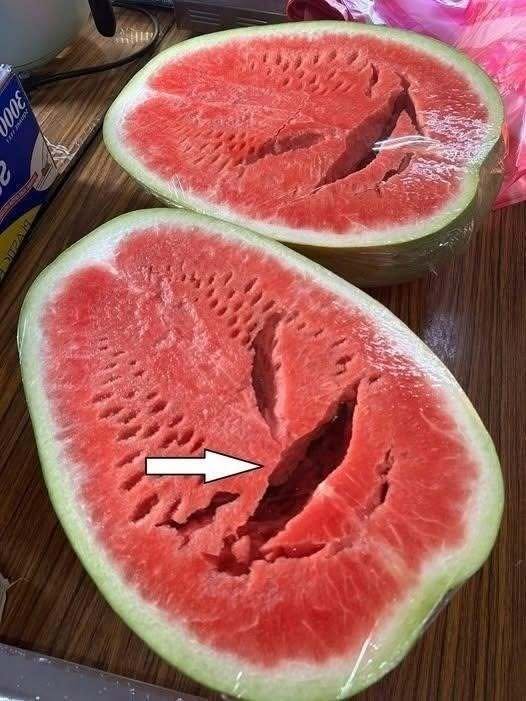
Cutting open a watermelon and discovering unusual internal cracks can be alarming, especially after encountering alarming social media posts linking these imperfections to chemicals and health risks. While the sight of deep fissures or hollow sections may raise concerns, experts emphasize that not every cracked watermelon is dangerous. In many cases, internal cracking occurs naturally due to irregular watering patterns, rapid growth after drought conditions, temperature fluctuations, physical damage during transport, or simple overripeness. These factors can alter the fruit’s texture and sweetness without posing a serious health threat.
One chemical often mentioned in discussions about cracked watermelons is chlorfenuron, a synthetic plant growth regulator designed to stimulate cell division and accelerate fruit development. By encouraging rapid expansion, chlorfenuron can sometimes contribute to hollow centers or unusual flesh structures. However, regulations surrounding its use vary widely around the world. While some regions prohibit its use on food crops due to limited long-term safety data, others allow restricted applications under specific guidelines.
Current scientific evidence regarding chlorfenuron’s effects on human health remains incomplete. Although certain animal studies have observed adverse outcomes at very high doses, researchers have not established conclusive links between typical dietary exposure and serious illnesses in humans. As a result, public health authorities often rely on precautionary approaches when determining regulatory policies, prioritizing consumer safety when uncertainty exists.
When selecting a watermelon, practical observation remains one of the best tools available. Look for fruits that feel heavy for their size, display a creamy yellow ground spot, have a firm rind, and possess a dried stem indicating vine ripening. After cutting, trust your senses. Fresh watermelon should smell clean and sweet, maintain a crisp texture, and taste refreshing rather than fermented or chemical-like.
If a watermelon displays minor internal cracks but otherwise appears normal, it is generally safe to consume. However, widespread hollowness accompanied by unpleasant odors, sliminess, mold, or unusual flavors should prompt immediate disposal. Foodborne illness from spoiled produce represents a far more common concern than exposure to growth regulator residues within approved limits.
Ultimately, food choices should be guided by knowledge rather than fear. Understanding the distinction between cosmetic imperfections and genuine warning signs empowers consumers to make informed decisions without unnecessary anxiety. Watermelon remains a nutritious, hydrating fruit that can be enjoyed confidently when purchased thoughtfully, handled safely, and evaluated using common-sense observations.
Website Disclaimer
The information provided on this website is for general informational and educational purposes only. While we strive to ensure that all content is accurate and up to date, we make no guarantees regarding the completeness, reliability, or accuracy of any information published.
The views and opinions expressed in articles belong to their respective authors and do not necessarily reflect the views of this website. Any action you take based on the information found on this website is strictly at your own risk. We will not be liable for any losses, damages, or inconveniences arising from the use of our content.
Some articles may contain opinions, third-party information, or external links. We do not endorse or guarantee the accuracy of content on external websites and are not responsible for their practices or policies.
All content on this website is provided in good faith and is intended for informational purposes only. Readers are encouraged to verify information independently and seek professional advice where appropriate.