Being a responsible dog owner involves much more than providing food, water, and a comfortable place to sleep. It also means understanding how dogs communicate and why they behave the way they do. Unlike humans, dogs rely heavily on their senses to explore and understand the world around them. Of all their senses, smell is by far the most important. A dog’s nose is an incredible tool that helps them gather information, recognize people, and make sense of new situations. When pet owners take the time to learn about these natural instincts, they often develop a stronger bond with their dogs and gain a deeper appreciation for how their furry companions experience everyday life.
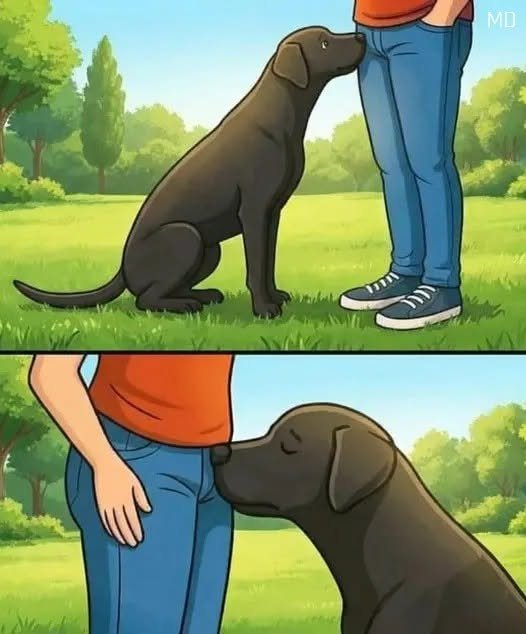
One behavior that frequently puzzles people is a dog’s tendency to sniff them during greetings. Whether it happens when you walk through the front door or meet a dog for the first time, this behavior is completely natural. While some people may find it awkward, especially in social settings, dogs are not being rude or misbehaving. They are simply gathering information in the most effective way they know. Because a dog’s sense of smell is far more powerful than a human’s, they can detect details that are impossible for us to notice. Different scents can provide clues about a person’s identity, recent activities, emotions, and even changes in their environment. For dogs, sniffing is similar to reading a detailed introduction.
Since dogs do not communicate through language the way humans do, scent plays a central role in how they interact with both people and other animals. Sniffing helps them recognize familiar individuals, identify new visitors, and feel more comfortable in their surroundings. It is a normal part of their social behavior and an important way they collect information. Understanding this can help owners respond with patience rather than embarrassment or frustration. Instead of viewing frequent sniffing as a problem, it can be helpful to see it as a sign of curiosity and engagement. Dogs are naturally interested in learning about the people they encounter, and their noses are the primary tool they use to do it.
Of course, understanding a behavior does not mean it cannot be guided. With gentle and consistent training, dogs can learn more appropriate ways to greet people while still satisfying their natural curiosity. Simple commands, positive reinforcement, and regular practice can help teach calm behavior in different situations. Rewarding polite greetings encourages good habits without discouraging a dog’s instinctive desire to explore through scent. Over time, these small efforts can make interactions more comfortable for everyone involved. The key is finding a healthy balance between respecting your dog’s natural behaviors and helping them adapt to everyday social situations. By combining patience, understanding, and training, owners can build a stronger relationship with their dogs while creating a positive environment where both pets and people feel comfortable and connected.
Website Disclaimer
The information provided on this website is for general informational and educational purposes only. While we strive to ensure that all content is accurate and up to date, we make no guarantees regarding the completeness, reliability, or accuracy of any information published.
The views and opinions expressed in articles belong to their respective authors and do not necessarily reflect the views of this website. Any action you take based on the information found on this website is strictly at your own risk. We will not be liable for any losses, damages, or inconveniences arising from the use of our content.
Some articles may contain opinions, third-party information, or external links. We do not endorse or guarantee the accuracy of content on external websites and are not responsible for their practices or policies.
All content on this website is provided in good faith and is intended for informational purposes only. Readers are encouraged to verify information independently and seek professional advice where appropriate.