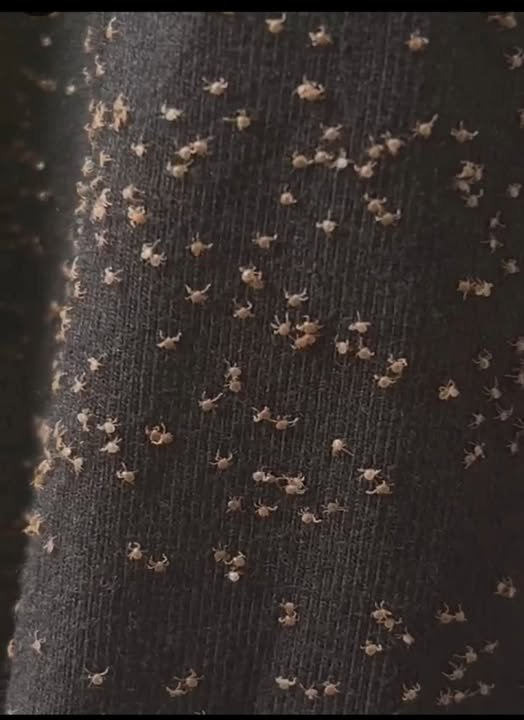
A peaceful walk through a park, meadow, or woodland trail can feel restorative, until you glance down and notice your pant legs speckled with tiny clinging bits. The sudden appearance can be puzzling, especially when you do not remember brushing against anything unusual. What seems mysterious at first is actually one of nature’s most practical and widespread strategies for survival, quietly unfolding with every step you take outdoors.
Those small hitchhikers are usually plant seeds, commonly called burrs or stickseeds. Rather than relying on wind or water alone, many plants have evolved to spread their seeds by attaching them to animals and humans. As you walk past, your clothing becomes an unwitting vehicle, carrying these seeds away from the parent plant and into new territory where they may eventually grow.
The reason these seeds cling so effectively lies in their structure. Many are equipped with tiny hooks, barbs, or stiff hairs that easily snag fabric fibers, working in a way strikingly similar to Velcro. Others rely on subtle stickiness or rough surfaces that increase friction. These features ensure the seed remains attached long enough to be transported some distance.
This method of travel significantly boosts a plant’s chances of survival. By spreading seeds farther from the original plant, competition for light, water, and nutrients is reduced. The farther the seed travels, the better its odds of landing in a suitable environment where it can take root and thrive.
Several common plants use this strategy, including beggar’s lice, burdock, goosegrass—often called cleavers—and sandbur. They are especially prevalent along trails, in tall grass, and near wooded edges where people and animals frequently pass. Encounters are almost unavoidable during warm months.
Removing these seeds is usually simple. Lint rollers, adhesive tape, or a fine-tooth comb work well. It is best to do this outdoors to prevent spreading seeds inside. A quick wash finishes the job, and checking pets afterward helps stop the journey there. Nature, even in small details, is remarkably clever.
Website Disclaimer
The information provided on this website is for general informational and educational purposes only. While we strive to ensure that all content is accurate and up to date, we make no guarantees regarding the completeness, reliability, or accuracy of any information published.
The views and opinions expressed in articles belong to their respective authors and do not necessarily reflect the views of this website. Any action you take based on the information found on this website is strictly at your own risk. We will not be liable for any losses, damages, or inconveniences arising from the use of our content.
Some articles may contain opinions, third-party information, or external links. We do not endorse or guarantee the accuracy of content on external websites and are not responsible for their practices or policies.
All content on this website is provided in good faith and is intended for informational purposes only. Readers are encouraged to verify information independently and seek professional advice where appropriate.