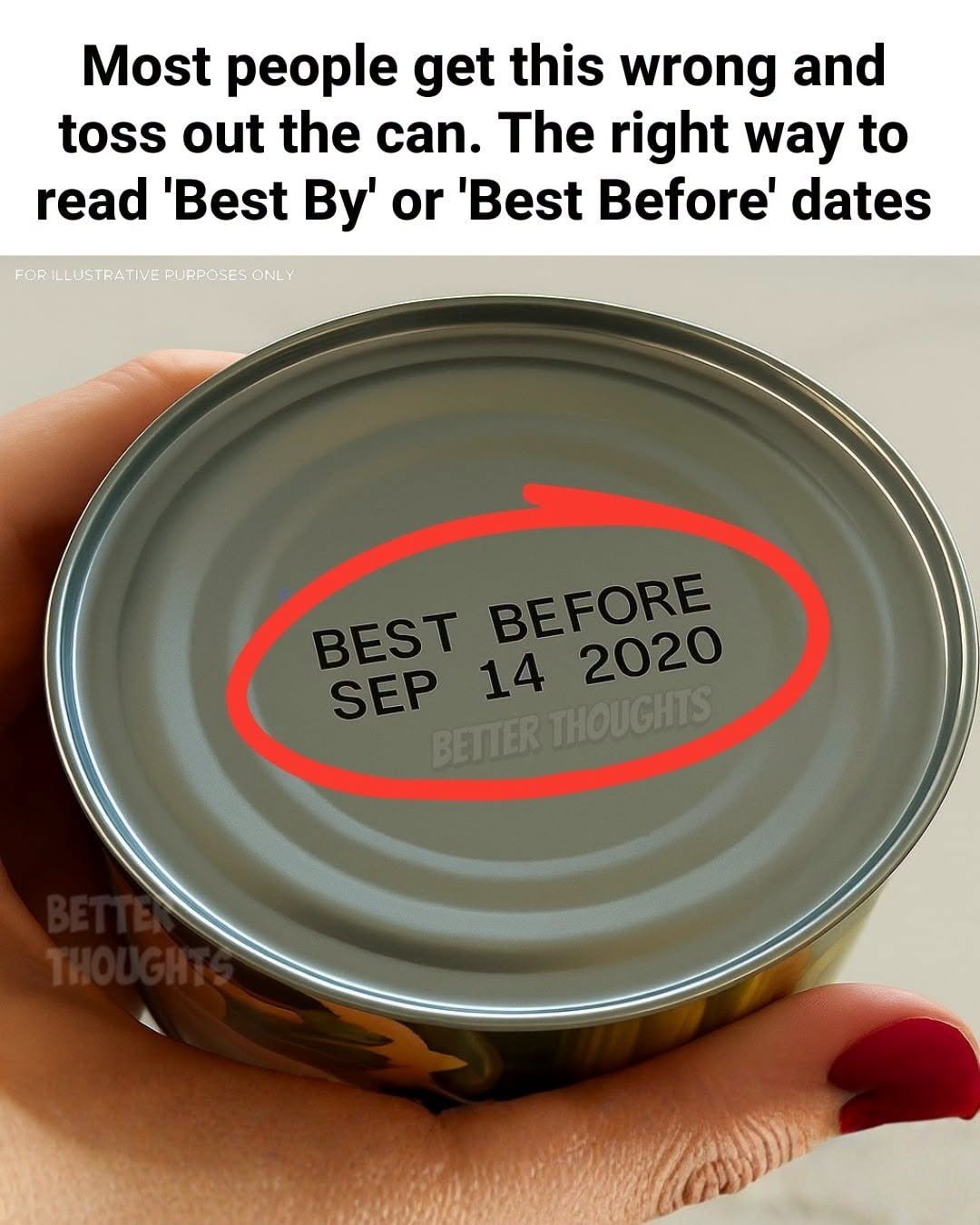
Open almost any kitchen pantry and you’ll likely find it: a dusty can of beans, soup, or vegetables tucked behind newer groceries, quietly waiting its turn. When most people finally notice the date stamped on the label has passed, the reaction is instant—throw it away.
But is that can really dangerous, or is it simply a victim of misunderstood expiration dates? The truth about canned food shelf life is far less alarming—and far more fascinating—than most people realize.“Best By” or “Best Before” dates indicate when the manufacturer believes the food will taste best. Flavor, texture, and color may slowly decline after this date, but the food itself is usually still safe.
“Sell By” dates are meant for retailers, not consumers. They help stores manage inventory.
“Use By” dates relate more closely to safety, but they are typically applied to perishable items like dairy, fresh meat, or prepared foods—not canned goods.
In short, the date on a can does not mean the food magically becomes unsafe the next day. It simply means the manufacturer can no longer guarantee peak quality.
Canned food is designed to last. During the canning process, food is heated to a temperature that kills bacteria, sealed in an airtight container, and protected from light and oxygen—two major causes of spoilage.
This combination creates an environment where harmful microorganisms struggle to survive. As long as the can remains sealed and undamaged, the contents are protected from contamination.
Website Disclaimer
The information provided on this website is for general informational and educational purposes only. While we strive to ensure that all content is accurate and up to date, we make no guarantees regarding the completeness, reliability, or accuracy of any information published.
The views and opinions expressed in articles belong to their respective authors and do not necessarily reflect the views of this website. Any action you take based on the information found on this website is strictly at your own risk. We will not be liable for any losses, damages, or inconveniences arising from the use of our content.
Some articles may contain opinions, third-party information, or external links. We do not endorse or guarantee the accuracy of content on external websites and are not responsible for their practices or policies.
All content on this website is provided in good faith and is intended for informational purposes only. Readers are encouraged to verify information independently and seek professional advice where appropriate.