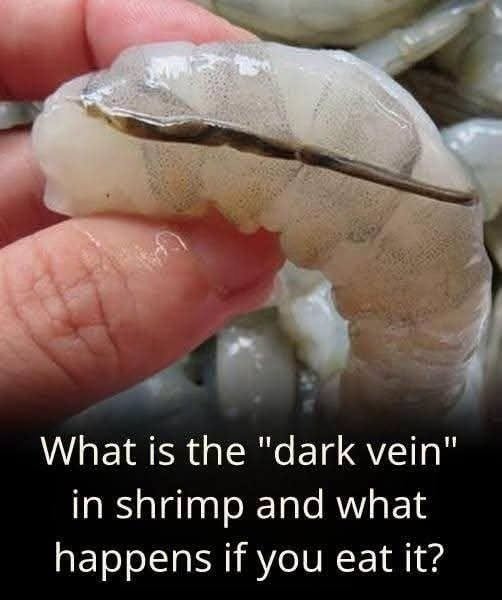
If you’ve ever prepared shrimp at home, you’ve probably noticed a thin, dark line running along the back of the shrimp’s body. Many people casually refer to it as the “shrimp vein,” but that name is actually misleading. The so-called vein is not a vein at all — it’s the shrimp’s digestive tract. This tube-like structure runs from the head to the tail and contains waste material, which is why it often appears dark or gritty. While the term “vein” has stuck in everyday language because of how it looks, understanding what it truly is can help home cooks make more informed decisions in the kitchen.The digestive tract of a shrimp functions much like it does in other animals, carrying digested food and waste through the body. When you see a black, brown, or sometimes greenish line, you’re looking at what remains inside that tract. In smaller shrimp, this line may be barely visible and contain very little material. In larger shrimp, however, it can be more noticeable and sometimes gritty if not removed. This is why many recipes recommend “deveining” shrimp before cooking — not because it’s dangerous, but because it improves texture and presentation.
From a food safety perspective, the shrimp vein is generally not harmful if eaten, especially when the shrimp is properly cooked. However, leaving it in can affect flavor and mouthfeel, particularly in larger shrimp where the tract may contain sand or partially digested food. Deveining is mostly about aesthetics and taste rather than safety. Many restaurants and seafood markets sell shrimp already peeled and deveined to save time and ensure a cleaner dining experience. If you’re preparing shrimp at home, removing it is simple: make a shallow cut along the back and gently lift out the tract with the tip of a knife or a toothpick.
Ultimately, whether you choose to remove the shrimp vein comes down to personal preference and the type of dish you’re making. For delicate recipes where presentation matters — such as shrimp cocktail, pasta, or grilled skewers — deveining is usually worth the extra effort. For small shrimp used in soups or finely chopped dishes, some cooks may skip the step entirely. Knowing that the “vein” is actually the digestive tract helps demystify the process and gives you more confidence in handling one of the most popular and versatile seafood ingredients in the world.
Website Disclaimer
The information provided on this website is for general informational and educational purposes only. While we strive to ensure that all content is accurate and up to date, we make no guarantees regarding the completeness, reliability, or accuracy of any information published.
The views and opinions expressed in articles belong to their respective authors and do not necessarily reflect the views of this website. Any action you take based on the information found on this website is strictly at your own risk. We will not be liable for any losses, damages, or inconveniences arising from the use of our content.
Some articles may contain opinions, third-party information, or external links. We do not endorse or guarantee the accuracy of content on external websites and are not responsible for their practices or policies.
All content on this website is provided in good faith and is intended for informational purposes only. Readers are encouraged to verify information independently and seek professional advice where appropriate.