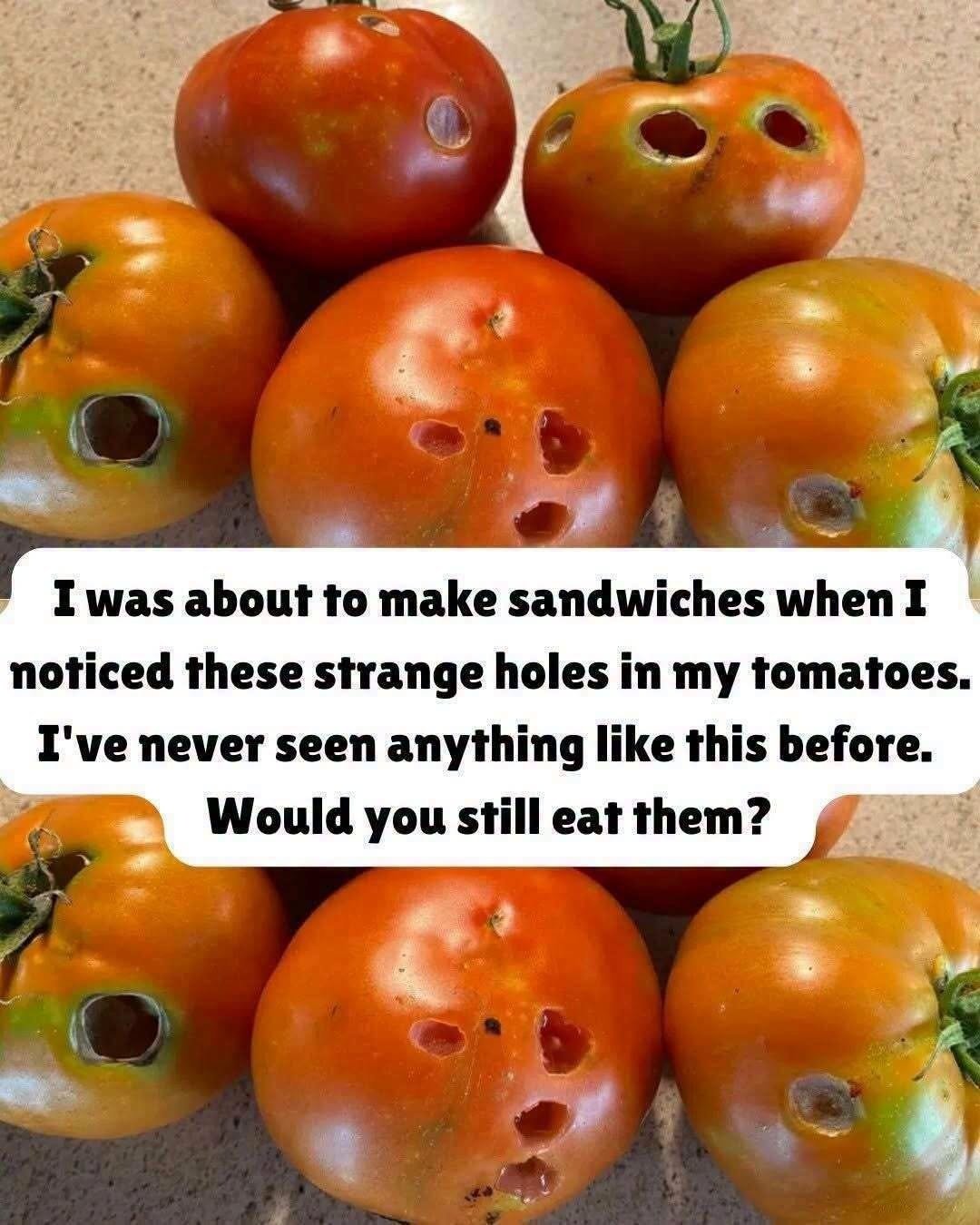
Finding a hole in a ripe tomato can be frustrating, especially after putting effort into caring for a garden. However, it does not always mean your entire harvest is at risk.
In many cases, a hole is simply a sign that something has interacted with the fruit. Gardens naturally attract insects and animals, and tomatoes are a common target.
One frequent cause is tomato fruitworms, which create small openings near the stem. These pests feed from the inside, often going unnoticed until damage appears.
Hornworms are another possibility. They are larger and can damage both leaves and fruit, sometimes quickly affecting multiple parts of the plant.
Birds may also peck at ripe tomatoes, leaving visible holes. Slugs and snails can cause irregular damage and may leave slimy trails as evidence.
The good news is that damage is often limited to individual tomatoes rather than spreading to the entire plant. Healthy plants can still produce usable fruit.
Gardeners can manage this by inspecting plants regularly, removing damaged fruit, and watching for pests. Keeping the garden clean and using natural prevention methods can also help.
In the end, a damaged tomato is not always a problem—it can be useful information. By paying attention and responding early, you can protect your garden and maintain a healthy harvest.
Website Disclaimer
The information provided on this website is for general informational and educational purposes only. While we strive to ensure that all content is accurate and up to date, we make no guarantees regarding the completeness, reliability, or accuracy of any information published.
The views and opinions expressed in articles belong to their respective authors and do not necessarily reflect the views of this website. Any action you take based on the information found on this website is strictly at your own risk. We will not be liable for any losses, damages, or inconveniences arising from the use of our content.
Some articles may contain opinions, third-party information, or external links. We do not endorse or guarantee the accuracy of content on external websites and are not responsible for their practices or policies.
All content on this website is provided in good faith and is intended for informational purposes only. Readers are encouraged to verify information independently and seek professional advice where appropriate.