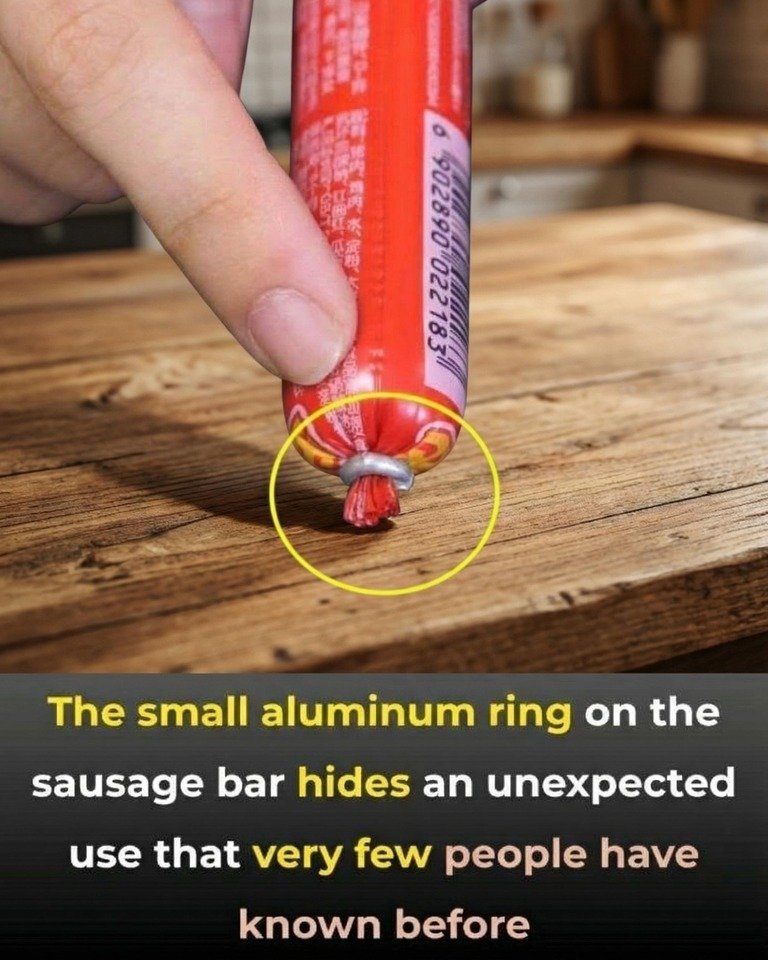
At first glance, it looks like nothing more than a small scrap of metal you might toss away without a second thought. But if you’ve ever picked up a sausage stick and noticed the tiny aluminum ring clipped to one end, you’ve seen a clever detail that most people overlook. This little piece of metal isn’t decoration or leftover packaging — it serves a specific purpose that begins long before the sausage reaches the store shelf. What seems insignificant actually plays a quiet but important role in food preparation, safety, and preservation.
The main function of the aluminum ring is to tightly seal the sausage casing. Sausages are enclosed in natural or synthetic skins that must be closed securely to keep air, moisture, and external contaminants out. By crimping the casing shut, the ring helps preserve flavor and texture while extending shelf life. It also keeps the sausage firm and properly shaped during storage and transportation. Without a secure closure like this, the product could dry out, lose freshness, or become damaged before it ever reaches consumers.
Beyond sealing, the ring also supports efficiency during production and storage. In many facilities, sausages are hung to cure or dry, and the metal loop provides a convenient hanging point that allows air to circulate evenly around the product. This process helps maintain consistent quality and taste. Even at home, some people find the ring useful as a small grip when separating linked sausages without tearing the casing. While these uses are secondary, they show how one small design element can serve multiple practical purposes.
The reason most shoppers never think about the aluminum ring is because it is designed to be discreet. It does its job quietly, without drawing attention, which is exactly what makes it effective. For decades, food manufacturers have relied on these rings because aluminum is lightweight, hygienic, and resistant to rust. The next time you notice that tiny metal clip, it may still look ordinary — but it represents years of refinement in food production methods. Sometimes the smallest details, the ones we barely notice, are the ones that make everyday products work smoothly behind the scenes.
Website Disclaimer
The information provided on this website is for general informational and educational purposes only. While we strive to ensure that all content is accurate and up to date, we make no guarantees regarding the completeness, reliability, or accuracy of any information published.
The views and opinions expressed in articles belong to their respective authors and do not necessarily reflect the views of this website. Any action you take based on the information found on this website is strictly at your own risk. We will not be liable for any losses, damages, or inconveniences arising from the use of our content.
Some articles may contain opinions, third-party information, or external links. We do not endorse or guarantee the accuracy of content on external websites and are not responsible for their practices or policies.
All content on this website is provided in good faith and is intended for informational purposes only. Readers are encouraged to verify information independently and seek professional advice where appropriate.