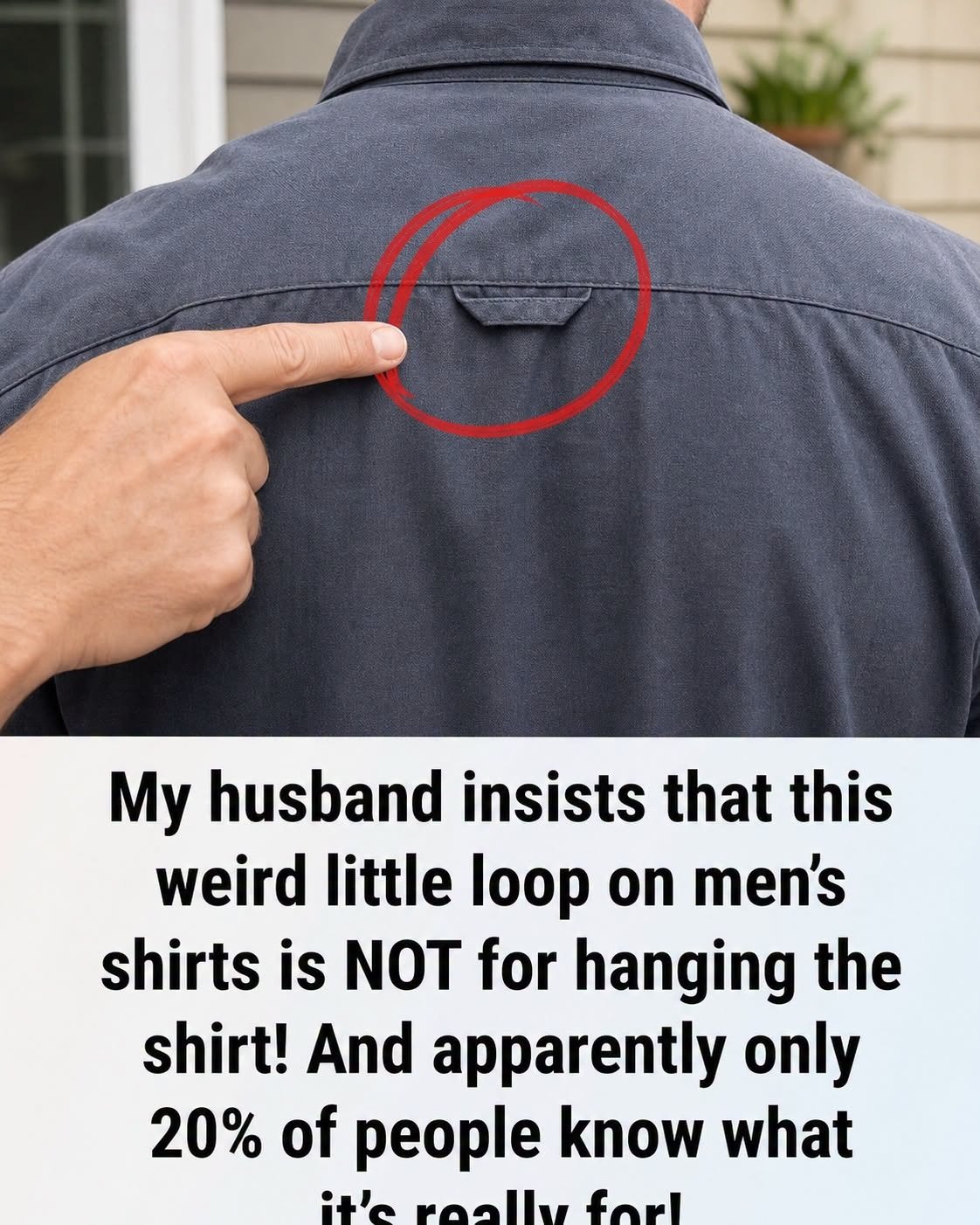
The tiny loop on your shirt once decided who slept where, who stayed clean, and who was “taken.” Born in the steel belly of U.S. Navy ships, it kept uniforms crisp in chaos. Decades later, it quietly ruled Ivy League romance. Today, you still wear it—without knowing what it real…
Long before it became a style detail, that small loop was a survival tool in brutal, cramped conditions at sea. With no closets and barely any personal space, sailors needed a way to keep uniforms off filthy bunks and damp floors. A simple strip of fabric, stitched at the back of the shirt, turned bare metal hooks into makeshift wardrobes, preserving order and pride in the tight, swaying world of a ship.
When the design came ashore, it slipped into campus life and took on a new, almost secret language. In Ivy League halls, the loop became a quiet code: tearing it off could signal a committed relationship, a wordless claim of loyalty. Today, it lingers as a mark of craftsmanship and heritage, still useful to travelers, still nodding to its naval past. That tiny loop is proof that even the smallest detail can carry a century of hidden stories.
Website Disclaimer
The information provided on this website is for general informational and educational purposes only. While we strive to ensure that all content is accurate and up to date, we make no guarantees regarding the completeness, reliability, or accuracy of any information published.
The views and opinions expressed in articles belong to their respective authors and do not necessarily reflect the views of this website. Any action you take based on the information found on this website is strictly at your own risk. We will not be liable for any losses, damages, or inconveniences arising from the use of our content.
Some articles may contain opinions, third-party information, or external links. We do not endorse or guarantee the accuracy of content on external websites and are not responsible for their practices or policies.
All content on this website is provided in good faith and is intended for informational purposes only. Readers are encouraged to verify information independently and seek professional advice where appropriate.