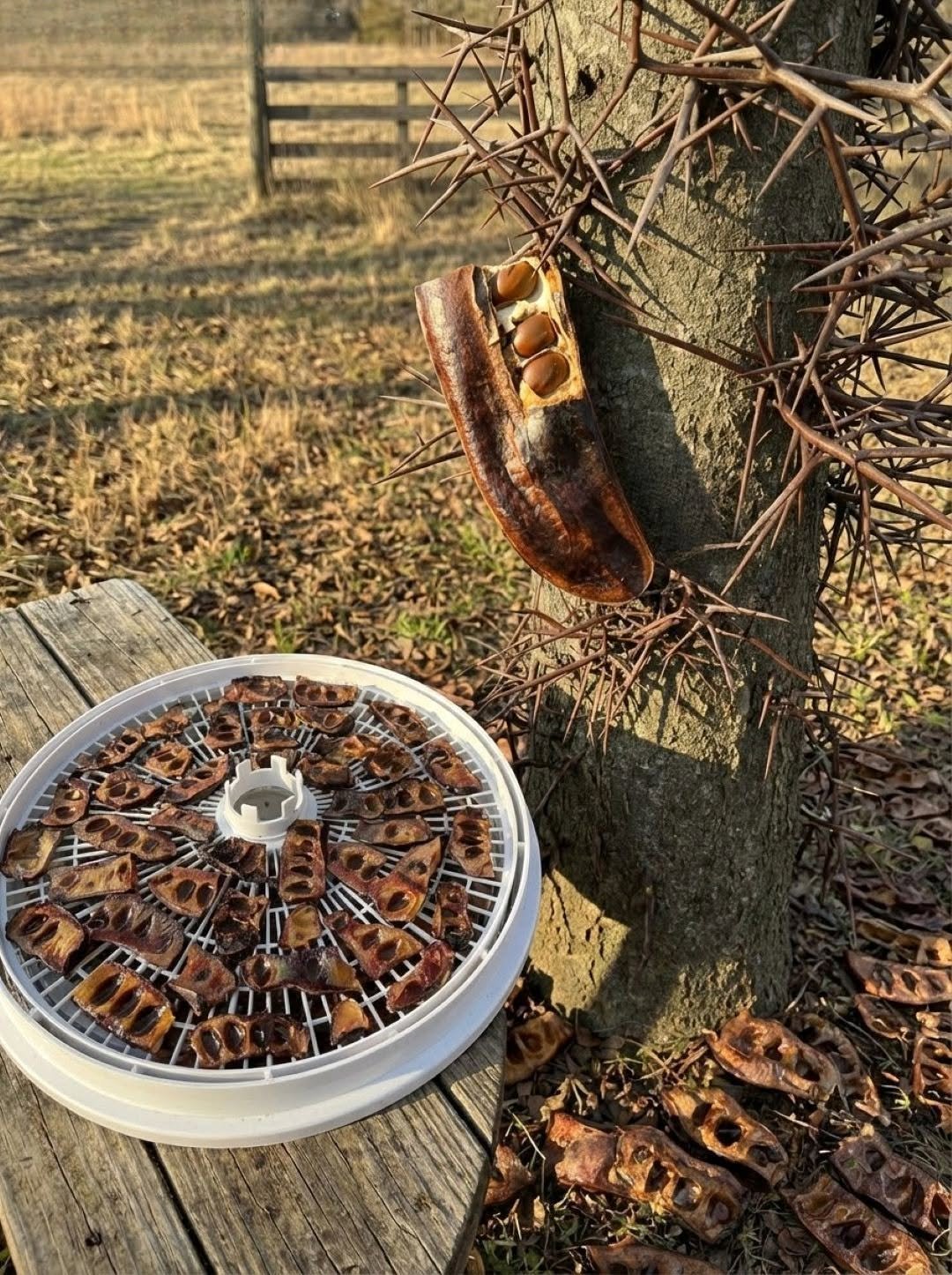
Many people recognize the honey locust as an attractive shade tree, but few realize how valuable it has been throughout history. Native to North America, particularly the fertile Mississippi Valley, the honey locust has quietly supported generations of people with its remarkable versatility. Long before supermarkets, hardware stores, and modern household products, communities depended on the natural resources around them. Trees like the honey locust were more than part of the landscape—they provided food, durable materials, and practical solutions for everyday life. Although it is often planted today for its beauty and filtered shade, this resilient tree has a fascinating past that deserves a closer look.
One of the honey locust’s most distinctive features is its long, curved seed pods. Hidden inside each pod is a naturally sweet pulp that inspired the tree’s name. For centuries, Indigenous peoples and early settlers enjoyed this sweet pulp as a simple treat or used it to prepare homemade syrups and lightly fermented beverages. Even the seeds had practical value. They were sometimes roasted to create a warm drink or ground into meal for cooking. These traditional uses remind us of a time when people relied on local plants to provide nourishment and make the most of what nature offered. The honey locust became an important resource because it combined flavor, nutrition, and accessibility in one remarkable tree.
Its usefulness didn’t end with food. The honey locust also became well known for its exceptionally strong and long-lasting wood. Because it naturally resists decay, especially when placed in soil or exposed to changing weather, it was widely used to make fence posts, tool handles, wagon parts, and other items built to last. In addition, parts of the tree contain natural compounds that create a gentle lather when mixed with water. Before commercial soaps became common, people sometimes used the bark and pods as a simple plant-based cleanser for basic household tasks. These practical qualities made the honey locust a dependable part of daily life, proving that one tree could serve many different purposes while helping families meet a variety of needs.
Beyond its historical value, the honey locust continues to play an important role in today’s natural environment. Its open canopy allows sunlight to reach the ground, encouraging grasses and smaller plants to thrive beneath its branches. The tree also supports local wildlife, providing food for deer and other animals through its seed pods, while its small flowers attract bees and other valuable pollinators. Although wild honey locust trees often grow large protective thorns, many modern landscape varieties have been carefully developed without them, making the tree safer for parks, neighborhoods, and gardens. As with any wild plant, proper identification and reliable guidance are important before using any part of it for food or other purposes. The honey locust stands as a reminder that nature often hides extraordinary value in the most familiar places, rewarding those who take the time to look a little closer.
Website Disclaimer
The information provided on this website is for general informational and educational purposes only. While we strive to ensure that all content is accurate and up to date, we make no guarantees regarding the completeness, reliability, or accuracy of any information published.
The views and opinions expressed in articles belong to their respective authors and do not necessarily reflect the views of this website. Any action you take based on the information found on this website is strictly at your own risk. We will not be liable for any losses, damages, or inconveniences arising from the use of our content.
Some articles may contain opinions, third-party information, or external links. We do not endorse or guarantee the accuracy of content on external websites and are not responsible for their practices or policies.
All content on this website is provided in good faith and is intended for informational purposes only. Readers are encouraged to verify information independently and seek professional advice where appropriate.