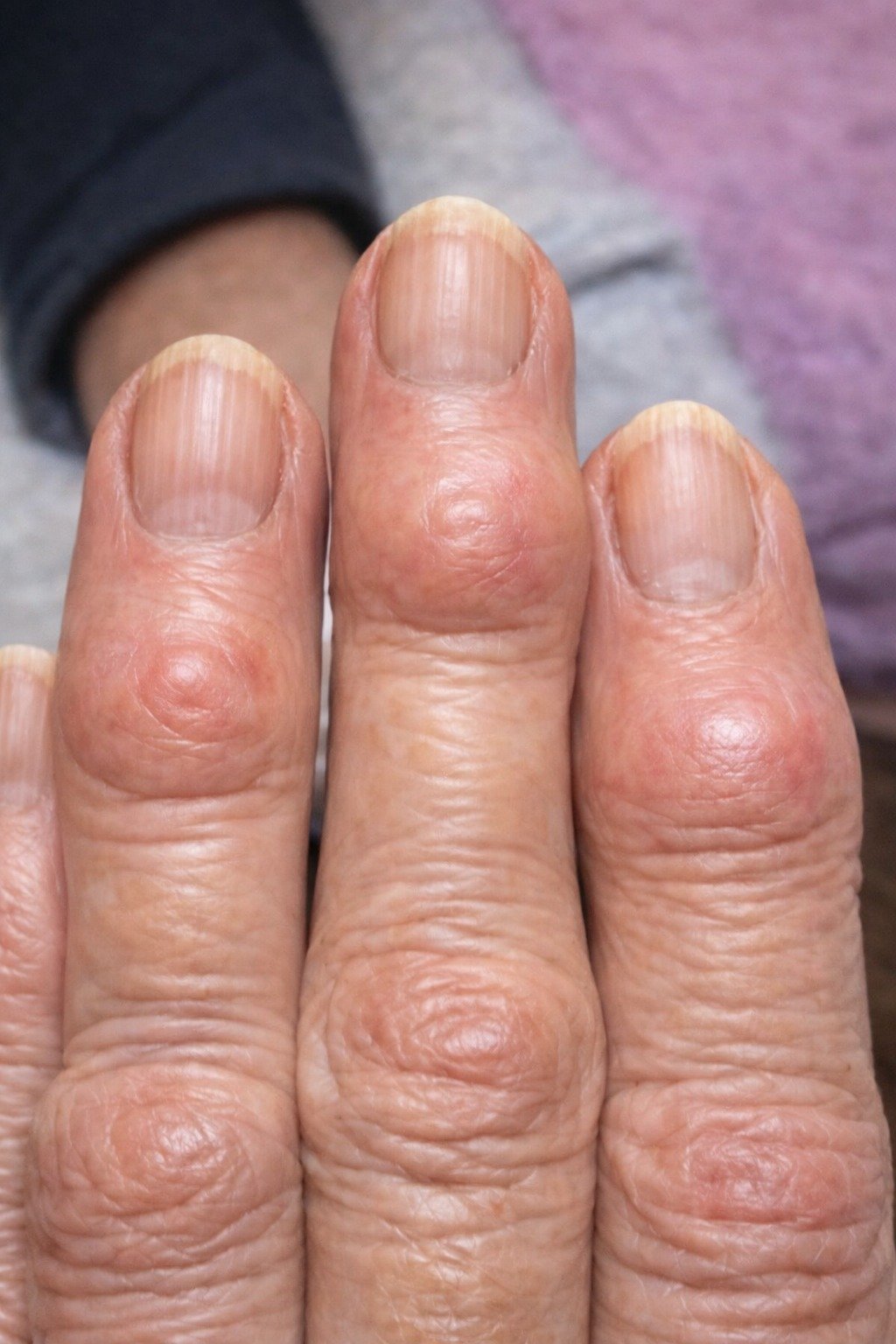
As people age, the body naturally changes, and some of these changes can feel unexpected or even concerning. One common issue is the appearance of hard bumps on the finger joints, especially near the fingertips. These bumps may look unusual and sometimes cause discomfort, leading many to wonder what they mean and whether they signal a serious problem.
In most cases, these bumps are known as nodes and are commonly associated with osteoarthritis. Osteoarthritis is a condition in which the protective cartilage in the joints gradually wears down over time. When this cushioning decreases, the bones begin to rub against each other. In response, the body forms extra bone as a way to stabilize the joint, which results in the hard, raised bumps seen on the fingers.
The most common type of these growths is called Heberden’s nodes. They typically form on the joints closest to the fingertips and can make the skin appear stretched or slightly shiny. This condition is more frequently seen in women, particularly after the age of 45, and may affect multiple fingers as it progresses. Genetics, natural aging, and repeated use or strain of the hands all contribute to how and when these nodes develop.
Along with visible changes, people may also experience symptoms such as stiffness, mild to moderate pain, and reduced flexibility. Everyday tasks that require fine motor skills—like writing, buttoning clothes, or opening small objects—can become more challenging. Symptoms often feel worse in cold weather or after periods of inactivity.
Doctors typically diagnose these nodes through a physical examination and may use imaging, such as X-rays, to evaluate joint damage. While these bumps are usually harmless, it’s important to rule out other conditions like rheumatoid arthritis if symptoms are severe or accompanied by significant swelling.
Although there is no cure, symptoms can be managed effectively. Pain relievers, warm or cold compresses, splints, and gentle hand exercises can help maintain mobility and reduce discomfort. Simple lifestyle habits—such as staying active, using ergonomic tools, and maintaining a balanced diet—can also support joint health and improve quality of life over time.
Website Disclaimer
The information provided on this website is for general informational and educational purposes only. While we strive to ensure that all content is accurate and up to date, we make no guarantees regarding the completeness, reliability, or accuracy of any information published.
The views and opinions expressed in articles belong to their respective authors and do not necessarily reflect the views of this website. Any action you take based on the information found on this website is strictly at your own risk. We will not be liable for any losses, damages, or inconveniences arising from the use of our content.
Some articles may contain opinions, third-party information, or external links. We do not endorse or guarantee the accuracy of content on external websites and are not responsible for their practices or policies.
All content on this website is provided in good faith and is intended for informational purposes only. Readers are encouraged to verify information independently and seek professional advice where appropriate.