# Italy Bans Cultivated Meat, Igniting a Global Battle Over Who Controls Our Food
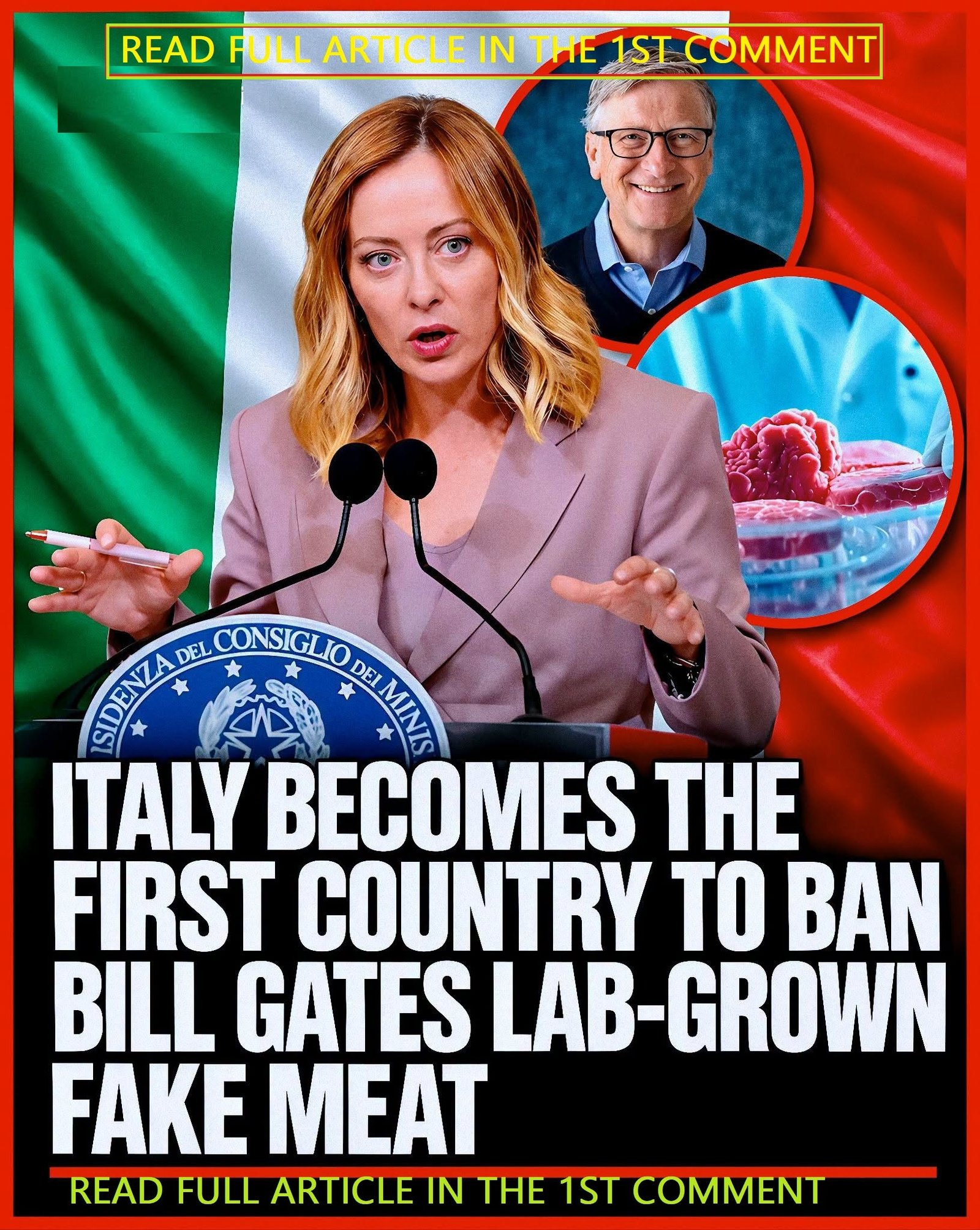
Italy has taken a controversial stand that has sent shockwaves through the global food industry. The country has banned the production and marketing of cultivated meat, a decision that has sparked a heated debate about tradition, scientific progress, consumer freedom, and the future of what ends up on our dinner plates.
The decision has been welcomed by supporters who believe Italy is protecting its agricultural heritage, traditional farmers, and world-famous food culture. For them, meat is more than just something people eat. It represents generations of farming traditions, family businesses, local economies, and a way of life that should not be replaced by laboratory-based alternatives.
But critics see things very differently.
Cultivated meat, sometimes called lab-grown meat, is produced by growing animal cells in controlled facilities rather than raising and slaughtering entire animals. Scientists believe this technology could eventually offer another way to produce meat while potentially reducing the need for conventional livestock farming. However, questions remain about production costs, energy consumption, food safety, environmental benefits, and whether it can ever compete with traditional meat on a large scale.
The controversy has become even more interesting because wealthy technology investors, including Bill Gates, have supported various alternative food technologies. Their investments have fueled discussions about whether the future of food could increasingly be shaped by powerful corporations, major investors, and private technology companies.
Italy’s government has argued that protecting traditional food production and preventing potential risks are important responsibilities. Supporters say governments should not wait until new technologies become widespread before establishing safeguards.
Opponents, however, warn that banning an emerging technology before its long-term effects are fully understood could discourage scientific research, investment, and innovation. They argue that consumers should have access to reliable information and the freedom to choose between traditional meat and scientifically developed alternatives.
And this is where the debate becomes much bigger than Italy.
Should governments decide which food technologies are acceptable? Should traditional farmers receive special protection against rapidly developing industries? Or should companies be allowed to innovate as long as their products meet strict safety standards?
There is also an important distinction: Italy’s legislation targets cultivated meat generally. It is not specifically a ban on Bill Gates or his investments.
Ultimately, the future of food will affect farmers, scientists, businesses, families, and consumers around the world. The challenge will be finding a balance between protecting food traditions, ensuring public safety, encouraging responsible innovation, and respecting people’s freedom to choose what they eat.
One thing is certain: the battle over the future of food is far from over.
So, what do you think?
Do you support Italy’s decision to protect traditional farming, or do you believe the government is going too far by banning a new food technology before consumers even have the chance to decide for themselves?
Share your opinion. Should the future of food belong to farmers, governments, or technology companies?
Website Disclaimer
The information provided on this website is for general informational and educational purposes only. While we strive to ensure that all content is accurate and up to date, we make no guarantees regarding the completeness, reliability, or accuracy of any information published.
The views and opinions expressed in articles belong to their respective authors and do not necessarily reflect the views of this website. Any action you take based on the information found on this website is strictly at your own risk. We will not be liable for any losses, damages, or inconveniences arising from the use of our content.
Some articles may contain opinions, third-party information, or external links. We do not endorse or guarantee the accuracy of content on external websites and are not responsible for their practices or policies.
All content on this website is provided in good faith and is intended for informational purposes only. Readers are encouraged to verify information independently and seek professional advice where appropriate.