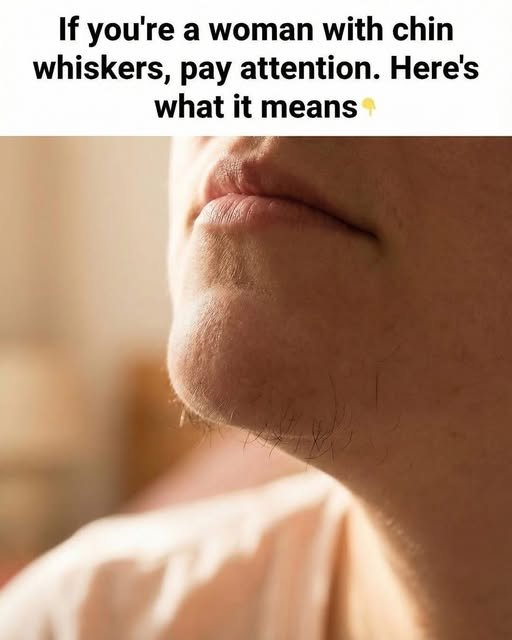
Chin whiskers in women are more common than many realize and often become a source of personal concern. These facial hairs can vary in texture and color—ranging from soft and light to thick and dark.
Some women may notice just a few stray hairs that appear occasionally, while others experience more consistent or prominent growth. Though it may feel alarming, this type of hair growth is typically harmless and quite normal.
Hormonal changes are one of the most common causes. Shifts related to puberty, pregnancy, or menopause can all contribute. For some women, increased levels of androgens (male hormones present in both sexes) may trigger facial hair growth.
Genetics also play a role. If female relatives have chin hair, there’s a higher chance of developing it too. In such cases, the growth may be perfectly normal and not linked to any health issues.
However, in some cases, medical conditions like polycystic ovary syndrome (PCOS) or adrenal disorders can cause excessive facial hair. It’s important to consult a doctor if the growth is sudden or accompanied by other symptoms.
Treatments vary. Options include plucking, waxing, threading, laser hair removal, and prescription medications that regulate hormones.
Understanding the underlying causes of chin whiskers is key to managing them effectively. More importantly, it helps remove the stigma around a natural and manageable condition.
Remember: having chin hair doesn’t make you any less feminine—it just makes you human.
Website Disclaimer
The information provided on this website is for general informational and educational purposes only. While we strive to ensure that all content is accurate and up to date, we make no guarantees regarding the completeness, reliability, or accuracy of any information published.
The views and opinions expressed in articles belong to their respective authors and do not necessarily reflect the views of this website. Any action you take based on the information found on this website is strictly at your own risk. We will not be liable for any losses, damages, or inconveniences arising from the use of our content.
Some articles may contain opinions, third-party information, or external links. We do not endorse or guarantee the accuracy of content on external websites and are not responsible for their practices or policies.
All content on this website is provided in good faith and is intended for informational purposes only. Readers are encouraged to verify information independently and seek professional advice where appropriate.