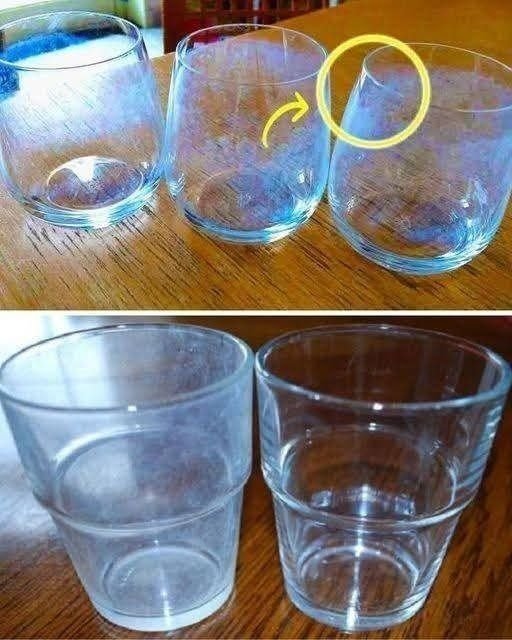
Over time, glassware often loses its original brilliance, developing a cloudy, whitish film that dulls its transparency and shine. This unsightly patina is usually caused by limescale buildup and surface corrosion, especially when glasses are frequently washed in dishwashers or washing machines. Once formed, these deposits can be difficult to remove with ordinary rinsing.
Many people notice the problem when preparing to entertain guests, only to find their glasses looking frosted rather than sparkling. While standard cleaners like dish soap, black soap, or vinegar work well for routine maintenance, they may not be enough to restore glass that has already become cloudy.
Fortunately, several effective and simple methods can help remove this white patina and revive glassware. One of the most accessible solutions is baking soda, a versatile household staple known for its gentle abrasive and whitening properties. When mixed with a small amount of water into a paste, it can lift stains without scratching the surface.
The paste should be applied to both the inside and outside of the glass and left to sit briefly. Afterward, gently wiping with a soft cloth removes residue, and a thorough rinse followed by drying restores clarity and shine.
White vinegar is another powerful option. Its natural descaling and disinfecting qualities make it ideal for dissolving mineral deposits. By wiping glasses with vinegar-soaked gauze and allowing it to work before rinsing, stubborn white marks can be effectively reduced.
For deeper cleaning, a soaking solution made with water, Marseille soap, white vinegar, and lemon juice can be used. Regular maintenance—cleaning glasses frequently and drying them immediately after washing—helps prevent white spots from returning.
Website Disclaimer
The information provided on this website is for general informational and educational purposes only. While we strive to ensure that all content is accurate and up to date, we make no guarantees regarding the completeness, reliability, or accuracy of any information published.
The views and opinions expressed in articles belong to their respective authors and do not necessarily reflect the views of this website. Any action you take based on the information found on this website is strictly at your own risk. We will not be liable for any losses, damages, or inconveniences arising from the use of our content.
Some articles may contain opinions, third-party information, or external links. We do not endorse or guarantee the accuracy of content on external websites and are not responsible for their practices or policies.
All content on this website is provided in good faith and is intended for informational purposes only. Readers are encouraged to verify information independently and seek professional advice where appropriate.