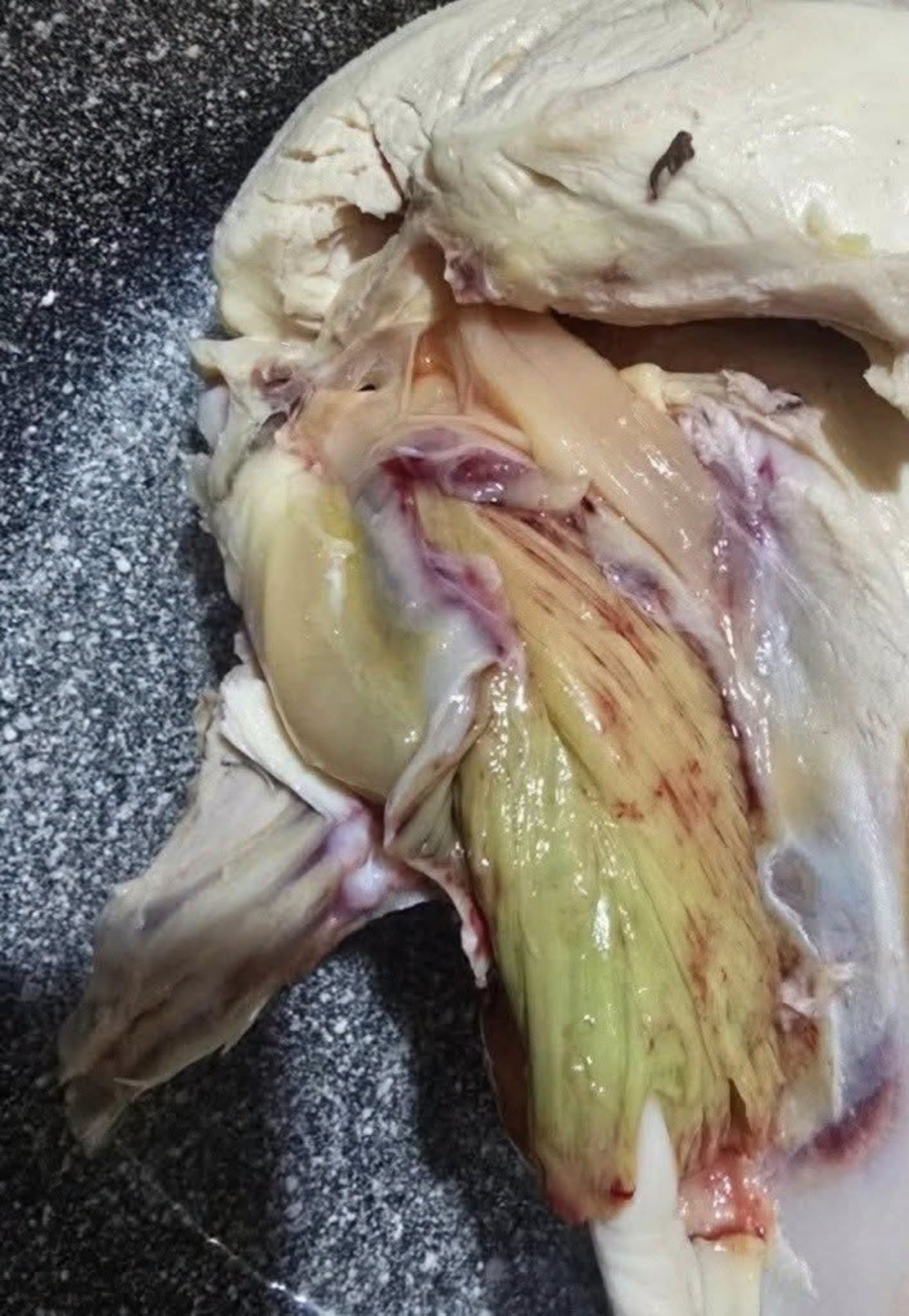
You slice into your perfect roast chicken… and the meat is green. Your stomach drops. Your brain screams “poison,” but your hunger whispers, “maybe it’s fine.” That ugly color feels like a warning from nature itself. Yet sometimes, it isn’t rot at all. It might be a bruise, a dead muscle, or just a trick of light. Other times, it’s a full-blown bacterial horror show waiting to explode in your gut. Knowing which is which can mean the difference between a good meal and a night in the ER. Before you throw it out—or worse, serve it—there’s one simple test that decides everything. You only need your eyes, your nose, and the courage to trus…
Green patches in chicken can come from several causes, and not all of them are dangerous. Bruising from rough handling or flapping can leave blood trapped deep in the muscle, turning from purple to a dull greenish hue as it breaks down, much like an old bruise on your own skin. Green muscle disease, common in heavy broiler chickens and turkeys, happens when the inner breast muscle is starved of oxygen and dies. The outside can look perfect, while the tenderloin inside is an off-putting greenish-brown, spongy and unappealing, but not necessarily unsafe if the bird was properly handled and cooked.
The true danger is spoilage. If the green area comes with a sour or sulfur smell, sliminess, or mushy texture, the meat is decomposing and must be discarded, no matter how much it cost. Light reflections or packaging can sometimes create harmless greenish or rainbow sheens, especially on vacuum-packed meats. When in doubt, trust your senses: if there is any odd odor at all, walk it straight to the trash.
Website Disclaimer
The information provided on this website is for general informational and educational purposes only. While we strive to ensure that all content is accurate and up to date, we make no guarantees regarding the completeness, reliability, or accuracy of any information published.
The views and opinions expressed in articles belong to their respective authors and do not necessarily reflect the views of this website. Any action you take based on the information found on this website is strictly at your own risk. We will not be liable for any losses, damages, or inconveniences arising from the use of our content.
Some articles may contain opinions, third-party information, or external links. We do not endorse or guarantee the accuracy of content on external websites and are not responsible for their practices or policies.
All content on this website is provided in good faith and is intended for informational purposes only. Readers are encouraged to verify information independently and seek professional advice where appropriate.