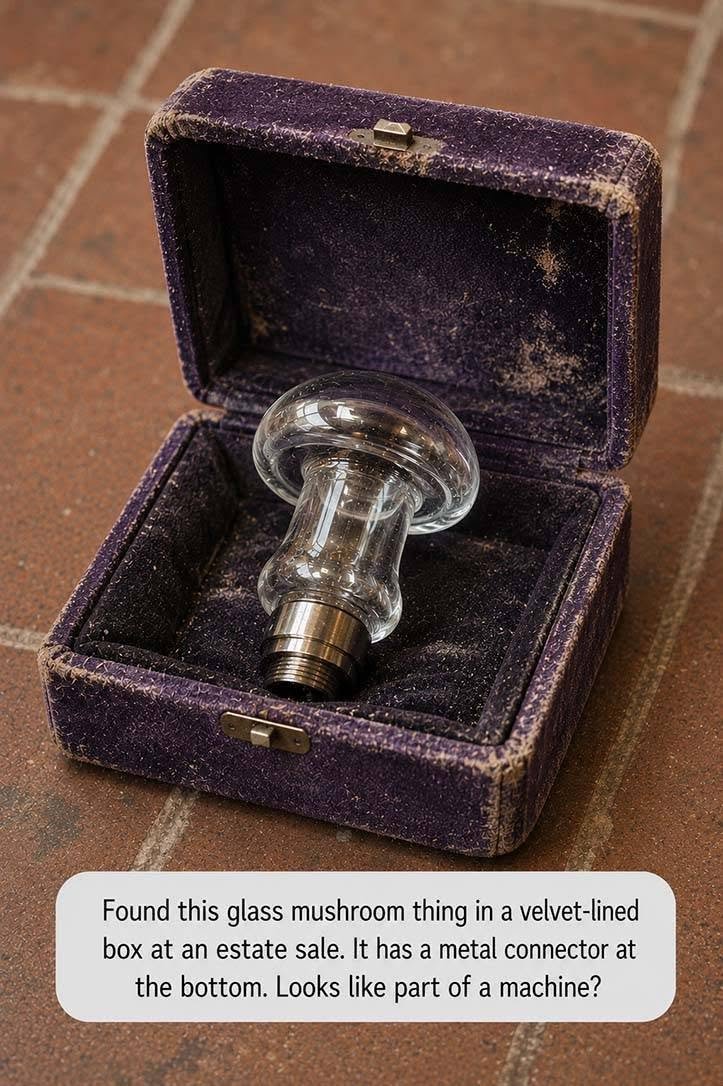
Estate sales are often filled with forgotten treasures, from antique furniture to strange objects with mysterious histories. One recent discovery stood out immediately: a glass mushroom-shaped object resting inside a velvet-lined wooden box. With its clear glass body and brass connector at the bottom, it looked both elegant and puzzling.
At first glance, the object seemed decorative, but the metal fitting suggested it once belonged to a machine. After closer examination, it appeared to be a vintage violet ray electrode, part of an early twentieth-century electrotherapy device once marketed as a cure-all for countless health problems.
A Curious Find
The glass piece measures roughly five inches tall and features a rounded mushroom cap attached to a narrow stem. Its brass connector was designed to screw into a larger electrical device. The glass itself resembles borosilicate, a durable material commonly used in scientific and medical equipment because it can withstand heat and electrical stress.
The fact that the object was carefully stored inside a velvet-lined box suggests it was once considered valuable and delicate. Its unusual shape and quality craftsmanship immediately make it a fascinating conversation piece.
The Era of Violet Ray Machines
Violet ray machines became popular during the early 1900s, when electricity fascinated the public, and many believed electrical treatments could heal the body. These devices generated high-frequency electrical currents that traveled through glass electrodes filled with gas, producing a glowing violet light.
Manufacturers claimed the machines could help with everything from headaches and arthritis to acne, insomnia, and hair loss. While modern science does not support most of these claims, the devices became widely popular because they looked futuristic and promised remarkable results.
Why the Mushroom Shape Was Popular
The mushroom-shaped electrode was one of the most common attachments used with violet ray devices. Its wide, rounded surface allowed users to treat larger areas of the body more comfortably and evenly.
Once connected to the machine, the glass would glow purple and produce a soft buzzing sound as electricity passed through it. The dramatic visual effect added to the machine’s appeal and reinforced the belief that it was performing advanced medical treatment.
A Collectible Piece of Medical History
Today, violet ray machines are considered part of the era of “quack medicine,” but they remain fascinating historical artifacts. The electrode itself is harmless when disconnected, though collectors generally advise against operating antique machines because they may not meet modern safety standards.
Vintage violet ray electrodes are now sought after by collectors of antique medical equipment. Pieces in excellent condition, especially those with original boxes or unusual designs, can be surprisingly valuable.
From Oddity to Conversation Piece
What first appeared to be a strange glass mushroom turned out to be a small piece of medical history. Its unusual design and mysterious purpose offer a glimpse into a time when electricity was viewed as futuristic, powerful, and full of healing potential.
Whether displayed in a collection or simply admired for its strange beauty, this vintage glass electrode continues to spark curiosity more than a century after it was made.
Website Disclaimer
The information provided on this website is for general informational and educational purposes only. While we strive to ensure that all content is accurate and up to date, we make no guarantees regarding the completeness, reliability, or accuracy of any information published.
The views and opinions expressed in articles belong to their respective authors and do not necessarily reflect the views of this website. Any action you take based on the information found on this website is strictly at your own risk. We will not be liable for any losses, damages, or inconveniences arising from the use of our content.
Some articles may contain opinions, third-party information, or external links. We do not endorse or guarantee the accuracy of content on external websites and are not responsible for their practices or policies.
All content on this website is provided in good faith and is intended for informational purposes only. Readers are encouraged to verify information independently and seek professional advice where appropriate.