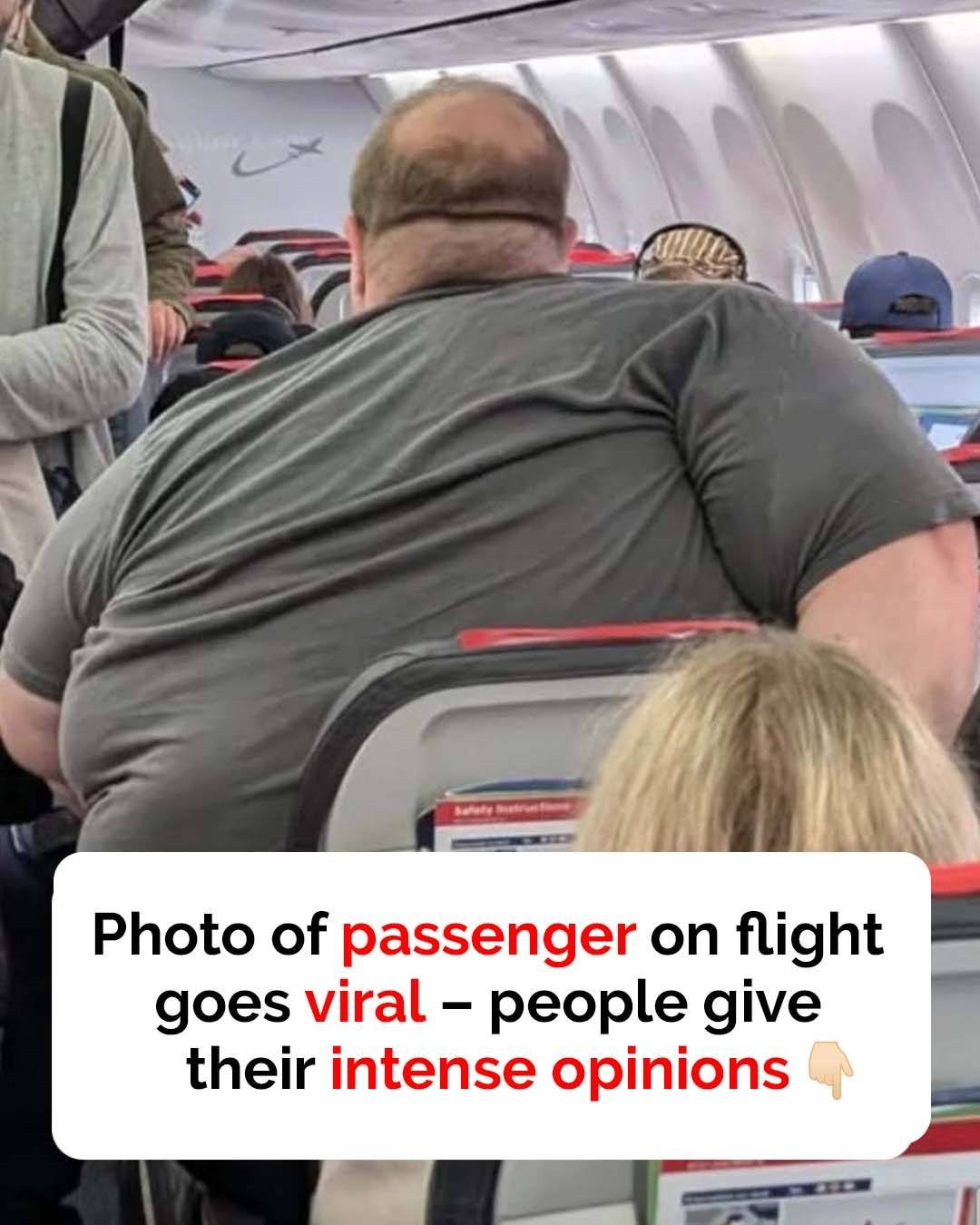
A viral photo showing a plus-sized passenger struggling to fit into an airplane seat has reignited fierce debate over airline seating policies and passenger rights. The image, first posted by consumer advocate Christopher Elliott and later shared by hip-hop group Pretty Ricky, quickly spread across social media, drawing thousands of comments and heated opinions.
Many users argued that passengers who cannot fit into a single seat should be required to purchase two. They claimed that fairness and safety should come before comfort, especially when space on planes is already limited. Others, however, blamed the airlines themselves, saying shrinking seat sizes and profit-driven design choices are the real problem.
Industry critics have long accused airlines of cutting comfort to maximize revenue, noting that modern seats are several inches narrower than those from decades ago. Some commenters called for the introduction of larger or “comfort” seats at higher prices, suggesting this could accommodate all body types without penalizing either group of travelers.
On the other side, plus-size travel influencer Jaelynn Chaney pushed back against what she described as discriminatory attitudes. “The issue isn’t me—it’s the system,” she said. Chaney, who has gained national attention for advocating size inclusivity in travel, argues that all passengers deserve equal access to air transportation regardless of body size.
She has called on airlines to provide additional seats for larger travelers at no extra charge and to introduce policies protecting plus-sized passengers from public humiliation or denial of service.
Supporters of Chaney’s stance argue that inclusivity should be a basic standard in transportation, not a luxury. They compare the issue to accessibility laws protecting passengers with disabilities.
With opinions deeply divided, the viral image has forced airlines—and the public—to confront a tough question: who should adapt—the passengers or the planes?
Website Disclaimer
The information provided on this website is for general informational and educational purposes only. While we strive to ensure that all content is accurate and up to date, we make no guarantees regarding the completeness, reliability, or accuracy of any information published.
The views and opinions expressed in articles belong to their respective authors and do not necessarily reflect the views of this website. Any action you take based on the information found on this website is strictly at your own risk. We will not be liable for any losses, damages, or inconveniences arising from the use of our content.
Some articles may contain opinions, third-party information, or external links. We do not endorse or guarantee the accuracy of content on external websites and are not responsible for their practices or policies.
All content on this website is provided in good faith and is intended for informational purposes only. Readers are encouraged to verify information independently and seek professional advice where appropriate.