Part 1
The reservation popped up on my office tablet at 2:13 p.m., tucked between a four-top that always ordered the chef’s counter and a private dining request from a venture group that treated wine pairings like a competitive sport.
Party of seven.
Saturday.
Center table requested.
Occasion: Engagement celebration.
Name: Allison K.
I didn’t recognize the booking name, but the notes made my stomach tighten anyway. Center table was where people wanted to be seen. It was also where they felt entitled to be heard—loudly, confidently, and often cruelly, because they assumed the room belonged to them.
I tapped the guest profile to see if we had any history.
One line appeared under “preferences,” added by Marcus months ago after a previous visit:
Guest family from Greenwich. Status-conscious. Treats staff like furniture. Watch for off-menu demands.
Greenwich.
My throat went dry, and I stared at the screen until the words blurred. I had lived an entire life inside that town’s carefully manicured expectations. I knew exactly the kind of smile people wore there—bright enough to show teeth, not warm enough to mean anything.
I stood, pushed back my chair, and walked to the kitchen pass where the air was already filling with the early prep scents I loved: simmering veal stock, lemon zest, toasted fennel, fresh basil that still smelled like summer even in spring. The line cooks moved with the quiet speed of professionals who didn’t need to announce they were good at what they did. Knives tapped rhythmically. Pans whispered. Someone laughed at a joke I didn’t catch.
This was my world. This was my home. And yet, my chest felt like it was being pressed from the inside.
Miranda Torres looked up from her clipboard as I approached. She was my chef de cuisine—sharp, calm, and the only person in the building who could read my moods before I spoke.
“You’re walking like you just got bad news,” she said.
I forced a breath. “We got a reservation for a Greenwich family,” I replied, keeping my voice low. “Engagement dinner. Center table.”
Miranda’s expression shifted into something like sympathy. “Do you want me to handle the floor?”
“I can handle it,” I said automatically.
Miranda arched an eyebrow. “That’s not what I asked.”
I looked past her to the stainless steel, the heat lamps, the stack of plates we’d designed specifically for this season—hand-glazed ceramics with a faint blue edge that reminded me of ocean shadows. My hands curled into fists without my permission.
“It’s my sister,” I admitted finally. “And my parents.”
Miranda’s face softened. “They don’t know it’s you.”
“No,” I said. “They probably picked us because we’re the restaurant everyone’s trying to brag about right now.”
“And you’re thinking about showing up,” Miranda guessed.
I didn’t answer right away. I’d built Maison to be separate from my old life. I’d been careful, intentional. My family knew I “worked in food,” the way you’d say someone “worked in finance,” vague enough to avoid details. It wasn’t because I wanted to punish them. It was because I wanted my success to belong to me first, without being swallowed by their approval.
But now they were coming here, into my space, to celebrate my sister—my flawless sister—inside the world I’d built out of stubbornness and burns and sleepless nights.
I exhaled slowly. “I’m going,” I said.
Miranda didn’t look surprised. She nodded once, like she’d expected it. “Okay. Then we plan for it.”
That sentence settled me. Not emotionally, but practically. Planning had saved me more than once.
“Marcus can keep the staff quiet,” Miranda continued. “We’ll keep service seamless. If your family gets difficult, we don’t engage. We redirect.”
I swallowed. “They’ll be difficult.”
Miranda gave me a quick, understanding smile. “Then we handle it like we handle everything else. With discipline.”
Discipline. That was the word that had changed my life.
Five years ago, I hadn’t known what discipline actually felt like. Not the kind my parents preached—polite posture, perfect grades, the right internships. I meant real discipline: the kind that made you come in at four a.m. to break down fish because the delivery came early, the kind that taught you to fix a sauce without panicking, the kind that let you take criticism, learn, and keep moving.
Five years ago, I’d stood in my parents’ immaculate living room and told them I was dropping out of my MBA program. That I was done trying to become the person they wanted.
My father, Richard Mitchell, had stared at me like I’d spoken profanity at church.
“This is unacceptable,” he said in that dangerously quiet voice he saved for real disappointments.
My mother, Margaret, had sat very still, her pearls perfectly centered at her throat. “If you insist on pursuing this hobby,” she replied, “you will do it without our support.”
My sister Heather—already set on Yale Law at the time, already winning—laughed in a way that still lived under my skin. “Let her,” she said. “She’ll come crawling back once she realizes food is just… service.”
My brother Ethan looked embarrassed for me, like my dreams had splashed something messy onto the family name.
I left that night with a suitcase, a few thousand dollars I’d saved quietly, and the first real breath I’d taken in years.
The months that followed were brutal. I lived in Queens with roommates who worked opposite shifts and never bought enough toilet paper. I worked prep in the mornings, line in the afternoons, bakery on weekends. I took out loans for culinary school and learned to stretch rice and eggs into dinners that didn’t taste like shame. I burned my arms. I cried in subway stations. I kept going anyway.
Then Chef Laurent Piros—three Michelin stars, reputation like thunder—tasted something I’d made at a catering event and said the sentence that lit my world on fire:
“You are wasting your talent. Come to my kitchen. I will make you great.”
He did. Not gently. But truly.
Two years ago, Maison opened in a space that used to be a failed nightclub. I designed everything—from the lighting to the linen weight—because I wanted diners to feel held by the room, not impressed by it. An investor backed me. Then another. Then a third.
Six months after opening, we were profitable.
Six months after that, I bought out my partners.
Now Maison was mine.
And on Saturday night, my family would sit in it and decide what I was worth based on what they thought I could afford.
Miranda touched my shoulder lightly. “You don’t have to prove anything,” she said.
I looked at her, grateful and tense. “I know,” I replied.
But the truth was more complicated. I wasn’t going to prove anything.
I was going to see something.
Because sometimes the hardest reservation to make isn’t with a restaurant.
It’s with your own past.
Part 2
I entered Maison through the front doors at exactly 7:00 p.m., not a second early, not a second late. The host stand glowed softly under the pendant lights I’d chosen because they made everyone look kinder than they felt. The dining room hummed with that particular energy we worked hard to cultivate—expensive, yes, but not stiff. Romantic without being theatrical. Alive without being chaotic.
Normally, the smell inside—saffron, reduced red wine, citrus oils—grounded me. Tonight it sharpened my nerves instead.
I wore a simple black dress and my grandmother’s pearl strand, the only inheritance I’d kept without bitterness. My hair was pulled into a sleek knot. If my family still saw me as the struggling middle child, they’d assume I was trying to look “classy” on a budget. I let them.
Marcus, my senior server, spotted me the moment I stepped inside. His eyes widened slightly, question in the lift of his brow.
Not yet, I mouthed.
He gave a minimal nod and returned to the floor like nothing had happened. That was the kind of loyalty you earned when you treated people like partners, not props.
From the entryway I could already see them.
They had the center table, of course.
My mother sat upright in a Chanel jacket, her posture so practiced it looked painful. My father examined the wine list with exaggerated seriousness, like selecting a bottle was a test of intelligence rather than taste. Heather wore something glossy and designer, her engagement ring catching the candlelight every time she moved her hand. Next to her sat a man I didn’t recognize—slicked-back hair, expensive watch, the kind of face that smiled without warmth.
Bradley, I guessed. The fiancé.
Ethan sat across from them with his wife Allison. They looked like they’d come straight from work, still wearing that corporate sheen that says, I am busy and important.
Celeste, my hostess, approached me smoothly. “Good evening,” she said, then caught herself before using my name. “Your party is seated. May I?”
“Yes,” I murmured. “Thank you.”
As we neared the table, my mother’s gaze snapped to me. The familiar scan followed: shoes, bag, dress, hair, jewelry. The calculation I’d endured since childhood.
Her smile tightened at the edges. “Dara,” she said, rising to air-kiss my cheeks. “You finally arrived.”
“I’m on time,” I replied lightly, tapping my watch. “Seven on the dot.”
My father stood and gave me a stiff hug that ended in an awkward pat on the back. “You look… healthy,” he said.
Mitchell language. Translation: you’re not as thin as we’d prefer, but we’ll pretend it’s a compliment.
Heather didn’t bother to stand. She offered her cheek like a queen receiving tribute. “This is Bradley,” she said, nodding at the man beside her.
Bradley rose and extended his hand. His grip was too firm, a practiced dominance. “Bradley Harrington,” he said. “Princeton undergrad, Wharton MBA. Just made junior partner at Goldman.”
Of course.
“Nice to meet you,” I said, keeping my face neutral.
Ethan greeted me more genuinely. “Hey, Dara,” he said, and there was a flicker of something in his eyes—curiosity, maybe even respect, though he’d never call it that out loud.
Allison’s smile was polite and strained. She looked relieved I’d shown up, like she’d been worried I would disrupt the perfect picture by existing too loudly.
My mother gestured to the last chair. “We already ordered champagne,” she said. “I hope that’s acceptable.”
I noticed the bottle: the most expensive option on our list. Showy, but safely within the range of people who wanted to signal wealth without risking embarrassment.
A sommelier appeared—José, gliding like he was part of the lighting. He presented the bottle to my father with perfect ceremony and began pouring.
“We’re celebrating an engagement,” my father announced loudly, as if the entire dining room needed the information.
“Congratulations,” José replied smoothly. “Maison is honored to host your special occasion.”
Heather preened, letting her ring flash. Bradley’s smile widened like he’d purchased the moment.
I raised my glass. “To Heather and Bradley,” I said.
We clinked. The champagne was exactly the right temperature, of course. I had trained them that way.
My mother leaned forward as soon as glasses touched the table. “So,” she began, her tone bright and sharp, “tell us what you’ve been doing these past few years. You’ve been so… mysterious.”
Five pairs of eyes pinned me. Evaluation disguised as interest.
“I’ve been working,” I said simply. “In food.”
Heather sighed dramatically. “Still with that cooking thing.”
“It’s not a thing,” I replied calmly. “It’s my career.”
Ethan cleared his throat. “Not everyone wants the corporate path,” he offered, trying to defend me in a way that still sounded like a critique.
Bradley looked puzzled. “What exactly do you do?” he asked.
I kept it vague. “Different roles. Kitchens. Events. Learning.”
My mother’s smile turned patronizing. “Well, we’re glad you’re supporting yourself,” she said. “Our door is open if things ever become too challenging.”
Translation: we expect you to fail.
An amuse-bouche arrived on a small stone plate—compressed watermelon, fermented black garlic, micro greens from a rooftop farm I’d partnered with. Jessica, one of our most experienced servers, placed the bites gently in front of each diner.
“Compliments of the kitchen,” she said.
Her eyes met mine for half a second. Loyalty flashed there, then she returned to professional neutrality.
Heather examined the bite with disappointment. “Is this all?” she asked.
“It’s an amuse-bouche,” I explained. “A palate opener.”
“I know what an amuse-bouche is, Dara,” she snapped. “I’m not uncultured just because I chose law instead of playing with food.”
I watched as everyone tasted it. My father ate it in one bite without pausing. My mother took the tiniest nibble, always counting calories. Ethan and Allison actually looked pleased.
Bradley made a show of analyzing the flavors with wine terms that made no sense.
Only Heather left hers untouched.
“I don’t do garlic,” she declared.
Jessica’s face flickered—a tiny disappointment, quickly masked.
Something inside me tightened, protective not of my ego, but of my people. They were not servants. They were artists. And they deserved respect.
The first official course arrived: heirloom tomatoes, house-made ricotta, basil oil. Heather pushed it around her plate like it offended her.
The conversation swerved into wedding planning. St. Thomas Church. Reception at the Plaza. Guest list politics. My mother spoke about social factions like she was negotiating peace treaties.
I chewed my own dish slowly, barely tasting it, tension dulling everything.
Heather’s eyes cut back to me. “And you,” she asked suddenly. “Any prospects? Or are you still too busy with your… kitchens?”
“I’m focused on my work,” I said.
“By twenty-nine,” my mother added, “you should be thinking about settling down.”
I almost laughed at the predictability.
Before I could reply, Jessica returned to clear plates. She paused at Heather’s untouched dish.
“Was there a problem with the course?” Jessica asked carefully.
Heather didn’t look up. “Too acidic,” she said dismissively. “Tomatoes could’ve been riper.”
I swallowed my irritation. Those tomatoes had been hand-selected at their peak that morning.
“Thank you for the feedback,” Jessica said smoothly.
As she walked away, she caught my eye again. The unspoken question: Do you want me to do anything?
Not yet, I told her silently.
Not yet.
Part 3
By the time the scallops arrived—seared perfectly, brown butter emulsion, pickled ramps—my family had settled into the dynamic as if five years hadn’t passed at all.
They were the winners at the table. I was the tolerated one.
My father tasted the scallop and nodded once. “Decent,” he declared, like he was judging a performance.
Bradley swirled his wine and said, “Not an exceptional list, but passable.”
José, passing behind him, shot me a quick glance. I gave him a faint smile. José had turned down offers from restaurants across the country to work here because I treated him like what he was: a master.
Allison tried to include me. “Dara,” she said, “Ethan mentioned you’d been working in food. What exactly do you do?”
Before I could answer, Heather cut in with a smirk. “Hostessing, probably. Using that business degree to hand out menus.”
“I started—” I began.
“No shame in starting small,” my father interrupted. “Everyone has to begin somewhere. Though after five years, I’d expect some advancement.”
“I’ve advanced,” I said quietly.
Heather laughed. “Into what? Assistant manager at Applebee’s?”
Ethan shifted uncomfortably. “Heather.”
“What?” she shot back. “I’m just being realistic. She abandoned her education for a passion project. Actions have consequences.”
I took a slow sip of wine and let the familiar notes steady me. It wasn’t just the taste. It was the fact that I had chosen it. That I had built a place where every element had intention.
“And how is law treating you?” I asked Heather, redirecting.
Heather’s smile tightened. “Fine.”
Bradley slid an arm around her chair like a claim. “She doesn’t need to kill herself at a firm,” he said. “Once we’re married, she can do charity work. Like my mother.”
Heather’s eyes flickered—resentment, maybe—before smoothing back into composure.
The next course arrived: hand-rolled tagliatelle with spring peas, pancetta, mint. One of our signature dishes. Featured in Food & Wine.
My mother frowned. “Portion size is ridiculous.”
“It’s a tasting menu,” I said, measured. “It’s designed to take you through multiple flavors.”
“In my day,” my father grumbled, “restaurants gave you a proper meal. This is just a way to charge more for less.”
Bradley cut the pasta instead of twirling, breaking the strands I’d rolled that morning. I watched, my jaw tightening, then forced myself to loosen it.
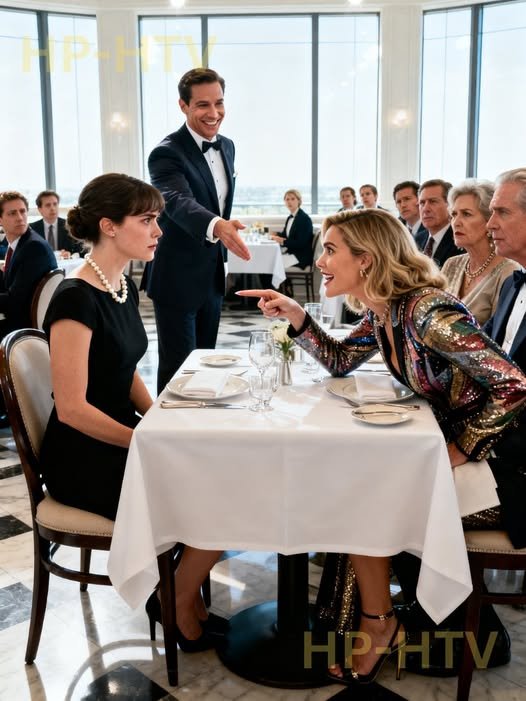
Heather leaned forward, eyes sharp. “So,” she said, “how exactly are you affording a place like this?”
I felt the table’s attention swing back to me like a spotlight.
“I manage my finances,” I replied.
“Oh, please,” Heather scoffed. “A dinner here costs more than you make in a day. Who’s paying? Are you dating someone? Is he covering this?”
“I’m not dating anyone,” I said evenly.
“Then you’re in debt,” she pressed, voice rising. “Or you’re lying about what you do.”
Ethan looked like he wanted to disappear. Allison’s cheeks flushed with discomfort.
Before I could respond, the duck course arrived—perfect medium-rare breast, cherry gastrique, farro. Bradley took one bite and made a face.
“This is undercooked,” he announced loudly.
“It’s meant to be served medium-rare,” I said, calm. “That’s optimal for duck breast.”
“I prefer my meat well-done,” he declared, waving for Jessica. “This is raw. Take it back and cook it properly.”
Jessica’s eyes flickered with irritation, then she smiled professionally. “Of course, sir.”
As she took the plate, she glanced at me. I gave her a tiny nod: don’t ruin good duck. Make a new one.
Heather turned back to me as if Bradley’s tantrum had primed her appetite for cruelty.
“Seriously, Dara,” she said, voice dripping sweetness. “How are you paying for this?”
My mother joined in, unable to resist. “We’re only asking because we worry. Your situation—”
“My situation?” I repeated softly.
“You’re nearly thirty,” she said, lowering her voice as if it was advice. “You don’t have a stable career path. No partner. No—”
“No what?” I asked, meeting her eyes. “No respectable identity in your world?”
My father cleared his throat. “Let’s not get dramatic.”
But Heather wasn’t done. She leaned closer, eyes locked on mine. “Can you even afford to eat here?”
The question landed like a slap. It was crafted for maximum humiliation, sharp enough that even my parents seemed to register the cruelty.
I felt heat crawl up my neck. Five years away hadn’t erased the old reflex to shrink.
But I didn’t shrink.
I inhaled slowly, the way Chef Laurent had taught me to when the kitchen got chaotic.
Before I could answer, Bradley’s overcooked duck returned, now dry and ruined. He chewed and nodded approvingly.
“Much better,” he declared.
I almost laughed at the absurdity.
My father signaled José. “We’ll have another bottle,” he said, loud again. “Something more impressive.”
He pointed to one of our most expensive Bordeaux—over $800. A bottle I knew intimately because I’d selected it personally during a trip to France.
It was spectacular.
And wrong for the remaining menu.
“May I suggest something that pairs better?” I offered.
My father waved me off. “I know my wines.”
José caught my eye, silently asking. I gave him a small nod. Let him.
By dessert—a deconstructed lemon tart I adored—I was emotionally exhausted. The restaurant’s gentle ambiance felt like a cage.
Then Marcus approached with the check folder and placed it discreetly at the center.
My father reached for it out of habit, but Bradley intercepted with a smooth smile. “Allow me,” he said. “My treat. Engagement celebration.”
My father did the expected token protest, then yielded.
Bradley opened the folder. His confident smile faltered for half a second as he saw the total.
A dinner for seven, premium wines, off-menu demands, the $800 Bordeaux—well over $3,000.
Not outrageous here, but enough to make even a junior partner blink if he wasn’t prepared.
“Problem?” my father asked.
“No,” Bradley said quickly, recovering. “Just… confirming the calculation.”
Heather chose that moment to circle back, enjoying the power shift. “So, Dara,” she said sweetly, “since you’re so independent… how are you paying for this?”
“I can cover my portion,” I said.
Heather laughed softly. “Can you though?”
Bradley, eager to reassert dominance after the bill shock, leaned in. “If you need help, just say so.”
The room went very still.
And then Bradley frowned, pointing at the receipt. “Wait. There’s a mistake. They only charged us for the wines, not the food.”
He snapped his fingers at Marcus like Marcus was a vending machine.
“Excuse me,” Bradley said. “There’s an error on our check.”
Marcus approached with perfect calm. He glanced at the folder, then at me, his eyes questioning.
In that instant, I made my decision.
I gave Marcus the smallest nod.
Marcus’s expression warmed. He turned back to Bradley with professional ease.
“There’s no error, sir,” Marcus said. “The dinner portion has been taken care of.”
My father blinked. “By whom?”
Marcus looked at me and smiled like the room finally made sense.
“Welcome back, Miss Dara,” he said. “Would you like your usual table? Your meeting with the investors is ready.”
My father nearly spit out his wine.
And six pairs of eyes swung to me as if I had suddenly changed languages.
Part 4
For a moment, nobody moved. Even the air seemed to pause, candle flames holding still as if waiting to see who would speak first.
Heather’s mouth opened, then closed. My mother’s hand lifted toward her pearls—the reflex she used when her world tilted. My father stared at Marcus like he’d misheard.
Bradley tried to laugh, but it came out thin.
Marcus kept smiling, calm and respectful. “Shall I close out Mr. Harrington’s beverage tab?” he asked.
“Yes,” I said, hearing how steady my voice sounded and being surprised by it. “Please do. The rest is covered.”
Marcus nodded, taking the folder from Bradley’s slack grip. “Very good, Miss Dara. Chef Miranda asked if you’ll taste the new spring menu adjustments before your meeting.”
“I will,” I replied.
Marcus turned and glided away, leaving my family sitting in the aftermath of a truth they weren’t ready for.
I finally looked around the table.
“Welcome to Maison,” I said simply. “My restaurant.”
The silence stretched.
My father’s expression shifted first—confusion melting into calculation, the same look he wore when evaluating investments or social dynamics.
“Your restaurant,” he repeated slowly. “You… work here.”
“No,” I said. “I own it. I’m the executive chef. And the sole proprietor.”
Heather’s face went pale. “That’s impossible. This place—this is one of the most exclusive restaurants in the city.”
“Yes,” I agreed. “Food & Wine last month. Bon Appétit before that. The Times review last year.”
Bradley stared at me like I’d committed a magic trick. “But you said you were… just working in food.”
“I was vague on purpose,” I replied.
My mother leaned forward, voice suddenly delicate. “Dara, sweetheart—why would you hide something like this from us?”
Because you didn’t deserve it, my old anger wanted to say.
Instead, I chose the truth.
“Because I didn’t want your approval to be the price of my peace,” I said. “And because I wanted to know how you’d treat me if you thought I wasn’t successful.”
Heather’s eyes narrowed, defensive. “So you set us up.”
“No,” I said. “You set yourselves up. I just watched.”
Bradley recovered enough to attempt charm. “This is… impressive,” he said, eyes scanning the room like he suddenly saw dollar signs. “A restaurant like this must generate significant revenue. Do you have plans for expansion?”
I looked at him, then smiled politely. “I’m well-advised.”
My father cleared his throat, still trying to regain footing. “But the cost—Dara, this location alone—”
“Three point four million initial investment,” I said. “Backed by Warren Capital and two smaller partners. Six months after opening, we were profitable. Then I bought them out.”
My mother blinked rapidly. “You did all that… alone?”
I tilted my head. “Not alone. I had mentors. Colleagues. Staff. People who believed in me.”
Not you, went unsaid.
Heather’s voice sharpened with humiliation. “So while I thought you were struggling, you were building this?”
“Yes,” I said.
Ethan leaned forward, something like awe on his face. “Dara… this is incredible.”
Allison looked relieved and impressed at the same time, like she’d accidentally chosen the right restaurant and now wanted credit but didn’t know how to ask for it.
My father’s gaze shifted, and I saw it—the dawning realization that my success could reflect on him socially. Pride trying to form, not from love, but from status.
My mother’s tone softened into that coaxing voice. “We would have been proud,” she insisted. “We could have supported you—”
“You cut me off,” I reminded her quietly. “Completely.”
My father’s jaw tightened. “We thought it was a phase,” he said. “We were protecting you from instability.”
“You were protecting your image,” I corrected.
Before anyone could respond, Chef Miranda approached the table, crisp whites immaculate, presence commanding without arrogance.
“Sorry to interrupt, Dara,” she said, her voice respectful and calm. “The Halstead group is ready in the private room. And Sava from the Times called back—she confirmed your interview for next week. Also your publisher wants a decision on the cookbook cover by Monday.”
Miranda nodded to the table politely, then looked back at me. “Five minutes?”
“Five,” I promised.
Miranda stepped away. The effect on my family was immediate: more shock, more recalculations.
“Cookbook,” Heather repeated weakly.
“Coming out this fall,” I confirmed.
My mother’s eyes glistened. “Darling… this is—this is extraordinary.”
I didn’t flinch at the word. I let it sit there and reveal what it meant: only now did my choices become acceptable.
Bradley leaned forward again, eager. “A cookbook deal comes with a substantial advance. And if you’re considering expansion, my firm—”
“I’m not interested in mixing my family’s event with your networking,” I said, voice still polite but firm.
Heather’s face twisted with resentment and embarrassment. “You let us criticize your food,” she said. “You let me—”
“You asked if I could afford to eat here,” I reminded her, meeting her eyes. “That wasn’t concern. That was cruelty.”
Heather’s cheeks flushed. “I was joking.”
“No,” I said. “You were enjoying it.”
My father shifted, uncomfortable now that the shame was tangible. “Dara,” he said, “we didn’t know.”
“You didn’t know I was successful,” I replied. “But you knew I loved it. That should have been enough for respect.”
A thick silence fell.
Ethan spoke quietly. “She’s right.”
All eyes turned to him. Ethan rarely contradicted the family narrative. He’d always been the quiet achiever, the one who didn’t disrupt.
He looked at me. “For what it’s worth, Dara… I’m sorry,” he said. “I should have supported you sooner.”
His apology felt different—less polished, more real.
I stood, smoothing my dress. “I have a meeting,” I said. “I need to go.”
My mother stood too quickly. “Don’t leave like this,” she pleaded. “We should celebrate. We should talk.”
“Not tonight,” I replied. “Tonight you came here to celebrate Heather. You spent the evening reminding me how little you respect me when you think I have nothing.”
My father’s voice softened, rare. “Where do we go from here?”
I looked at each of them—my mother’s fear, my father’s discomfort, Heather’s humiliation, Bradley’s opportunism, Ethan’s sincerity, Allison’s awkward guilt.
“I don’t know yet,” I said honestly. “But if we’re going to have a relationship, it has to change.”
My mother nodded too quickly, desperate. “Of course.”
I met her gaze. “Different terms,” I continued. “No more comments about my choices. No more measuring my worth by status. And no using my restaurant as a shortcut to your social ambitions.”
Bradley opened his mouth, then closed it.
Heather swallowed, voice smaller. “I owe you an apology,” she said.
I studied her, searching for sincerity behind pride. “Yes,” I said simply. “You do.”
I turned toward the private dining room. My real life waited there—investors, menus, staff who counted on me.
As I walked away, I didn’t feel triumphant.
I felt lighter.
Because the secret wasn’t power over them.
The secret was that I didn’t need them anymore.
Part 5
The Halstead group wanted numbers, timelines, and reassurance that my second concept wouldn’t dilute Maison’s brand. I gave them all three. I spoke calmly, answered questions sharply, and left the room with a tentative agreement for exploratory funding on a smaller, more experimental sister space—one that would focus on regional American ingredients with global technique.
When the meeting ended, Miranda handed me a small plate: one bite of the new spring dish—charred asparagus, smoked yogurt, preserved lemon.
I tasted it, closed my eyes, and finally felt something other than tension.
“Perfect,” I said.
Miranda smiled. “You okay?”
I exhaled. “I’m getting there.”
By the time I returned to the dining room, my family was gone.
They hadn’t waited. They hadn’t tried to corner me again. They’d simply left, carrying their shock into the city night like an expensive bag they didn’t know how to set down.
Marcus approached quietly. “Do you want me to debrief the staff?” he asked.
“No,” I said. “They saw what they saw. They handled it beautifully.”
Marcus nodded, then hesitated. “For what it’s worth, chef… you didn’t deserve that.”
My throat tightened. “Thank you,” I said.
After closing, I sat alone at my usual table—near the side window, where I could watch the streetlights blur into soft halos. I opened my notebook to write, but the pen hovered uselessly.
I kept hearing Heather’s voice: Can you even afford to eat here?
The sting wasn’t about money. It was about the way my family’s respect had always been conditional—earned, not given. Purchased, not offered. They didn’t know how to love without evaluating.
My phone buzzed.
A text from Ethan: That was incredible. I’m sorry. I mean that.
Then another, from Allison: Dara, I truly didn’t know. I’m embarrassed. You built something amazing.
A third, from my mother: We need to talk. Please.
And finally, from Heather: I didn’t know. I didn’t know it was yours. I’m… processing.
No message from Bradley. Of course not.
I set the phone down and stared at the empty dining room. Healing, I’d learned, didn’t arrive like a grand gesture. It arrived like repetition. Like showing up again and again with different choices.
Two days later, my mother called.
I answered because I wanted to be the kind of person who didn’t avoid hard conversations just because she could.
Her voice sounded unsteady. “Dara,” she said softly.
“Yes, mother.”
A pause. Then, “Why didn’t you tell us?”
I closed my eyes briefly. “Because you didn’t ask,” I said. “Not really. You asked to measure. Not to understand.”
She inhaled shakily. “I thought you were… struggling.”
“And how did that make you feel?” I asked calmly.
Silence.
Then, “Worried,” she said, but it sounded rehearsed.
I didn’t let her hide behind the easy word. “Worried about me, or worried about what it looked like?”
Another pause. Then a small, honest crack: “Both.”
I respected that more than any polished apology.
“We were wrong,” she said quietly. “Your father and I.”
I didn’t rush to comfort her. “Yes,” I replied. “You were.”
She swallowed. “Your father wants to see you.”
“Does he?” I asked.
“Yes,” she insisted. “He… he was shaken.”
I almost laughed. Richard Mitchell shaken by a restaurant. But I understood: he was shaken because something he’d dismissed had become powerful without him.
“I’m free for brunch Sunday,” I said. “But not at your club.”
My mother hesitated. “Where?”
“There’s a place in the East Village,” I said. “Small. Good. Honest.”
“We’ll be there,” she promised, voice fragile.
Sunday brunch was a study in discomfort.
My parents arrived overdressed. My mother looked around at the mismatched chairs and graffiti wall like she expected to catch a disease.
Then the food arrived—shakshuka with homemade sourdough, a simple salad with citrus and herbs so bright it tasted like sunlight. My father took a bite and stopped chewing for a second.
“I didn’t know eggs could taste like this,” he admitted, almost grudgingly.
“Because you never looked,” I said, not cruel, just factual.
Heather arrived late, alone.
No Bradley.
She slid into the booth and stared at her menu like she needed it as a shield.
“I told him not to come,” she said quietly.
“Why?” my mother asked, surprised.
Heather’s jaw tightened. “Because he said something disgusting after Saturday.”
My father frowned. “What did he say?”
Heather glanced at me, then away. “He asked if Dara would be willing to host our rehearsal dinner at Maison for a discount. Like it was… leverage.”
My stomach twisted. Not because I was surprised. Because I was.
Heather swallowed hard. “And then he said,” she continued, voice shaking with anger, “‘If your sister can pay for her own restaurant, she can pay for part of the wedding too.’”
My mother’s face went pale.
Heather’s eyes flashed. “I realized something in that moment,” she said. “He doesn’t see people. He sees… assets.”
A heavy silence settled over the booth.
Ethan, arriving with Allison and their two little kids, broke it by sliding into the seat beside me and saying softly, “I’m proud of you.”
I looked at him, surprised by the directness.
He met my gaze. “I should’ve said it years ago,” he added.
Heather’s voice cracked. “I don’t know what to do,” she admitted quietly. “Everything is so… planned. The wedding. The life. The image.”
I looked at her, really looked. Under the designer coat and sharp edges, she looked tired.
“The question isn’t what people expect,” I said gently. “It’s what you can live with.”
Heather nodded slowly, eyes wet.
My father cleared his throat, a rare sign of emotion. “We made mistakes,” he said, voice rough. “With you, Dara. With… how we defined success.”
I didn’t soften instantly. I didn’t forgive automatically. But I listened.
Because real change didn’t come with perfection.
It came with cracks in old armor.
Part 6
Heather didn’t cancel the wedding immediately.
Instead, she did something I never expected: she started asking questions.
Not the sharp, competitive questions she used to ask, the ones designed to expose weakness. These were quieter. Personal. Almost scared.
She texted me on a Tuesday night: Can we get coffee? Just us.
I met her at a small café near the courthouse where she’d once interned. She arrived in a plain coat, no designer logos, hair pulled back like she didn’t want to be perceived too loudly.
She sat across from me and stared at her coffee. “Do you know how humiliating Saturday was?” she asked.
I didn’t flinch. “Yes.”
Heather swallowed. “I deserved it,” she added quickly, surprising me. “Not the humiliation, exactly. But… the truth.”
I let the silence breathe.
“I thought you left and failed,” she admitted. “Part of me wanted you to fail because then I wouldn’t have to question my own path.”
Her honesty was sharp enough to sting, but it was honest.
“And now?” I asked.
Heather’s eyes lifted. “Now I’m questioning everything,” she whispered.
She told me about Bradley’s controlling comments, disguised as generosity. About how he insisted she quit her job “because his wife shouldn’t have to work.” About how he corrected her in public and called it “helping.” About how he treated every interaction like a negotiation he needed to win.
“I told myself it was normal,” she said, voice shaking. “Because in our world, control looks like stability.”
I leaned forward slightly. “Heather,” I said softly, “do you want to marry him?”
Tears slid down her cheeks. She wiped them quickly, frustrated. “I don’t know,” she whispered. “I don’t even know if I know what I want anymore. I’ve been… performing my whole life.”
That word landed hard between us.
Performing.
It was what our mother had trained us to do, in different costumes.
Heather looked at me like she was looking at an unfamiliar map. “How did you do it?” she asked. “How did you just… leave? How did you survive without their approval?”
I considered the question.
“I didn’t leave because I was brave,” I said. “I left because staying felt like dying slowly.”
Heather laughed weakly through tears. “That’s how I feel right now.”
So I did something I hadn’t planned.
I reached across the table and took her hand.
“You don’t have to decide everything today,” I said. “But you do have to be honest with yourself.”
Heather squeezed my fingers like she was holding on to a lifeline.
That weekend, she asked to tour Maison’s kitchen.
Not as a social flex. Not as a critic. As someone trying to understand.
Miranda lined the staff up politely and introduced Heather. Heather looked nervous, like she expected knives to fly.
Instead, Marcus smiled warmly and said, “We’ve heard a lot about you.”
Heather flinched. “Good things?” she asked, half joking.
Marcus kept his tone kind. “We’ve heard you matter to chef,” he said.
Heather’s eyes filled again, and she turned away quickly so no one would see.
In the kitchen, I showed her the stations—sauté, garde manger, pastry. I showed her the prep lists, the inventory systems, the discipline beneath the art.
“This is… insane,” she said softly, watching a cook plate with tweezers.
“It’s love,” I corrected. “It’s just love with heat.”
Heather stayed quiet for a long time. Then she asked, “Did they ever come visit you when you were starting?”
“No,” I said simply.
Heather’s jaw clenched. “I didn’t either.”
I didn’t blame her. Not out loud. I just nodded. “I noticed,” I said.
She swallowed, shame tightening her features. “I’m sorry,” she whispered.
And for the first time, I believed her.
Two weeks before the wedding, Heather called me late at night.
Her voice was thin. “I ended it,” she said.
I sat up in bed, heart pounding. “With Bradley?”
“Yes,” she whispered. “He called me ungrateful. He said I’d regret it. Then he said… he said he’d make sure everyone knew I was unstable.”
My stomach tightened. “Are you safe?”
“I’m at Allison’s,” she said. “Ethan came and got me.”
I exhaled slowly. Ethan. The quiet brother stepping in when it mattered. Another crack in old patterns.
Heather’s voice broke. “Mom is furious,” she whispered. “Dad won’t speak.”
I closed my eyes. “They’ll survive,” I said. “And so will you.”
Heather sniffed. “I don’t know what comes next.”
“You get to find out,” I replied.
The next day, my mother called me, voice sharp with panic disguised as anger.
“This is your fault,” she snapped.
I stayed calm. “No,” I said. “This is Heather’s choice.”
“She’s throwing her life away,” my mother insisted. “She’s humiliating us.”
“There it is,” I said quietly. “Not ‘she’s hurting.’ Not ‘she’s scared.’ Humiliating you.”
My mother went silent.
Then, in a smaller voice, she said, “Do you know how people will talk?”
“Yes,” I replied. “And I don’t care.”
My mother’s voice trembled. “I just want her to be okay.”
I waited, because that sentence was new.
“If you want her to be okay,” I said, “then stop treating her like a display piece. Let her be a person.”
My mother didn’t respond, but she didn’t hang up either.
Progress, I thought. Ugly, slow progress.
Part 7
The canceled wedding became the social event of the season anyway—just not the one my mother planned.
People whispered at charity galas. Friends “checked in” with fake concern. Invitations dried up for a month like punishment.
Heather stayed mostly quiet, living with Allison and Ethan temporarily, rebuilding in small steps. She started therapy, something my mother called “indulgent” until Heather looked at her and said, “If you want me alive, you’ll stop mocking the tools I’m using to survive.”
Hearing Heather say that made something in me shift.
She wasn’t just rebelling.
She was waking up.
One evening, Heather came to Maison after service, slipping in through the side door like she didn’t want to be seen. She found me at my usual table, notebook open, cookbook drafts spread out.
“I don’t know who I am without a plan,” she admitted quietly, sitting across from me.
I studied her. She looked softer without the armor of engagement perfection. Still sharp, still proud, but less cruel.
“You can make a new plan,” I said.
“I don’t trust myself,” she whispered. “I’ve spent my whole life doing what was expected. How do I know what I actually want?”
I thought of Elena, our housekeeper, and the way she used to press dough into my hands when I was thirteen, whispering, You have the hands for this.
“I think you start by paying attention,” I said. “Not to what impresses people. To what makes you feel… honest.”
Heather nodded slowly.
Over the next months, Heather volunteered at a legal clinic—not the glamorous kind our parents bragged about, but one in a cramped office that helped low-income tenants fight evictions. She came home exhausted, angry at the system, alive in a way I’d never seen.
“It matters,” she told me one night, eyes fierce. “It actually matters.”
My father remained distant, but Ethan kept showing up. He brought Heather groceries. He took her to appointments. He listened without fixing.
One afternoon, Ethan visited Maison with his kids. I gave them a tour of the kitchen, tiny aprons and all. His daughter stared at the pastry station like it was magic.
“Can I do this when I grow up?” she asked.
“You can do anything,” I told her.
Ethan’s eyes met mine. “I want them to know that,” he said quietly. “Not just the narrow version we grew up with.”
I nodded, feeling something like gratitude.
My mother, slowly, began to change—not dramatically, not cleanly. More like a person learning a new language and stumbling through words.
She called me one day and asked, “Is it true you mentor young chefs?”
“Yes,” I replied, suspicious.
She hesitated. “Could I… see it? The program?”
I paused. “Why?”
Her voice was small. “Because I think I missed a lot,” she admitted. “And I don’t want to keep missing.”
So I invited her.
On Saturday morning, my mother walked into Maison’s kitchen classroom wearing a coat worth more than most people’s rent. The eight young chefs stared at her warily.
Then Zoe, my apprentice, stepped forward and extended a hand. “Hi,” she said brightly. “You must be Dara’s mom.”
My mother froze, caught off guard by the casual warmth.
“Yes,” she managed. “Margaret.”
Zoe smiled. “Dara talks about you,” she said, which wasn’t entirely true—but Zoe had the kindness to build bridges.
My mother watched the students cook, watched them take notes, watched them laugh when they made mistakes instead of collapsing in shame.
Afterward, in the quiet dining room, my mother sat at a table and stared at her hands.
“I didn’t know,” she whispered.
I didn’t ask what she meant. I let her find her own words.
“I didn’t know there was another way to be successful,” she admitted. “I didn’t know… joy could be part of it.”
I swallowed. “It always could have been,” I said.
Her eyes filled with tears she tried to hide. “I’m sorry,” she whispered.
It wasn’t a perfect apology. But it was real.
Heather’s relationship with our parents remained rocky, but less toxic. My father eventually sat down with Heather in their living room and said, stiffly, “I wish you had told me you were unhappy.”
Heather looked at him and replied, “I tried. You called it weakness.”
My father flinched.
Then, quietly, “I was wrong,” he said.
Hearing those words from him was like hearing a mountain admit it moved.
Part 8
The cookbook launch became the first time my family had ever attended something for me without turning it into a reflection of themselves.
We hosted the event at Maison after hours—invite-only, press, investors, chefs, and a few of my mentorship students who deserved to see what their futures could look like.
Miranda stood beside me like a shield. Marcus glided through the room like a conductor. José poured with reverence.
When my parents arrived, my mother looked nervous. My father looked stiff. Heather arrived in a simple dress, hair loose, expression guarded but steady. Ethan and Allison came with the kids, who were delighted by the tiny desserts.
During my speech, I didn’t talk about awards or money.
I talked about choosing authenticity.
I talked about kitchens as sanctuaries. About mentorship. About the way food could carry stories.
And for the first time, when I glanced at my family, I didn’t see evaluation.
I saw something like pride—quiet, imperfect, but present.
Afterward, my father approached me with a glass of water, not whiskey. That alone was a statement.
“You built something extraordinary,” he said quietly.
I studied his face, searching for the old angle—status, bragging rights. But his eyes looked tired, human.
“Thank you,” I said cautiously.
He swallowed. “I should have believed you when you were thirteen,” he admitted. “When you were always in the kitchen.”
My throat tightened. “Yes,” I said softly. “You should have.”
My mother hugged me awkwardly, like she wasn’t sure she had the right. “I’m proud,” she whispered.
“Of me,” I said gently, “or of what you can tell your friends?”
She flinched, then nodded slowly. “Of you,” she said. “Of you.”
Heather waited until later, when the crowd thinned. She found me near the bar, where the lights were dimmer.
“I read the dedication,” she said quietly.
I’d dedicated the book to Elena, the housekeeper who first saw me, and to “the people who taught me that worth isn’t measured by applause.”
Heather’s eyes glistened. “I’m sorry for how I treated you,” she said. “Not just at dinner. For years.”
I didn’t rush to forgive. I didn’t punish her either.
“I believe you,” I said finally.
Heather exhaled, relief and grief mixing. “I’m applying for a position at a public-interest firm,” she added, almost shy. “Not for status. For… meaning.”
I smiled. “Good,” I said. “You’ll be good at it.”
The second restaurant concept opened the following year, smaller and louder, more experimental. I named it Eleni, after Elena. My mother cried when she heard why. Heather volunteered to help with legal paperwork, not as a power move, but as support.
One Sunday, my family came to Eleni together—no center table, no show. Just a meal. My father ate quietly. My mother asked genuine questions about ingredients. Heather laughed at a joke Miranda made. Ethan’s kids chased each other outside and got scolded gently.
It wasn’t perfect. It wasn’t a movie ending.
It was real.
Part 9
Two years after the night Heather asked if I could even afford to eat at Maison, we gathered there again—not for an engagement, not for a show, but for something simpler.
A celebration dinner for the mentorship program’s first graduating class.
Eight young chefs in pressed jackets sat at a long table, eyes bright with possibility. Zoe sat nearest to me, her hands folded neatly, trying not to cry.
“You did it,” I whispered to her.
She shook her head, smiling. “You did,” she whispered back.
Miranda raised a toast to discipline. Marcus raised a toast to teamwork. José raised a toast to taste.
Then, unexpectedly, my father stood.
The room quieted, surprised. Richard Mitchell didn’t do heartfelt speeches. He did polished remarks.
But his voice, when it came, was rougher than usual.
“I used to believe success was one shape,” he said slowly, looking at the young chefs. “One path. One kind of respectable.”
My mother’s hand tightened on her napkin.
My father continued. “My daughter taught me I was wrong.”
My chest tightened.
He looked at me, eyes glossy. “Dara,” he said, voice cracking slightly, “you built something that feeds people—more than food. You built opportunity. You built dignity. I’m proud of you. Not because you succeeded publicly, but because you lived honestly.”
Silence held, heavy and tender.
My mother wiped at her eyes. Heather stared at her plate like she was holding herself together. Ethan smiled softly.
I stood, not wanting to make it bigger than it was, but not wanting to shrink from it either.
“Thank you,” I said simply.
After dinner, as the students took photos and hugged each other, Heather stepped beside me near the window.
“Remember when I asked if you could afford to eat here?” she said quietly.
I nodded.
She winced. “I hate myself for that.”
“I don’t want you to hate yourself,” I replied. “I want you to remember what it felt like to be that person, so you don’t become her again.”
Heather nodded, eyes shining. “I won’t.”
My mother approached hesitantly. “Can we… take a family photo?” she asked.
Five years ago, that would have felt like a performance request. Tonight, it felt like a small, sincere attempt to hold something new.
We took the photo—my parents, Heather, Ethan, Allison, the kids, me. Not posed like accessories. Just people.
After they left, I walked through the empty dining room, trailing my fingers along the backs of the chairs, the linen, the edges of the world I built.
Miranda met me near the kitchen door. “You okay?” she asked.
I smiled, tired and full. “Yeah,” I said. “I think I finally am.”
Later, at home, I opened my notebook and wrote one sentence at the top of a blank page:
Some people only learn your worth when they can’t look down on you anymore.
I paused, then added another:
But the real victory is learning your worth without waiting for them to learn.
I closed the notebook and turned off the light.
Outside, the city kept moving. Inside, I felt steady.
And somewhere in Greenwich, the old version of me—the girl who believed love had to be earned—finally exhaled and let go.
THE END
Website Disclaimer
The information provided on this website is for general informational and educational purposes only. While we strive to ensure that all content is accurate and up to date, we make no guarantees regarding the completeness, reliability, or accuracy of any information published.
The views and opinions expressed in articles belong to their respective authors and do not necessarily reflect the views of this website. Any action you take based on the information found on this website is strictly at your own risk. We will not be liable for any losses, damages, or inconveniences arising from the use of our content.
Some articles may contain opinions, third-party information, or external links. We do not endorse or guarantee the accuracy of content on external websites and are not responsible for their practices or policies.
All content on this website is provided in good faith and is intended for informational purposes only. Readers are encouraged to verify information independently and seek professional advice where appropriate.