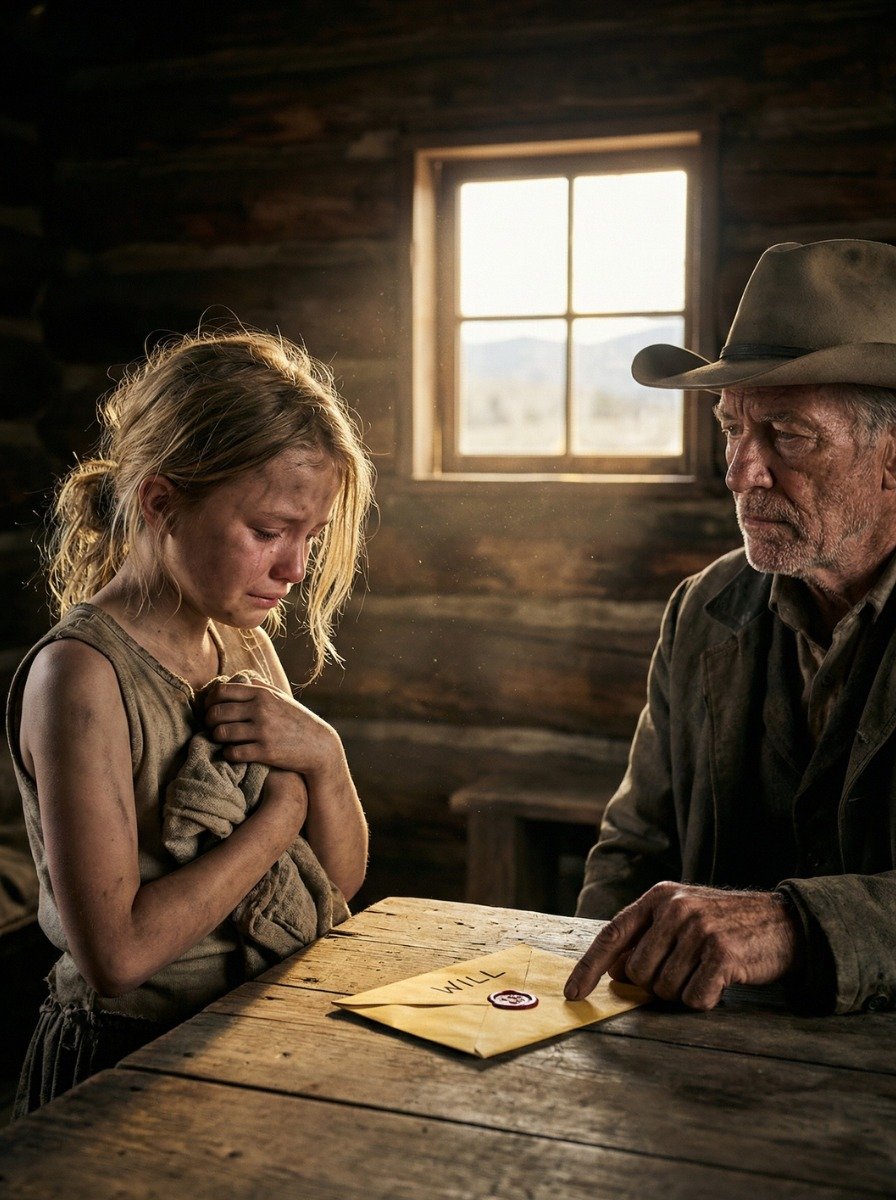
They did not soften it with excuses, nor did they bother to disguise what they were doing as concern or necessity, because to them I had never been a daughter or even a responsibility, but a weight they were tired of carrying, and when the man stood in the doorway with a leather wallet in his hand, they looked relieved in a way that still makes my chest tighten years later.
My name is Olivia Serrano, and I was seventeen years old when I learned that some people can sell a human being without flinching, provided they convince themselves that the person was never theirs to begin with.
I grew up in a stretch of rural Arizona where the desert swallowed sound and secrets alike, where houses stood far apart and neighbors learned early that asking questions only brought trouble, and inside our small, sun cracked home I learned how to move quietly enough to avoid provoking anger that never needed a real reason.
The man I was told to call my father, Miguel Serrano, believed silence was obedience and obedience was owed, and when he drank he liked to remind me of both, while the woman called my mother, Ruth, preferred a slower cruelty, one delivered through words that sank deep and stayed there long after the sound faded.
“You should be grateful we took you in,” she would say while watching me scrub the counter again and again, her eyes sharp with something that was never love. “Some girls get much worse.”
I believed her for a long time, because when pain is all you know, comparison feels like hope.
I learned to disappear into chores and books borrowed from the county library, stories about places where names mattered and parents protected instead of punished, and I learned not to imagine too hard because disappointment hurt worse than bruises.
The day everything changed came wrapped in heat and dust, one of those afternoons where the air feels heavy enough to press you into the ground, and I was on my knees washing the floor when the knock came, deliberate and confident, nothing like the hesitant taps of neighbors.
Miguel opened the door, and a tall man stood there, his posture straight despite the years etched into his face, his clothes simple but well kept, his eyes observant in a way that made me feel exposed even from the other room.
“I came as agreed,” the man said calmly, his voice steady, almost formal.
Ruth stepped forward too quickly, her smile sharp at the edges as she replied, “She is not easy, but she is strong enough to work, and you said you would pay today.”
The man nodded and replied, “I said I would make sure she was taken care of, and I intend to do exactly that.”
Money appeared, counted with care, and the sound of bills sliding against each other felt louder than it should have, because it was the sound of my life being reduced to a transaction, and when Miguel turned toward me and said, “Pack your things and do not make this harder than it needs to be,” I understood that this was not a negotiation I could refuse.
The drive away from that house felt unreal, the desert stretching endlessly as I sat stiffly in the passenger seat, clutching a bag that held everything I owned, while my thoughts spiraled through fear and disbelief.
After a long silence, the man finally spoke. “You do not need to be afraid of me,” he said gently, as if he had sensed my thoughts. “My name is Thomas Keane, and I did not bring you here to harm you.”
I did not answer, because trust was not something I knew how to offer, but when we arrived at his property, a wide ranch bordered by open land and low hills, clean and orderly in a way that surprised me, confusion replaced fear.
Inside the house, everything felt lived in rather than empty, and when Thomas set two mugs of tea on the table and said, “Sit with me, please, there are things you deserve to hear,” something in his tone made it impossible to refuse.
He slid a thick folder across the table, his hands steady as he added, “What I am about to tell you will change everything you believe about yourself, and I need you to listen carefully.”
The documents inside told a story that did not match my life, one of a baby placed with caretakers after a tragic accident, of trust betrayed and funds misused, and when I looked up, my voice shaking as I asked, “Are you saying they were never my parents,” Thomas met my gaze and answered, “I am saying they were paid to protect you and instead chose greed.”
My real name had been hidden.
My identity buried.
My inheritance stolen.
“You were born Evelyn Moore, the daughter of Patrick Moore and Rachel Moore,” Thomas explained, his voice heavy with emotion. “They were close friends of mine, and before they died, they asked me to watch over you if anything ever happened.”
I could barely breathe as he continued, “They trusted the wrong people, and by the time I uncovered the truth, you were already seventeen, but I promised myself I would not let another day pass without giving you your life back.”
I cried then, not loudly, not dramatically, but with a quiet release that felt like years of pressure lifting all at once, and when I whispered, “So I was not unwanted,” Thomas replied immediately, “You were loved beyond measure, and what they did to you does not define your worth.”
The months that followed were filled with lawyers, hearings, and long conversations that rebuilt my past piece by piece, and when Miguel and Ruth were arrested for fraud and abuse, they shouted accusations instead of apologies, but their voices no longer held power over me.
One day, as we sat on the porch watching the sun dip below the horizon, I asked Thomas, “Why did you wait so long,” and he answered honestly, “Because sometimes truth hides well, and sometimes justice takes time, but it should never be denied once found.”
Today, the land where I once learned to make myself small is home to a shelter for children who need safety and dignity, and when people ask me how I survived, I tell them that survival was never the point.
I was not sold to be broken. I was sold because someone wanted to erase me. And they failed. Because I learned my name. I learned my value. And I learned that even after seventeen years of darkness, a life can still be reclaimed.
Website Disclaimer
The information provided on this website is for general informational and educational purposes only. While we strive to ensure that all content is accurate and up to date, we make no guarantees regarding the completeness, reliability, or accuracy of any information published.
The views and opinions expressed in articles belong to their respective authors and do not necessarily reflect the views of this website. Any action you take based on the information found on this website is strictly at your own risk. We will not be liable for any losses, damages, or inconveniences arising from the use of our content.
Some articles may contain opinions, third-party information, or external links. We do not endorse or guarantee the accuracy of content on external websites and are not responsible for their practices or policies.
All content on this website is provided in good faith and is intended for informational purposes only. Readers are encouraged to verify information independently and seek professional advice where appropriate.