Christmas had always smelled like sage and citrus in my house—Maria’s hands rubbing zest into turkey skin while Michael banged cookie cutters on the counter. Years later I caught that same scent drifting from my son’s front door and I stupidly thought it was an invitation. Instead it was a polite eviction dressed in pine needles and cashmere. One sentence—“Dad, you won’t be able to spend Christmas here”—landed colder than the December air on my face. He said it softly, eyes glued to the marble coffee table I had carried up those steps when their credit cards were maxed and his job was a memory. My fingerprints were on every polished surface, but apparently my presence was the stain they couldn’t tolerate.
I didn’t argue. I’ve spent a lifetime fixing things—soles, heels, broken budgets—so I know when something is past repair. I simply stood, traced the crown molding I installed during a three-day weekend of splinters and swearing, and walked out. The door clicked behind me like the final snap of a suitcase. In the truck I sat without starting the engine and watched the colored lights blink across the street where other people’s grandchildren pressed noses to windows. My own grandkids were inside the house I helped buy, already rehearsing a celebration that had no seat for me. The silence in the cab was so complete I could hear my pulse asking what forty years of fatherhood had earned me beyond a closed door and a second mortgage.
The drive home became a tour of my own generosity. Fifth Street—where I refinanced so they could keep the house when jobs vanished. Lincoln Avenue—where I took a second mortgage so Isabella could replace “unsophisticated” furniture with pieces too delicate for actual living. Each turn was a receipt I couldn’t return. By the time I pulled into my cracked driveway the math was merciless: one hundred and forty thousand dollars over five years, every tamale-filled Sunday repaid with a single phrase about tradition and atmosphere. Maria’s photo on the mantel smiled the same gentle smile she wore when we were young and broke together, back when love was enough seasoning for any table.
Inside, the house felt like a hollow drum—warm walls, cold center. The phone rang before I could hang my coat. Isabella’s voice floated over shopping-mall noise, syrupy and rehearsed. She spoke of “intellectual conversation” and “expectations,” of spices and music her educated parents found distasteful. When she said the word class I felt every callus on my hands rise in protest. I reminded her of the tamales she once claimed tasted like childhood, of the grandmother she said would have approved. The line went quiet except for the rustle of bags full of presents bought with money I no longer planned to provide. I hung up before she could drag Maria’s memory through another apology.
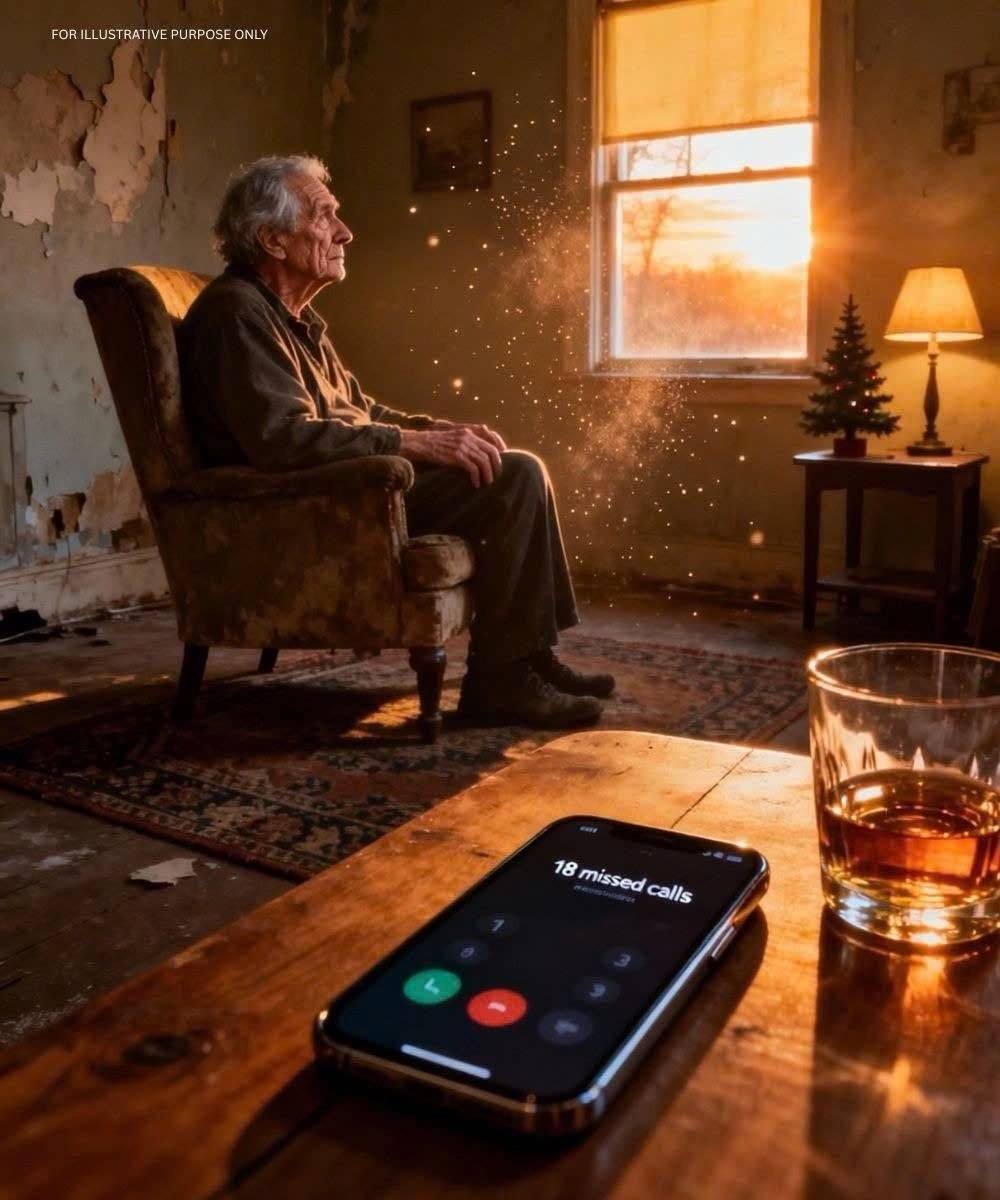
I opened the folder I’d avoided for months—bank statements, payment histories, proof of my own foolishness. One phone call ended the bleeding: effective immediately, no more automatic transfers, no more safety net woven from my retirement. The silence that followed felt like the first deep breath after a long illness. That night I burned five years of paperwork in the fireplace, watching numbers curl into black lace, sipping cheap whiskey from a Christmas mug Maria bought at a gas station twenty years ago. I toasted the empty room: “Merry Christmas to the fool who finally learned when to stop giving.” For the first time in half a decade I slept without dreaming of bills I couldn’t pay and doors I couldn’t open.
I don’t know yet what tomorrow will bring—maybe apologies, maybe more silence—but I know the crack in my driveway no longer feels like failure. It feels like a line drawn between what I will carry and what I will finally set down. Next year turkey will roast in my own oven, sage and citrus rising through rooms that hold no obligation but love. If Michael knocks, he will find a table big enough for anyone who chooses to sit, but small enough that no one gets lost. And if he doesn’t, the sage will still taste like Maria, the citrus like memory, and I will raise a glass to the woman who taught me that generosity begins at home—with myself first—and spreads outward only when the door is opened from the inside.
Website Disclaimer
The information provided on this website is for general informational and educational purposes only. While we strive to ensure that all content is accurate and up to date, we make no guarantees regarding the completeness, reliability, or accuracy of any information published.
The views and opinions expressed in articles belong to their respective authors and do not necessarily reflect the views of this website. Any action you take based on the information found on this website is strictly at your own risk. We will not be liable for any losses, damages, or inconveniences arising from the use of our content.
Some articles may contain opinions, third-party information, or external links. We do not endorse or guarantee the accuracy of content on external websites and are not responsible for their practices or policies.
All content on this website is provided in good faith and is intended for informational purposes only. Readers are encouraged to verify information independently and seek professional advice where appropriate.