I buried my brother 42 years ago. His name was Thomas. Tommy, we called him. He was 19 when the Greyhound bus he was on went off the Kokhala Highway during a January snowstorm in 1983. They told me 17 passengers died that night. Tommy was one of them. I identified his body at the morg in Hope, British Columbia.
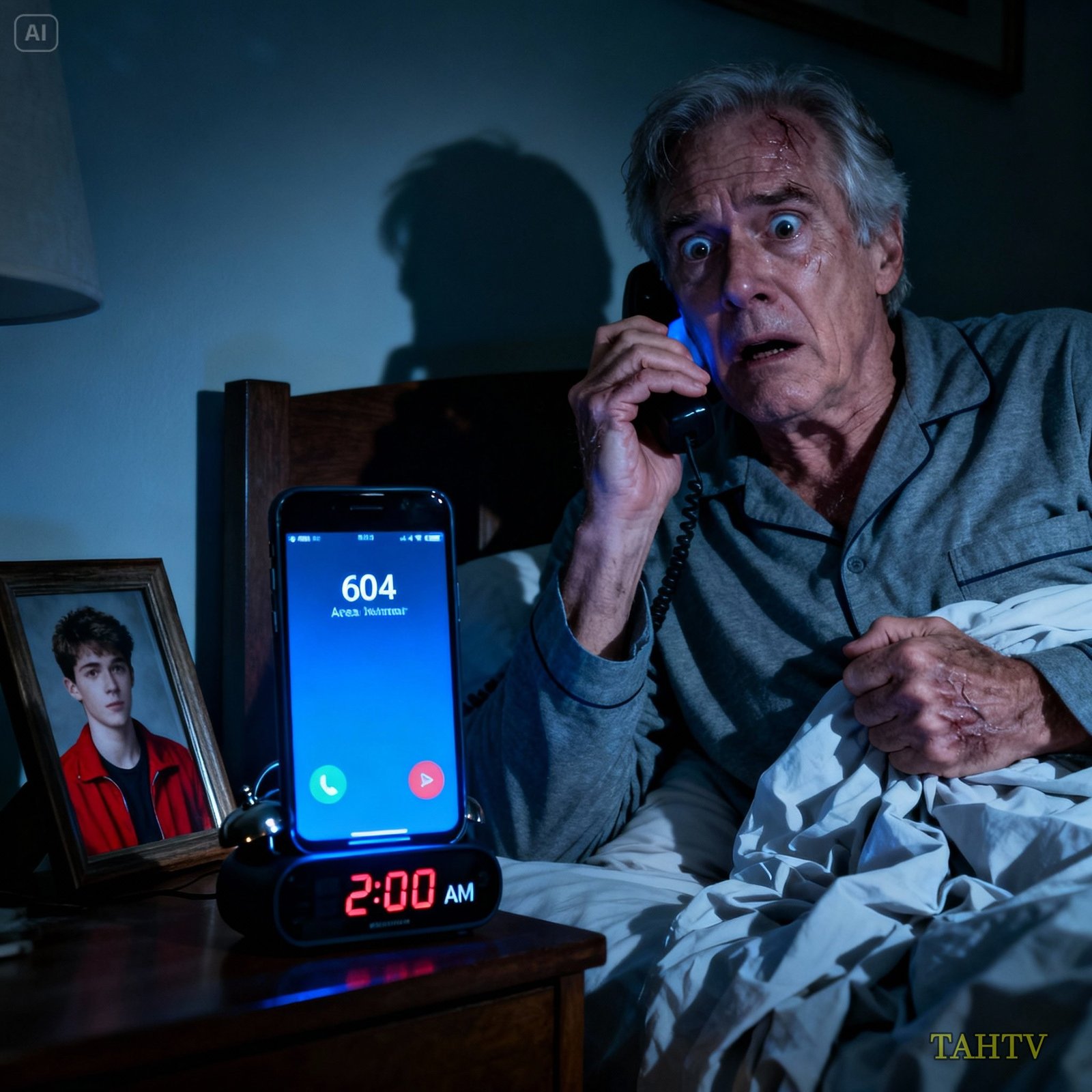
I was 23 years old and I had to tell our mother that her youngest son was gone. Last Tuesday, my phone rang at 2:00 in the morning. The caller ID showed a number I didn’t recognize, but the area code was 604, Vancouver. I almost didn’t answer. At 65, you learned that nothing good comes from calls at that hour, but something made me reach for it.
Maybe it was the same instinct that used to wake me when Tommy had nightmares as a kid. I answered. A voice said, “David? Is this David?” I sat up in bed, my heart suddenly pounding against my ribs. The voice was, uncertain, like someone who hadn’t spoken in a very long time. But underneath that roughness, there was something that made my blood run cold.
“Who is this?” I asked. There was breathing on the other end. Heavy, labored. “It’s me,” the voice said. “It’s Tommy.” I dropped the phone. My hands were shaking so badly I could barely pick it up again. When I did, the line was still open. I could hear him breathing. “This isn’t funny,” I said, my voice cracking. “Whoever you are.
This is sick. My brother died 42 years ago.” “I know,” the voice said. “I know how long it’s been. I just I just figured out who I am. I found something. A newspaper clipping about the bus crash.” And there’s a picture of me, but the name under it says Thomas Carr. That’s me, isn’t it? I’m Thomas Carr. I couldn’t breathe. The room was spinning.
Where are you? I managed to say. I don’t I don’t really know. A place called the downtown east side. Someone told me that’s what it’s called. I’ve been here a long time. I think I live in a shelter on East Hastings Street. But I don’t remember. I don’t remember how I got here.
I don’t remember anything before about 15 years ago. Just waking up in a hospital and they said I’d been found on the street and I didn’t have any ID and I couldn’t tell them my name. My mind was racing. This couldn’t be real. This had to be some kind of scam. Someone who’d found Tommy’s name somewhere and decided to torture me with it.
What do you remember? I asked, testing him. Nothing clear, just feelings. Sometimes I dream about snow, about being cold, about people screaming. And sometimes I dream about a house with a blue door. And someone someone used to make pancakes with blueberries. Every Sunday I felt the tears start then, hot and sudden, because I remembered that house.
I remembered that blue door. And I remembered mom making those pancakes every Sunday morning without fail. And Tommy always ate twice as many as anyone else. “What do you look like?” I asked, my voice barely a whisper. “Old,” he said. And there was something like sadness in his voice. “Really old. My face is I don’t know how to describe it.
Weathered, I guess. I’ve lived rough for a long time, but I found this picture in the newspaper from the accident. And even though it’s 42 years old, I can see it. I can see myself in that face. We have the same eyes. Tommy had a scar. I said on his left forearm from when he fell off his bike when he was seven.
12 stitches. There was a long pause. Then I have a scar on my left forearm. It’s old. Really old. I never knew where it came from. I was crying now. Really crying in a way I hadn’t cried since the day we buried him. Give me your address, I said. I’m coming to get you. I don’t think you should,” he said quietly.
“I don’t think I don’t think I’m the person you remember. I don’t remember being him. I’m just I’m just someone who’s been living on the streets for longer than I can recall. I probably smell bad. I probably look scary. I just wanted to call because I thought I thought someone should know that maybe I didn’t die in that crash.
That maybe there was a mistake. Tell me where you are,” I said firmly. “Right now.” He gave me the address of a shelter on East Hastings. I wrote it down with shaking hands. It was a 7-hour drive from Colona to Vancouver. Longer if the roads were bad. I looked at the clock. 2:15 in the morning. Stay there, I said. Don’t go anywhere.
I’m leaving right now. I’ll be there by noon at the latest. Do you understand? Don’t leave. Okay, he said softly. Okay, David, I’ll wait. The line went dead. I sat there in the darkness of my bedroom for maybe 30 seconds, trying to process what had just happened. Then I was moving, pulling on clothes, grabbing my wallet and keys.
My wife Sarah stirred in bed. “David, what’s wrong? I have to go to Vancouver,” I said, and my voice sounded strange, disconnected. “Now at 2:00 in the morning, David, what’s happened?” I looked at her. This woman I’d been married to for 38 years, and I didn’t know how to say it. How do you tell someone that the brother you buriedfour decades ago just called you on the phone? I’ll explain later, I said.
I have to go. I’m sorry. I was out the door before she could ask any more questions. The drive to Vancouver was the longest 7 hours of my life. I kept the radio off because I couldn’t stand the noise. My mind was spinning with possibilities, with impossibilities. Part of me was convinced this was a cruel hoax, that I’d get there and find some con artist who’d somehow learned details about Tommy’s life.
But another part of me, the part that had never fully accepted that my little brother was gone, was screaming that it was real. I thought about that day in the morg. I was 23 years old, barely more than a kid myself, and they’d pulled back the sheet to show me a face that was battered and swollen from the crash. The body had been in the cold for 12 hours before they recovered it from the wreckage.
There was a gash across the forehead, bruising everywhere. But I’d looked at the shape of the face, the color of the hair, the build of the body, and I’d said, “Yes, yes, that’s my brother. That’s Thomas Carr.” What if I’d been wrong? What if in my shock and grief, I’d identified the wrong body? The possibility made me feel sick? Because if that was true, then Tommy had been alive all this time.
Alive and suffering, alone, not knowing who he was. While I’d moved on with my life, while I’d married Sarah, had kids, built a career, celebrated birthdays and Christmases and anniversaries. While mom had died 10 years ago, still grieving for her youngest son, I pressed harder on the accelerator.
I reached Vancouver at 11:30 in the morning. The downtown east side was exactly as bad as I’d heard, maybe worse. Boarded up buildings, people slumped in doorways, needles on the sidewalk. This was where my brother had been living. I found the shelter on East Hastings. It was a low, gray building that looked like it had been there forever.
The front door was unlocked. Inside, it smelled like industrial cleaner trying and failing to mask the scent of too many unwashed bodies in too small a space. A woman sat behind a desk near the entrance. She looked up as I came in. Can I help you? I’m looking for someone, I said. His name is He might not remember his name, but he called me this morning.
He said he’s been staying here. He would have asked to use a phone around 2:00 a.m. She studied me for a moment, then nodded slowly. Tommy. Yeah, I remember. He was pretty worked up. Asked if he could use the phone. Said it was an emergency. Sweet guy. Tommy been coming here on and off for about 8 years.
Keeps to himself mostly. Is he here now? Check the common room. Through there. She pointed to a door on the left. I walked toward it, my heart hammering so hard I thought I might pass out. The common room was a large space with mismatched chairs and tables. a television playing quietly in one corner.
There were maybe a dozen people scattered around. Most of them looked up as I entered, their eyes wary. And then I saw him. He was sitting alone at a table near the window, his back to me. I could see gray hair, longer than it should be, pulled back in a ponytail. He wore a flannel shirt that had seen better days, and his shoulders were hunched like he was trying to make himself smaller.
I walked toward him slowly. My legs felt like they didn’t quite work right. Tommy, I said. He turned around. The face that looked at me was nothing like the face I remembered. This man was weathered and worn with deep lines around his eyes and mouth. His skin was the kind of brown that comes from years of living outside. There was a scar across his left cheek that hadn’t been there before.
He looked at least 70, not 61. But the eyes, God, the eyes were the same. brown with flexcks of gold, exactly like our father’s eyes, exactly like Tommy’s eyes. “David,” he said, and his voice cracked. I couldn’t speak. I just stared at him. This man who might be my brother, this ghost from 42 years ago. He stood up slowly, like his joints hurt.
He was thinner than Tommy had been and shorter somehow, though that might just have been the way he held himself. But when he looked at me, there was something in his expression that made my breath catch. “You came,” he said. “I wasn’t sure you would.” “Show me your arm,” I said. My voice came out harsh, demanding. “The left one.
” He hesitated, then rolled up his sleeve. There, running along his forearm, was a scar, old and faded, but unmistakable, about 4 in long, right where Tommy’s scar had been. I felt my knees go weak. I reached out and grabbed the edge of the table to steady myself. I think I need to sit down, I said.
He pulled out a chair for me and I collapsed into it. He sat back down across from me, watching me carefully like I might bolt at any moment. Tell me about the bus crash, I said. Tell me what you remember. I don’t remember the crash itself, he said slowly. But I have nightmares. Always the same. I’m on a bus and it’s snowing.
And the driver is trying to slow down, but we’re sliding. And then people are screaming and it’s so cold. So cold I think I might die from it and then nothing. Just darkness for a long time. He rubbed his face with both hands. The next thing I remember clearly is waking up in a hospital. A nurse told me I’d been brought in from the streets, that I’d been unconscious.
They said I’d been beaten, that someone had robbed me. But I didn’t remember that either. I couldn’t remember anything. Not my name, not where I was from, nothing. They kept me for 3 days, ran tests, but they couldn’t find anything physically wrong with me beyond some old injuries. Head trauma, they said. Possibly from years ago. What year was this? I asked.
2010, he said. February, I think. I didn’t even know what year it was. I had to ask. My mind was racing. 2010. That was 15 years after the crash. What had happened in those 15 years? Where had Tommy been? And before that, I pressed. You really don’t remember anything? Sometimes I get flashes, he said.
Little pieces that don’t make sense. I remember being cold a lot. Living rough somewhere. Mountains maybe. And I remember I think I remember working manual labor. construction, maybe getting paid in cash, but it’s all foggy, like trying to remember a dream. He looked down at his hands, and I noticed they were scarred and calloused, the hands of someone who’d done hard physical work.
For a long time, I didn’t even try to remember, he said quietly. I just survived dayto-day. Found shelters when I could, slept outside when I couldn’t. There are gaps in my memory, even from the last 15 years. Sometimes I’d realize weeks had passed and I couldn’t account for them. The doctors I’ve seen, the ones at the free clinics, they said I might have some kind of dissociative disorder, probably from trauma.
When did you start trying to remember? I asked. About 6 months ago, he said. I met this woman at the shelter, a volunteer. She was going through boxes of old newspapers, sorting them for recycling, and she showed me one from January 1,983. said, “Can you believe this was 40 years ago?” And something about that date made me feel, I don’t know, strange, like it meant something.
He reached into his pocket and pulled out a carefully folded piece of newspaper, yellowed with age. He unfolded it gently, like it might disintegrate in his hands and pushed it across the table to me. It was a front page article about the bus crash, 17 dead in highway disaster, the headline read.
And there in a small photo grid of the victims was Tommy’s face, young, smiling, a high school graduation photo that mom had given to the newspaper. I looked at that picture for a long time, he said, and something clicked. I knew that face, not from a mirror. I don’t look like that anymore, but from somewhere deep inside and the name underneath, Thomas Carr.
I kept saying it over and over, Thomas. Tommy. and it felt right. It felt like my name. I stared at the newspaper clipping at my brother’s young face smiling back at me. I started looking for more information, he continued. There’s a library near here. The librarian helped me search old records. I found the obituary.
I found the list of survivors family members left behind. Your name was there, David Carr, brother. And there was an address in Colona. It took me 3 months to work up the courage to call. I didn’t know if you’d even still be there. I didn’t know if you’d believe me. I’m not sure I do believe you, I said.
And it came out harsher than I meant it to. I’m not sure I can believe you because if you’re Tommy, then I identified the wrong body. I told our mother the wrong son was dead. Do you understand what that means? He flinched, but he nodded. I’m sorry. I’m so sorry. I know this is I can’t imagine what this is like for you.
Mom’s dead, I said, and I heard my voice break. She died 10 years ago. She spent 32 years thinking you were gone. She never got over it. And if you’re really Tommy, then she died not knowing you were alive. The tears were streaming down my face now. And I didn’t care who saw the man across from me. Tommy, maybe Tommy was crying, too.
Silent tears running down his weathered face. I’m sorry, he whispered. I’m so sorry. We sat there in that shelter common room, two old men crying while people walked past and pretended not to notice. Finally, I wiped my face with my sleeve and looked at him. Really? Looked at him. We need to do a DNA test, I said. That’s the only way to know for sure.
He nodded. Okay, yes, I want to know, too. I need to know. I pulled out my phone and started searching. There was a place in downtown Vancouver that did same day DNA testing. Private lab, expensive, but they could have results in 48 hours. I called them and made an appointment for 3:00 that afternoon.
“Come on,” I said, standing up. “Let’s go get this done.” He stood too, moving stiffly. As we walked out of the shelter together, I realized how much shorter he was than menow. Tommy had been almost my height when he died, or when I thought he died. This man was at least 3 in shorter, but then years of malnutrition and living rough could do that to a person.
We drove to the lab in silence. I kept glancing at him in the passenger seat, trying to see my little brother in this weathered stranger. Sometimes I could see at the shape of his ear, the way he rubbed his thumb against his fingers when he was nervous, a habit Tommy had always had.
Other times, he looked like a complete stranger. The DNA test was simple. cheek swabs for both of us, paperwork, payment. The lab technician said they’d call me with the results in 48 hours. As we left the lab, I realized I hadn’t thought about what came next. “Where are you staying tonight?” I asked him. “The shelter, I guess.
” “Same place.” I looked at him at this man who might be my brother, standing on the street corner in clothes that had been worn too many times and shoes that were falling apart. And I couldn’t do it. I couldn’t just leave him there. “Come on,” I said. I’m getting a hotel room. You’re staying with me.
You don’t have to do that. I know. Come on. I found a hotel near Stanley Park. Got a room with two beds. The desk clerk gave us a look me in my clean clothes and him looking like he’d been living rough, but I didn’t care. I paid cash and got the key. In the room, I ordered pizza while he took a shower.
He was in there for almost 45 minutes. When he came out, his hair was wet and clean, sllicked back from his face, and he’d shaved off a patchy beard. And suddenly, I could see it more clearly. The shape of his face, the set of his jaw, Tommy’s jaw. We ate pizza in near silence, the television playing quietly in the background.
Finally, he spoke. “Thank you,” he said. “For this, for not just, for believing me enough to try.” “I haven’t decided what I believe yet,” I said. But I needed to know one way or another. He nodded. Can I ask you something? What? What was I like before? When I was Tommy? The question hit me like a physical blow.
I sat down my pizza and leaned back against the headboard. You were good, I said after a moment. Really good. Kind, you know. You were the kid who always brought home stray cats, who cried when you saw roadkill. You wanted to be a veterinarian. You were going to college in Vancouver that year in September. You were so excited about it.
I could see tears forming in his eyes again. You were funny, I continued, always making mom laugh, even when she was having a bad day. And you were brave. When dad left when you were 12, you told me we’d be okay. You said we’d take care of mom together, and we did. I wish I could remember, he whispered. I wish I could remember being that person.
Maybe you will, I said. Maybe when you know for sure who you are, it’ll come back. But I wasn’t sure I believed that. That night, I lay awake in the hotel bed, listening to him breathe in the bed next to mine. Steady, deep breaths. The breathing of someone who’d finally found a safe place to sleep.
I thought about calling Sarah, but I didn’t know what to say. How do you explain this on the phone? So, I sent her a text instead. I’m okay. I’ll explain everything when I get home. I love you, she wrote back immediately. I love you, too. Be safe. The next day, we didn’t talk much. We got breakfast at a diner.
I watched him eat like he hadn’t had a real meal in months, which he probably hadn’t. And then we walked around Stanley Park. It seemed important somehow to not just sit in the hotel room waiting for the phone to ring. As we walked, he told me more about his life on the streets, the shelters he’d stayed in, the people he’d met, the winters that almost killed him.
He told me about finding small jobs here and there, day labor that paid cash, about the times he’d been robbed, beaten, thrown in jail for loitering, about the constant fog in his mind, the feeling of being lost in his own life. I always felt like I was waiting for something, he said as we stood looking out at the water, like there was something I was supposed to do, somewhere I was supposed to be, but I could never remember what it was.
The phone rang at 2:30 on Thursday afternoon. We were back in the hotel room. I’d checked out planning to start the drive home, but I delayed leaving until we got the call. I answered on the second ring. Hello, Mr. Carr. This is Sarah Chen from the Vancouver DNA Lab. I’m calling with your results. My hand was shaking so badly I almost dropped the phone.
The man sitting on the bed across from me, Tommy. Maybe Tommy was watching me with wide eyes. Yes, I said. Yes, this is David Carr. The results of your DNA comparison test are conclusive. The probability of siblingship between you and the second party is 99.9 to7%. In other words, Mr. Carr, you are biological brothers. The room tilted.
I sat down hard on the bed. You’re certain? I asked, though I knew it was a stupid question. Yes, sir. These resultsare definitive. Would you like me to email you the full report? Yes, please. I gave her my email address, thanked her, and hung up. I looked across at my brother. My brother who I’d buried 42 years ago.
My brother who’d been alive this whole time. It’s you, I said. You’re really Tommy. He let out a sound that was half laugh, half sobb. I’m Tommy, he repeated like he was trying to believe it himself. I’m Thomas Carr. And then we were both crying again. And this time I crossed the space between us and pulled him into a hug.
He felt so thin, so fragile in my arms. But he was real. He was alive. We held on to each other for a long time. Finally, I pulled back. We need to figure out what happened. I said, “How you survived the crash? Where you’ve been all this time?” “I know someone who might be able to help.” Tommy said, “There’s a doctor at the free clinic who’s been helping me. Dr.
Patricia Walsh. She specializes in trauma cases. She might have some answers. We went to see Dr. Walsh that afternoon. She was a woman in her 50s with kind eyes and the patient manner of someone who’d heard every story there was to hear. I explained everything. The crash, the identification, the phone call, the DNA test.
She listened without interrupting, taking notes. “I’d like to examine you if that’s all right, Tommy,” she said when I finished. He nodded. She had him lie on the examination table and she conducted a thorough physical exam. She paid particular attention to old scars and healed fractures. She used a small light to check his eyes, tested his reflexes, felt along his skull.
You have extensive evidence of old trauma, she said when she was done. Multiple healed fractures, ribs, left arm, right ankle, significant scarring on your torso and back. And there’s a depression in your skull. here or she touched the back of his head gently consistent with a severe impact injury.
From the bus crash? I asked possibly. But here’s what I think happened based on what you’ve told me and what I’m seeing. She pulled up a chair and sat down, her expression serious. I think Tommy did survive the initial crash, but he was badly injured. Head trauma, possibly unconscious in the chaos and the snow, in the darkness.
He was likely thrown from the bus. The other passengers who survived said it was complete chaos, that it was hard to see anything. I think Tommy ended up away from the main wreckage, possibly in the snow. She paused, choosing her words carefully. The body you identified, David, I think it was another passenger.
Someone of similar build and age. In the state the bodies were in after the crash, after being in the cold with the facial trauma, it would have been easy to make a mistake, especially for someone who was grieving and in shock. I felt sick. She was right. I knew she was right. So, what happened to Tommy? I asked. I think he was found by someone.
Maybe a trucker passing by. Maybe someone from one of the small towns along that highway. someone who didn’t take him to a hospital either because they were involved in something illegal themselves or because they saw an opportunity. A young man with no memory, no ID, easy to exploit. “You think someone kept him?” I asked, my voice hollow.
“I think someone used him,” she said quietly. “For labor, most likely. There are operations in remote areas of BC. Illegal logging, drug operations, off the books, construction. They use workers who won’t ask questions, won’t go to the authorities, workers who don’t even know who they are. Tommy was staring at the floor, his hands clenched together.
That would explain the gaps in your memory, Dr. Walsh continued. Years of untreated head trauma, possible additional injuries, malnutrition, exposure to drugs or alcohol as a coping mechanism. Your brain was trying to protect itself by shutting down. The dissociative episodes you’ve described, those are classic trauma responses. So somewhere around 2010, I said slowly.
He got away or they let him go or they thought he was more trouble than he was worth. Dr. Walsh said 15 years of hard labor would age anyone significantly. If he was starting to have medical problems, memory issues, they might have just dumped him in Vancouver. And then he lived on the streets for another 15 years. I said while I was in Colona, while I could have been looking for him.
You couldn’t have known, Tommy said quietly. You thought I was dead. We all thought I was dead. Your mother, Dr. Walsh said to me, “She’s passed.” I nodded, not trusting my voice. “I’m sorry, but David, you need to understand something. The man sitting here, he’s your brother genetically, but he’s not the same person he was at 19.
He’s lived a life you can’t even imagine. He’s survived things that would have killed most people. He’s Tommy, but he’s also someone new, someone who’s been forged by 42 years of trauma and survival. I looked at my brother, really looked at him at the gray in his hair and the lines on his face and the weariness inhis eyes. She was right.
This wasn’t the boy I’d said goodbye to in 1983. This was a survivor. What do we do now? I asked. That’s up to you, Dr. Walsh said. But I’d recommend some intensive therapy for Tommy. Processing this kind of trauma, rebuilding identity. It’s a long journey, and you both might benefit from family therapy as well, learning how to be brothers again after all this time.
We left the clinic in silence. It was getting dark, and the streets of the downtown east side were coming alive with their nighttime population. “Come home with me,” I said as we stood on the sidewalk. “Come to Colona. Stay with Sarah and me. We have a spare room. We can figure this out together. He looked at me and I could see the fear in his eyes.
I don’t know how to be someone’s brother, he said. I don’t know how to be part of a family. I’ve been alone for so long. So, we’ll learn, I said. Both of us. We’ll figure it out. He was quiet for a long moment. Then he nodded slowly. Okay, he said. Okay, David. I’ll try. We drove back to Colona the next morning.
The 7-hour drive felt different this time. I kept glancing over at him in the passenger seat. This brother who’d come back from the dead. We didn’t talk much, but it was a comfortable silence. When we pulled into my driveway, Sarah was waiting on the porch. I’d called her the night before, explained everything. She’d cried on the phone, told me to bring him home.
She came down the steps as we got out of the car, and she looked at Tommy for a long moment. Then she opened her arms. Welcome home, Tommy,” she said. He hesitated, then let her hug him. I saw his shoulders shake, and I knew he was crying again. That was three months ago. It hasn’t been easy. Tommy has nightmares almost every night.
He struggles with crowds, with loud noises, with being inside for too long. He sees a therapist twice a week, and we’re working through decades of trauma, one session at a time. But he’s remembering things. Small things at first. the taste of mom’s blueberry pancakes. The name of the dog we had when we were kids.
The way the house used to smell in the summer. Last week he remembered a Christmas when he was eight. Remembered the bike I’d saved up to buy him. I’m starting to feel like him. He told me yesterday as we sat on the back deck watching the sun set over the lake. Like Tommy, like I’m not just someone who has his DNA.
Like I’m actually becoming him again. or maybe becoming someone new who includes him. Does that make sense? Yeah, I said. It makes sense. My kids have met him, my two daughters and my son, the nieces and nephew he never knew he had. They’re cautious, curious, kind. My grandson, who’s five, has decided that Tommy is his best friend.
Tommy smiles more when the kids around. We’ve talked about what to do about the grave. There’s a headstone with Tommy’s name on it in the cemetery in Colona. We’ve discussed having it removed or changed or leaving it there as a memorial to the person Tommy was before. We haven’t decided yet. There’s no rush.
Last week, Tommy got a part-time job at a garden center. He’s good with plants. He’s discovered they don’t ask questions. Don’t judge. He comes home with dirt under his fingernails and stories about customers. He’s learning to be a person again. And I’m learning, too. I’m learning that grief doesn’t work the way you think it does.
I spent 42 years grieving my brother and now he’s here, but I still feel the loss of who he was. I’m grieving for the 19-year-old who got on that bus. I’m grieving for the life he should have had. But I’m also grateful because he’s alive. Against all odds, through everything, he survived. And maybe that’s what matters most.
He asked me the other day if I ever blamed myself for identifying the wrong body. Every day, I told him honestly. Every single day since you called me. Don’t, he said. You were 23. You just lost your brother. You did the best you could. I should have looked more carefully. If you had, they might never have found me.
I might have died in those mountains, working for whoever took me. At least this way. I’m here. I’m alive. And I have a brother who drove seven hours in the middle of the night because a stranger said his name. He’s right, I suppose. I’m trying to forgive myself. It’s harder than it sounds. Sometimes late at night, I lie awake and think about all the years we lost, all the birthdays and holidays, all the moments we should have shared.
I think about mom and how happy she would have been to know he was alive. That’s the hardest part, knowing she died without knowing. But then I remind myself what Dr. Walsh said, “The past is the past. We can’t change it. All we can do is move forward.” So that’s what we’re doing day by day, moment by moment, learning how to be brothers again.
Or maybe learning how to be brothers for the first time because we’re both different people now. Last night, we sat on the deck after dinner and Tommy looked up at the stars.”Do you think mom knows?” he asked. “Wherever she is, do you think she knows I’m alive?” I think she does, I said. I think she’s been watching over you this whole time, keeping you alive until you could find your way back.
He smiled at that. It’s still a rare thing, his smile. But it’s getting more common. I’m glad you answered the phone, he said. Me too, Tommy. Me too. And I am. Despite everything, the pain, the confusion, the grief that somehow still exists alongside the joy, I’m grateful because my brother came back from the dead. And that’s a miracle I never thought I’d see.
I learned something through all of this. I learned that hope isn’t foolish, even when it seems impossible. I learned that people are more resilient than we give them credit for. I learned that family isn’t just about shared memories. It’s about choosing to show up day after day, even when it’s hard. And I learned that it’s never too late for a second chance. Tommy’s still finding himself.
He may never remember everything. He may always carry the scars of those lost years, but he’s here. He’s alive. He’s home. And that’s enough. That’s more than enough. That’s everything.
Website Disclaimer
The information provided on this website is for general informational and educational purposes only. While we strive to ensure that all content is accurate and up to date, we make no guarantees regarding the completeness, reliability, or accuracy of any information published.
The views and opinions expressed in articles belong to their respective authors and do not necessarily reflect the views of this website. Any action you take based on the information found on this website is strictly at your own risk. We will not be liable for any losses, damages, or inconveniences arising from the use of our content.
Some articles may contain opinions, third-party information, or external links. We do not endorse or guarantee the accuracy of content on external websites and are not responsible for their practices or policies.
All content on this website is provided in good faith and is intended for informational purposes only. Readers are encouraged to verify information independently and seek professional advice where appropriate.