The Intuition of Innocence
Chapter 1: The Art of Perfection
The autumn morning light streaming through the floor-to-ceiling glass windows of the Boston Contemporary Art Museum was exceptionally beautiful, casting long, geometric shadows across the polished concrete floors. It was the kind of light that made dust motes look like gold dust, the kind of light I lived for as a curator. But today, it felt less like illumination and more like a spotlight on my fraying nerves.
I glanced at the slender watch on my wrist. One hour until opening. One hour until the donors, the critics, and the press descended upon us like vultures in tailored suits.
“A little to the left,” I murmured to myself, adjusting the angle of a heavy, abstract expressionist frame. I stepped back, squinting to check the overall balance of the wall. The spacing was mathematically precise, the thematic flow seamless.
“Perfect, Abigail.”
I turned to see Martha, the museum director, approaching with that effortless grace she always commanded. Her silver hair was swept back in a chignon that defied gravity.
“This modern art exhibition wouldn’t have succeeded without your curation,” she said, placing a warm hand on my shoulder. “You have an eye for the soul of a piece, Abby. You always have.”
“Thank you, Martha,” I replied, returning a humble smile, though I could feel the tension radiating from my neck down to my shoulders. “But we still have the press conference ahead. That’s the real performance.”
“You’ll dazzle them,” she assured me before gliding away to terrorize the catering staff.
I retreated to my office, the sanctuary of silence amidst the pre-opening chaos. I checked my cell phone, expecting a text from the caterer or a last-minute demand from an artist. Instead, the screen displayed a missed call from Emily’s school.
My stomach dropped—a sensation familiar to every single mother. That specific frequency of dread that cuts through professional obligations like a hot knife. I quickly dialed back.
“Ms. Morrison?” The school nurse’s voice was kind but clipped. “Emily seems to have developed a slight fever. She’s lethargic and her temperature is climbing. Could you come pick her up?”
I let out a deep sigh, my eyes darting to the schedule pinned to my wall. The press conference. The biggest moment of my career this year.
“I understand,” I said, my voice steady despite the internal collapse. “I’ll come right away.”
When I found Martha near the entrance, I braced myself for disappointment. Instead, she just nodded, her expression softening. “Family comes first, Abigail. Always. I’ll handle the press. Go get that baby girl.”
I expressed my gratitude, grabbed my coat, and hurried out of the museum, leaving the world of perfect, static art for the messy, unpredictable reality of my life.
Six-year-old Emily was curled up small on the cot in the school infirmary. Her golden curls were stuck to her forehead with sweat, and her usually vibrant, inquisitive expression was somewhat listless. She looked so fragile, a tiny bird grounded by illness.
When I entered, she gave a weak smile. “Mommy?”
“It’s okay, Em,” I whispered, brushing the damp hair from her forehead. Her skin was hot, dry like parchment paper. “Mommy’s here. Let’s go home.”
Once in the car, Emily clutched her worn rabbit stuffed animal in the back seat. I adjusted the rearview mirror to look at her, reflecting on the days since my divorce three years ago. James had left saying he “needed more freedom,” a euphemism for finding fatherhood too tedious. Now, he visited Emily once a month, and only when the mood struck him. It was just us against the world, a team of two.
Arriving at our apartment, I tucked Emily into bed, gave her fever medication, and smoothed the duvet over her small shoulders.
“Rest now, sweetie,” I said.
I moved to the kitchen to warm up some soup, balancing my laptop on the counter to check work emails. The clock on the wall showed 3:00 PM. Normally, I would have been standing at a podium right now, answering questions about post-modernism. Instead, I was stirring chicken broth.
The phone rang, shattering the quiet. The screen displayed my mother’s name: Carol.
I hesitated. My relationship with my mother was… complicated. Since she had come into money through her real estate ventures, she had changed. She was brighter, louder, but also more distant.
“Abby! How are you?” Carol’s voice was youthful, bubbling with an energy that felt almost manic.
“Well, I’m okay,” I said, keeping my voice low. “Emily has a fever, so I left work early.”
“Oh, dear. Poor thing,” she said, though she didn’t dwell on it. “But I’m glad I caught you. Actually, I’m having a birthday party next Saturday. A big one. Of course, I want you and Emily to come.”
I bit my lip. It would be the first meeting with her new boyfriend, Victor Harris. Two months ago, my mother had suddenly begun dating this younger man—a “real estate investor”—and had moved with him to a luxurious beach house on the North Shore. I had a vague, shapeless distrust of Victor based on nothing but the speed of their romance, but I couldn’t express it without sounding jealous or controlling.
“Of course, we’ll come, Mom,” I said, forcing enthusiasm into my tone. “If Emily feels better, she’ll be looking forward to seeing Grandma.”
“Wonderful! Victor is dying to meet you both,” Carol gushed. “He’s really a wonderful person, Abby. You’ll see when you meet him. He treats me like a queen.”
“I’m sure he does,” I replied.
After hanging up, I gazed out the window. From our apartment facing the wharf, I could see the evening sea, gray and choppy. Complex emotions swirled in my chest—protective instinct, suspicion, and a deep, aching hope that my mother was actually happy and not just being taken for a ride.
Chapter 2: The Coastal Road
Over the weekend, I searched for a present for my mother between managing museum crises via email and nursing Emily back to health. Finally, in a small boutique in Beacon Hill, I found it: a rare antique brooch, silver filigree with a sapphire center. It was something she had admired in a magazine years ago.
By Friday evening, Emily’s fever had broken, though she was still quiet, her usual boundless energy dampened. I picked her up from daycare, buckled her into the car, and began the drive north along the coastal road.
“What do you think Grandma’s new house is like?” Emily asked from the back seat, her voice small.
“It’s a lovely beach house, apparently,” I said, trying to sound upbeat. “You can see the ocean. And you’ll meet the new uncle.”
“Uncle Victor,” Emily tested the name on her tongue. It sounded heavy.
I hesitated. “Yes. Uncle Victor will be there, too. I’m sure he’s nice.”
Emily didn’t respond. She just silently hugged her rabbit tighter.
As we left the hustle of Boston behind, the scenery shifted. The dense urban sprawl gave way to rocky coastlines and salt marshes. I tapped my fingers to a jazz tune playing on the radio, trying to dissolve the knot of anxiety in my stomach. Carol seemed to be glowing, starting life anew. Why did I find it so hard to just be happy for her? Was I cynical? Or was I observant?
“Mom, I’m hungry,” Emily murmured.
I checked the mirror. She was gazing out the window with a bored, distant expression. “There should be a service area soon. Let’s take a break.”
We stopped at a generic travel plaza. Over sandwiches and orange juice, Emily looked up, her blue eyes serious.
“What kind of person is the uncle?”
I paused, holding my coffee cup halfway to my mouth. “Uncle Victor? Well… I haven’t met him yet either. I’ve only spoken with him on the phone a few times. But Grandma really likes him.”
“Was Grandma lonely?” Emily asked with that piercing, childlike directness that always caught me off guard.
I thought about the last three years. Since my father passed, Carol had been living alone in that big suburban house before selling it. She had money, she had friends, but…
“Maybe she was,” I answered honestly. “But Grandma is a strong person. She doesn’t show her feelings much.”
Back in the car, the landscape began to change again. We were entering the territory of Cape Ann, specifically the upscale resort areas where old money and new money built fortresses against the sea.
“Mom, I can see the ocean,” Emily said.
The blue horizon of the Atlantic stretched out to our right, vast and indifferent. Following my mother’s instructions, I turned off the main coastal highway onto a small, winding side road. We climbed a gentle slope lined with ancient pines. The road narrowed, and grand vacation homes began to appear in the gaps between the trees.
“Wow,” Emily breathed, leaning toward the window.
These weren’t just houses; they were statements. White pillars, wide verandas, modern glass cubes cantilevered over cliffs. It was a world of aggressive wealth. According to the GPS, my mother’s new beach house was located near the tip of the peninsula, a spot that commanded a panoramic view. A property like that would cost millions.
“Mom.” Emily’s tone shifted abruptly.
I glanced back. She was no longer looking at the houses with wonder. She was staring out the window with a rigid intensity.
“This place feels strange,” she whispered.
“What’s wrong, Em?”
“I don’t know.” She pulled the rabbit up to cover her mouth. “It just… feels strange.”
I laughed lightly, trying to dispel the sudden chill in the car. “You’re probably just tired from the long journey. We’re almost there.”
But Emily remained silent. She began fidgeting with the rabbit’s ear, a nervous tic she hadn’t displayed since the divorce.
The GPS announced, One mile to destination. The road became a single lane, winding through dense woods that blocked out the sun. Suddenly, the trees opened up, and we emerged atop a cliff.
There it stood.
It was a massive, three-story white building, stark against the gray sky. Large glass windows reflected the clouds, looking like unblinking eyes. A manicured lawn spread around it, unnatural in its perfection, with wooden stairs leading down to the churning sea below.
I gasped. Had my mother really purchased this? Or was Victor the one with the deed?
I stopped at the iron gate and pressed the intercom.
“Yes? Who is this?” A low, calm male voice.
“Abigail Morrison. Carol Bradley’s daughter.”
“Ah, Abigail. We’ve been expecting you. Please come in.”
With a mechanical whir, the gate swung open.
Chapter 3: The Unseen Threat
I drove into the circular driveway. Several luxury cars were already parked there—black sedans, a silver Porsche. It seemed the “intimate” party was well-attended.
“There are a lot of cars,” Emily said, her voice trembling.
“It’s a party, sweetie. Grandma has lots of friends.”
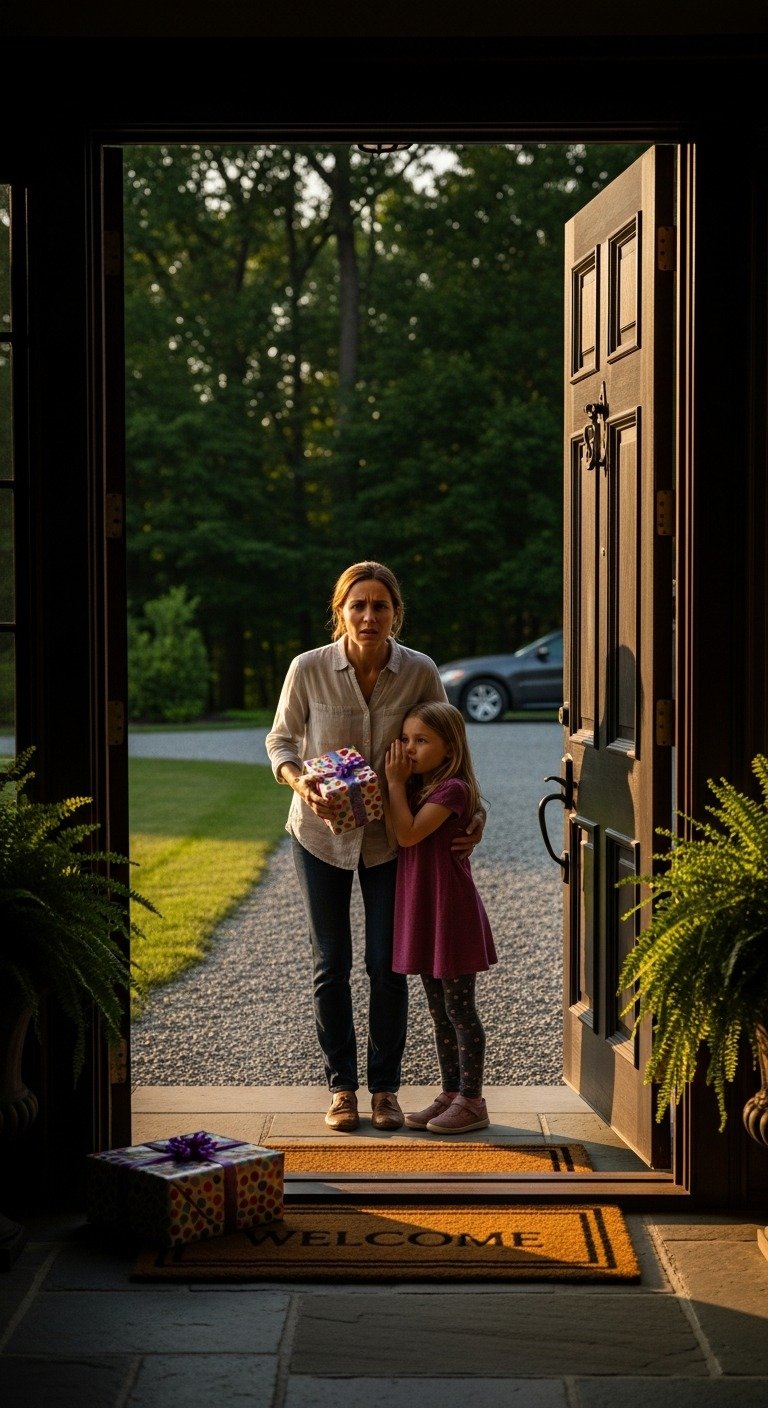
I parked and retrieved the gift package. Emily got out slowly, sticking to my side like a shadow. I reached down and took her hand. It was ice cold and trembling slightly.
“What’s wrong?” I asked, crouching down. “It’s okay. We’ll see Grandma, have some cake, and if you want to leave early, we will.”
Emily didn’t answer. She stared at the stone path leading to the magnificent entrance. Laughter and the clinking of glass drifted from inside. Through the massive windows, I could see silhouettes of people in evening wear.
“Let’s go,” I said, giving her hand a gentle squeeze.
We took two steps, and then Emily stopped dead. She dug her heels into the gravel.
“Mom,” she whispered. “Don’t go in there.”
I frowned, looking down at her. Her face was pale, her eyes wide with sheer panic. “Why? Grandma is waiting.”
She shook her head slowly, tears pooling in her eyes. “Please. Let’s go home.”
I was confused. Emily had an imagination, sure, but this wasn’t play-acting. She was terrified. Her whole body was vibrating with fear.
“Emily, did you see something?” I asked, scanning the windows.
“I can’t say,” she stammered. “But this is a scary place. Bad place.”
Just then, the front door opened.
A man stepped out onto the porch. I knew instinctively it was Victor. He was handsome in a slick, curated way—slim-fitting suit, silver hair gleaming in the sunlight, a posture of ownership. He looked around the garden, his eyes scanning the driveway.
Without thinking—driven by a primitive instinct I didn’t know I possessed—I pulled Emily behind a large ornamental bush.
“Why are we hiding?” Emily whispered.
“I don’t know,” I admitted. My heart was hammering against my ribs. Why was I hiding? I was a rational woman. I was a curator. But looking at Emily’s terror, and seeing the sharp, predatory way Victor scanned the grounds, logic evaporated.
I pulled out my phone and dialed my mother. No answer. I tried again. Nothing.
“That’s strange,” I muttered. “She always answers.”
I looked back at Emily. “Do you really want to leave? Can’t you tell me why?”
Emily looked straight into my eyes, and the fear in her expression solidified into something eerily adult. “Grandma is in danger. Those people… they’re bad people.”
A chill raced down my spine.
“Okay,” I said, making a snap decision. I grabbed a notepad from my purse, scribbled a quick note—Emily isn’t feeling well, heading back, love you—and attached it to the gift.
“Wait here behind the car,” I told Emily.
I walked quickly to the porch, intent on dropping the gift and running. But as I set the box down, the door swung open.
Victor Harris stood there. Up close, his smile was too wide, showing too many teeth.
“Abigail!” he exclaimed, spreading his arms. “Finally. Carol has told me so much about you.”
I stepped back, managing a tight, social smile. “Nice to meet you, Victor. Where is my mother?”
“Carol is upstairs getting ready. She wanted to make a grand entrance.” His eyes were warm, but they didn’t match the cold calculation I saw behind them.
“I see. Actually,” I gestured vaguely toward the driveway, “my daughter isn’t feeling well. The fever came back. I just wanted to drop off the present.”
Victor’s smile faltered. A flicker of genuine irritation crossed his face, sharp and ugly. “That’s a shame. But surely you can come in for a moment? Carol was dying to see you.”
“I really can’t,” I said, backing away.
He took a step forward, placing a hand on my shoulder. His grip was firm—too firm. Dominating. “I prepared a special drink for everyone. A toast. You really must stay.”
“I’m sorry,” I said, twisting out of his grip. “Maybe next time. Tell Mom I’ll call her.”
I turned and walked away. I didn’t run, but I walked fast. I could feel his eyes boring into my back, a physical weight.
I grabbed Emily’s hand and practically threw her into the car.
“Fasten your seatbelt,” I ordered, my voice shaking.
As I started the engine, I looked in the rearview mirror. Another man had joined Victor on the porch. He was younger, rougher-looking. Victor pointed at my car. They weren’t smiling.
“Mom, let’s go quickly,” Emily whimpered.
Just as I shifted gears, Victor broke into a jog, heading toward us. He tapped on the driver’s side window.
“Abigail!” he shouted, muffled by the glass. “Carol wants to talk to you on the phone! Wait!”
Every alarm bell in my head was ringing. Don’t open the window. Don’t stop.
“I’ll call later!” I yelled through the glass, and I floored the accelerator. Gravel sprayed as we spun out of the driveway.
Chapter 4: The Poisoned Toast
I drove like a madwoman until we hit the main road. I kept checking the mirror, expecting the silver Porsche to be on my bumper, but the road behind was empty.
“It’s okay, Emily,” I breathed, my knuckles white on the steering wheel. “We’re safe now.”
“Mom,” Emily whispered. “Those people were going to do something to Grandma.”
“What do you mean?”
“I don’t know. But… they were laughing. In a way that hurt my ears. And Grandma… she felt dark.”
I pulled the car into a scenic overlook and turned to face her. “How do you know that?”
She shrugged helplessly. “I just knew. If we went in that house, we wouldn’t come out.”
My phone rang. The screen said Unknown.
I answered. “Hello?”
“Abigail. What’s going on?” It was Victor. His voice was tight, the charm stripping away. “Carol is very worried.”
“How did you get my number?” I asked, my voice cold.
“Carol gave it to me, of course. Listen, she’s devastated. She’s lying down now, but she’ll be heartbroken when she wakes up.”
“Is she sleeping?” I asked sharply. “You said she was getting ready a minute ago.”
There was a pause. A beat of silence that lasted too long.
“She… felt faint. It’s menopausal symptoms, the doctor says. Look, I prepared a special recipe for her. A health cocktail. Everyone loved it. You should really come back and try it.”
Then, faintly, in the background, I heard another voice. It was muffled, but audible.
…Not everyone came, but the old woman alone is enough. Proceed as planned. The cocktail effect kicks in within thirty minutes…
Victor muttered something harsh away from the receiver, and the background noise cut out.
My blood ran cold.
“Victor,” I said, my voice trembling. “I’m going home.”
“That’s a shame,” he said, and his tone was now ice. “I thought you cared about your mother.”
I hung up.
“Mom,” Emily said, staring at me with wide, terrified eyes. “Did that man give Grandma poison?”
I stared at her. “Why would you say that?”
“I heard the man say ‘cocktail effect’. It sounded like… like a bad potion.”
I scrambled to the passenger side and grabbed the map. My hands were shaking so hard I nearly ripped the paper. “We’re going to the police. Now.”
My phone rang again. Carol.
I answered immediately. “Mom? Mom, are you okay?”
“Abigail…” It was Victor again. “Carol is sleeping. She can’t talk.”
“Wake her up!” I screamed. “Put her on the phone!”
“She’s very tired,” Victor said, his voice mocking now. “She drank the special toast. She needs her rest. Permanent rest.”
Click.
I dropped the phone.
“Mom!” Emily yelled. “Grandma is calling for help! I can hear her in my head! She’s saying ‘Help me!’”
I didn’t question it. I didn’t analyze it. I dialed 911.
“Emergency,” the operator said.
“My mother is being poisoned,” I said, my voice surprisingly calm and clear. “The address is 44 Cliffside Drive. There are men there. They are trying to kill her.”
“We are dispatching officers,” the operator replied instantly. “Stay on the line. Are you safe?”
“I’m in a car. I’m going to the station.”
I threw the car into gear. “Hold on tight, Emily.”
Chapter 5: Intuition and Evidence
The hour at the police station was an eternity compressed into sixty minutes.
I sat in the plastic chair, hugging Emily, watching the clock hands tick. Officers had swarmed out immediately. I had told the detective everything—the phone call, the background voice, Victor’s behavior, Emily’s terror.
“Is Grandma okay?” Emily asked for the hundredth time, her head resting on my shoulder.
“She’s strong,” I said, praying it was true.
Finally, the double doors opened. A uniformed officer walked toward us. He looked tired, but he was smiling.
“Ms. Morrison?”
I stood up, my legs feeling like jelly.
“Your mother is safe,” he said.
I collapsed back into the chair, sobbing into my hands.
“She’s being transported to the hospital now,” the officer explained gently. “When we arrived, we found several guests unconscious. Your mother was in a stupor—severe sedation. We confiscated the drinks. The lab is confirming it, but it looks like a potent sedative mixed with a heart-stopping agent. If she hadn’t received medical attention when she did…”
He trailed off, shaking his head. “We arrested Victor Harris and two accomplices. They were cleaning up the scene, trying to make it look like accidental food poisoning or a gas leak. They had paperwork prepped—inheritance documents.”
He looked down at Emily, who was sipping a hot chocolate a female officer had brought her.
“You saved her life,” he said to me. “That call came just in time.”
I looked at Emily. “No,” I said softly. “She did.”
Chapter 6: A New Horizon
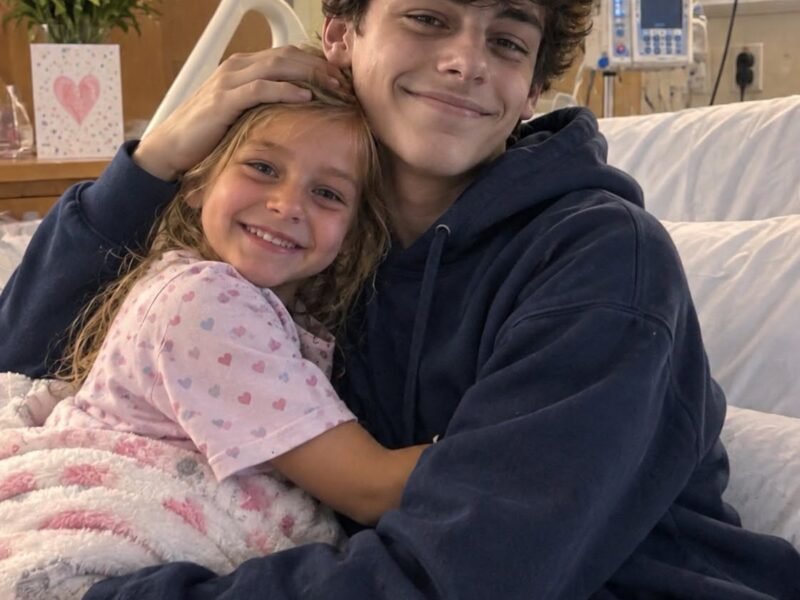
Three days later, the hospital room was bright with flowers.
Carol looked frail, her skin pale against the white sheets, but she was sitting up. When we walked in, her eyes filled with tears.
“Abby,” she croaked, reaching out a trembling hand. “Emily.”
I rushed to her side, gripping her hand. “Mom. I’m so sorry.”
“I was so foolish,” Carol wept. “I thought… I thought he loved me. He just wanted the money. All of it.”
“Don’t blame yourself,” I said fiercely. “He was a professional. He tricked everyone.”
Carol turned her gaze to Emily, who was standing by the window folding a piece of paper into a bird.
“The police told me,” Carol said softly. “They said you called because you knew something was wrong. How did Emily know? How did she sense it when I couldn’t?”
I looked at my daughter. The sunlight caught her golden hair, creating a halo.
“I don’t know,” I answered honestly. “Maybe children see things we’ve learned to ignore. Maybe love is a kind of radar.”
A month later, the beach house was sold. Carol bought a small, charming cottage with a garden, just three blocks from our apartment in Boston.
One calm evening, the three of us sat on her new porch, watching the sun dip below the city skyline. The air was crisp, smelling of fallen leaves and safety.
“Emily,” Carol said, beckoning her over. She held a small velvet box.
“This is for you.”
Emily opened it. Inside lay the antique pendant—the sapphire brooch I had bought, now converted into a necklace.
“Your special sense saved my life,” Carol said, her voice thick with emotion. “This has been in our family for generations. Now, it protects you.”
“From now on,” Carol continued, looking at me, “we live closer. We protect each other. No more strangers. Just us.”
Emily hugged the pendant to her chest, beaming with a smile that reached her eyes—the fear finally gone.
I watched my mother and daughter, a fierce swell of gratitude rising in my throat. I had spent my life relying on logic, on curation, on controlling the environment. But that day on the cliff, logic had failed. It was the raw, unexplainable instinct of a child that had pulled us back from the brink.
“Sometimes,” I murmured to the wind, “the things you can’t explain are the only things that matter.”
The sun set, casting long shadows across the porch, binding the three of us together. We were a fortress now, built not of stone and money, but of intuition and blood. And we were unbreakable.
Website Disclaimer
The information provided on this website is for general informational and educational purposes only. While we strive to ensure that all content is accurate and up to date, we make no guarantees regarding the completeness, reliability, or accuracy of any information published.
The views and opinions expressed in articles belong to their respective authors and do not necessarily reflect the views of this website. Any action you take based on the information found on this website is strictly at your own risk. We will not be liable for any losses, damages, or inconveniences arising from the use of our content.
Some articles may contain opinions, third-party information, or external links. We do not endorse or guarantee the accuracy of content on external websites and are not responsible for their practices or policies.
All content on this website is provided in good faith and is intended for informational purposes only. Readers are encouraged to verify information independently and seek professional advice where appropriate.