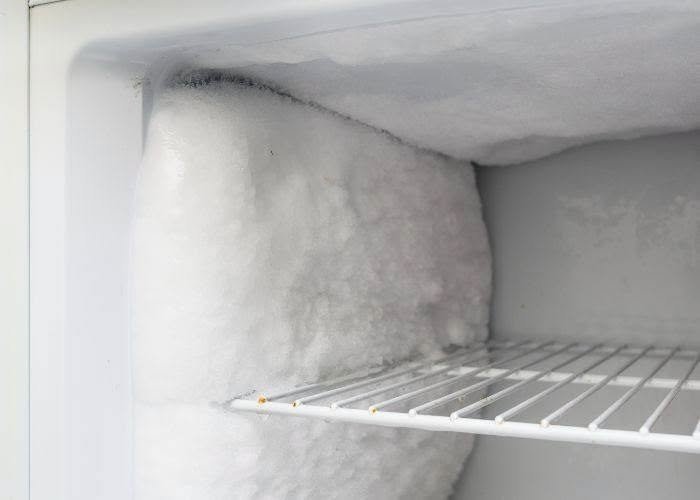
Defrosting a freezer is a household task many people put off, but ice build-up can be costly: just 0.5 cm of ice can increase electricity consumption by up to 30%, forcing the compressor to run continuously, which leads to higher bills and premature wear on the appliance. Regular defrosting reduces electricity use, protects the motor and extends the appliance’s life, keeps food at a constant temperature, prevents unpleasant odours and bacteria, and keeps the freezer working efficiently — if the drawers are difficult to close or the interior walls are covered with ice, it is time to defrost.
The article’s quick trick is a homemade defrost spray: 1 cup of white vinegar, 1 cup of hot water and 1 tablespoon of rubbing alcohol or spirit (optional, for quick evaporation), mixed in a spray bottle. First remove all the food and store it temporarily in a cooler or insulated bags, then pour the hot water, vinegar and alcohol into the bottle and shake well. Spray the solution directly onto the ice-covered areas, focusing on the corners and edges where the ice is hardest, then let it sit for 5–10 minutes while the ice starts to crack and break apart. Finally, remove the ice chunks with a plastic or wooden spatula and wipe the interior with a dry cloth.
For a thick layer of ice — over 3–4 mm — the spray can be combined with the steam method: cover the floor around the freezer with absorbent towels, boil water and pour it into heat-resistant containers, place the dishes in the freezer on a rack, close the door and let the steam work for 15–20 minutes, then open the door, remove the softened ice and wipe the interior completely before restarting. How often to defrost depends on the model and use: once every 3–4 months for classic models, whenever the ice layer exceeds 3 mm, or immediately if energy consumption rises for no clear reason; modern No Frost freezers need it less often, but periodic checking still matters.
The article warns against common mistakes that can destroy a freezer: using knives or metal objects, hitting the interior walls to loosen the ice, restarting without completely drying the inside, and using a hair dryer or direct heat — these can puncture the cooling circuit or deform the interior plastic. Its safety rules are simple: use only plastic or wooden tools, unplug the appliance if using water, make sure the interior is completely dry, and wait 10–15 minutes before restarting. Done properly and regularly, defrosting means lower energy bills, a longer appliance life, quiet and efficient operation, and food stored in the best conditions.
Website Disclaimer
The information provided on this website is for general informational and educational purposes only. While we strive to ensure that all content is accurate and up to date, we make no guarantees regarding the completeness, reliability, or accuracy of any information published.
The views and opinions expressed in articles belong to their respective authors and do not necessarily reflect the views of this website. Any action you take based on the information found on this website is strictly at your own risk. We will not be liable for any losses, damages, or inconveniences arising from the use of our content.
Some articles may contain opinions, third-party information, or external links. We do not endorse or guarantee the accuracy of content on external websites and are not responsible for their practices or policies.
All content on this website is provided in good faith and is intended for informational purposes only. Readers are encouraged to verify information independently and seek professional advice where appropriate.