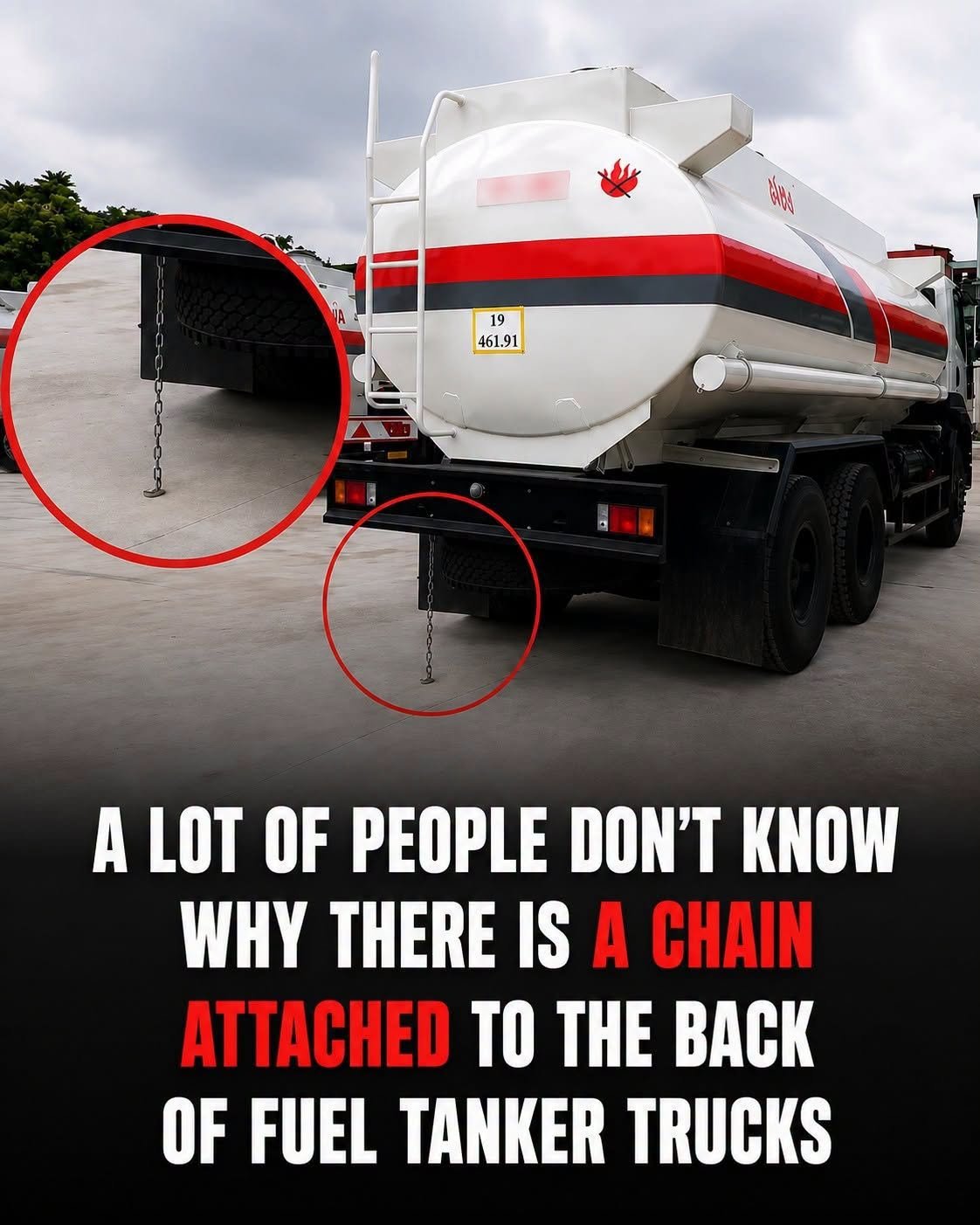
You may have noticed fuel tanker trucks with a metal chain hanging from the back and wondered what it is for. It might look like a simple piece of equipment, but the chain is connected to an important safety principle: controlling static electricity around flammable fuel.
As a tanker moves along the road, friction between the vehicle, tires, air, and other surfaces can create static electrical charges. Loading and transporting fuel can also contribute to static buildup. Under the wrong conditions, a spark could become a serious ignition hazard.
The hanging chain is traditionally intended to provide a path for electrical charge to dissipate toward the ground. By keeping the vehicle electrically connected with its surroundings, it can help reduce the accumulation of static electricity.
However, the chain is not the main safety system used during modern fuel transportation. Professional tanker trucks rely on carefully designed grounding and bonding procedures, especially while fuel is being loaded or unloaded.
During fuel transfer, grounding equipment connects the tanker to an approved grounding point before the operation begins. Bonding also helps ensure that different pieces of equipment remain at the same electrical potential, reducing the possibility of a spark forming between them.
This is particularly important because gasoline and other fuels can produce flammable vapors. A small ignition source in the wrong environment can create a dangerous situation, which is why fuel facilities follow strict procedures for handling and transferring petroleum products.
The chain may therefore be best understood as an additional or traditional feature rather than a magical device that makes the truck completely safe. Its exact purpose can also vary depending on the truck, regulations, and design. Modern grounding systems are far more important for controlling electrical hazards.
So, the next time you see a tanker truck with a chain hanging near the rear, remember that it is related to an important engineering challenge: controlling static electricity around flammable materials. What looks like a simple chain reflects a much larger system of safety measures designed to protect drivers, workers, and everyone nearby.
Website Disclaimer
The information provided on this website is for general informational and educational purposes only. While we strive to ensure that all content is accurate and up to date, we make no guarantees regarding the completeness, reliability, or accuracy of any information published.
The views and opinions expressed in articles belong to their respective authors and do not necessarily reflect the views of this website. Any action you take based on the information found on this website is strictly at your own risk. We will not be liable for any losses, damages, or inconveniences arising from the use of our content.
Some articles may contain opinions, third-party information, or external links. We do not endorse or guarantee the accuracy of content on external websites and are not responsible for their practices or policies.
All content on this website is provided in good faith and is intended for informational purposes only. Readers are encouraged to verify information independently and seek professional advice where appropriate.