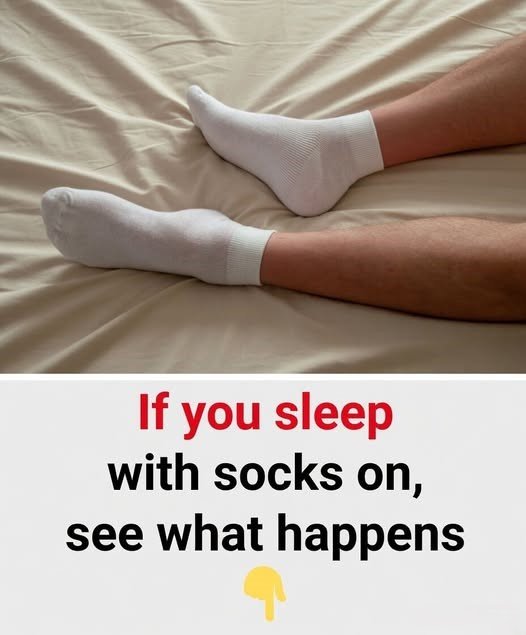
Wearing socks to bed sounds harmless, even trivial. Yet researchers suggest this small habit may quietly influence sleep quality, body temperature regulation, and how easily the brain transitions into rest.
Each night, the body performs a careful balance: cooling the core while warming the extremities. This shift signals the brain that it’s safe to move from alertness into deep, restorative sleep.
The feet play a key role in this process. When they are warm, blood vessels dilate, allowing heat to escape more efficiently and lowering core body temperature—an essential trigger for falling asleep.
Socks, in this context, act less like a comfort item and more like a biological aid. By keeping feet warm, they may help shorten the time it takes to fall asleep and reduce nighttime restlessness.
Scientists have found that this warming effect can also calm the nervous system. For some people, it softens anxiety signals and supports longer, less fragmented sleep cycles.
This effect may be especially noticeable for people with cold feet, poor circulation, aging bodies, or frequent nighttime awakenings. In these cases, socks can reduce disruptions and support more stable REM sleep.
That doesn’t mean socks work for everyone. Some sleepers overheat easily or find the sensation uncomfortable, which can interfere with rest rather than improve it.
Still, for many, wearing light, breathable socks becomes a simple form of self-care. It’s not a cure-all, but a small adjustment that gently supports the body’s natural sleep rhythms.
Website Disclaimer
The information provided on this website is for general informational and educational purposes only. While we strive to ensure that all content is accurate and up to date, we make no guarantees regarding the completeness, reliability, or accuracy of any information published.
The views and opinions expressed in articles belong to their respective authors and do not necessarily reflect the views of this website. Any action you take based on the information found on this website is strictly at your own risk. We will not be liable for any losses, damages, or inconveniences arising from the use of our content.
Some articles may contain opinions, third-party information, or external links. We do not endorse or guarantee the accuracy of content on external websites and are not responsible for their practices or policies.
All content on this website is provided in good faith and is intended for informational purposes only. Readers are encouraged to verify information independently and seek professional advice where appropriate.