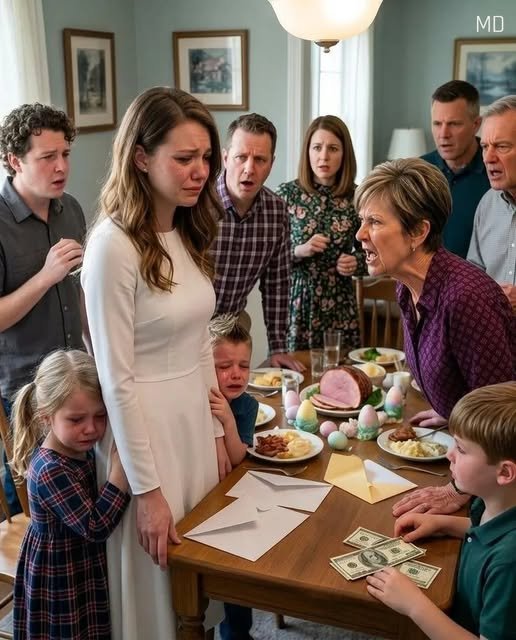
Easter at my mother’s house always looked warm and welcoming, filled with laughter, bright decorations, and the promise of togetherness. My wife, Rachel, moved easily through the kitchen, helping wherever she could, while our children, Noah and Sophie, played happily with their cousins. I wanted the day to feel whole, to feel like we truly belonged. But when my aunt Carol began handing out envelopes of money to every child—skipping only mine—the atmosphere shifted. Her quiet remark that my children “weren’t really family” landed louder than anything spoken that day. In that moment, the celebration lost its meaning. I stood up, gathered my family, and we left—not in anger alone, but in quiet resolve.
The drive home was heavy with silence. Sophie’s soft question—whether her mother was truly part of the family—cut deeper than any insult. Rachel answered gently, reminding her that love, not words, defines who belongs. At home, while the children tried to settle, my phone filled with messages questioning my reaction. I had sent one message before leaving, reminding everyone that I was tied to Carol’s car loan as a co-signer. It wasn’t meant as revenge, but as a boundary—one I had ignored for too long. Years earlier, I had stepped in to help Carol when she needed support, trusting her promise to handle her responsibilities. But over time, that trust had been tested, and now, after her words, something in me shifted.
That evening, Rachel helped me see things more clearly. She didn’t want retaliation; she wanted respect. That distinction mattered. The next morning, I contacted the bank and learned my options. I couldn’t simply walk away, but I could protect myself and set firm expectations. I sent Carol a calm, direct message outlining what needed to happen—refinance the car or sell it within a set time. I also told my family that we would be stepping back from anyone who excused what had happened. Slowly, the tone of their responses changed. Some apologized. Others admitted they should have spoken up sooner. For the first time, the focus shifted from avoiding conflict to acknowledging it.
In the end, Carol sold the car and began repaying what she owed. Time passed, and distance gave space for reflection. Nearly a year later, we returned for Easter with clear expectations. This time, Carol approached Rachel openly and offered a sincere apology, acknowledging the hurt she had caused. It didn’t erase the past, but it opened a door. Small, simple moments followed—children laughing, eggs being dyed, quiet conversations that felt more honest than before. I realized then that boundaries are not barriers to love; they are what protect it. My children learned something far more lasting than anger—that family is defined not by words or gestures, but by who stands beside you when it truly matters.
Website Disclaimer
The information provided on this website is for general informational and educational purposes only. While we strive to ensure that all content is accurate and up to date, we make no guarantees regarding the completeness, reliability, or accuracy of any information published.
The views and opinions expressed in articles belong to their respective authors and do not necessarily reflect the views of this website. Any action you take based on the information found on this website is strictly at your own risk. We will not be liable for any losses, damages, or inconveniences arising from the use of our content.
Some articles may contain opinions, third-party information, or external links. We do not endorse or guarantee the accuracy of content on external websites and are not responsible for their practices or policies.
All content on this website is provided in good faith and is intended for informational purposes only. Readers are encouraged to verify information independently and seek professional advice where appropriate.