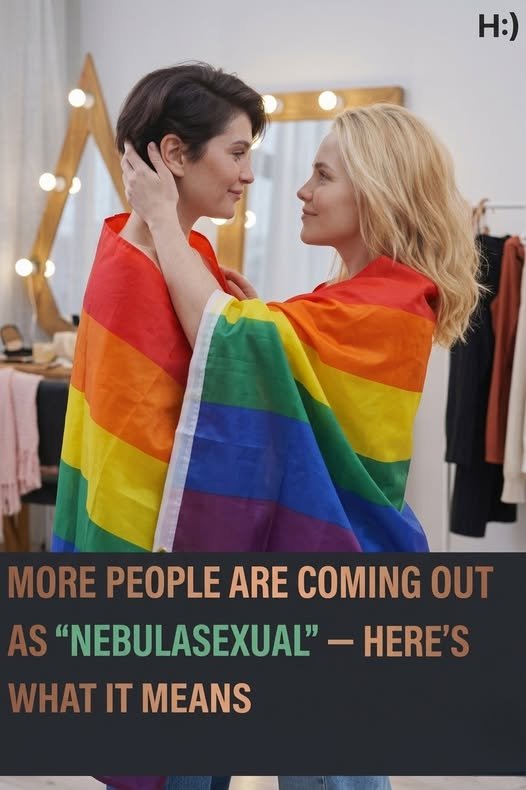
As society’s understanding of identity evolves, new terms continue to emerge to describe experiences that traditional labels may not fully capture. One such term gaining attention is nebulasexual, an identity connected to neurodivergence and the often unclear experience of attraction. As conversations around sexuality and gender become more nuanced, some individuals—particularly those who are neurodivergent—have found that existing categories do not adequately reflect how they experience attraction or connection.
The concept of nebulasexuality has been discussed within online communities and advocacy spaces such as Autism Nottingham, where it has been described as falling under the broader quoisexual umbrella. The term draws from “nebula,” meaning cloudy or unclear, reflecting the difficulty some neurodivergent individuals face in distinguishing between types of attraction. For people with conditions such as ADHD, autism, or OCD, neurological differences can blur the lines between sexual, romantic, aesthetic, or intrusive thoughts, making attraction harder to define in conventional ways.
Importantly, nebulasexual is not framed as simple confusion or questioning. Rather, it describes an ongoing state in which a person may want intimacy or relationships but cannot clearly identify whether they experience sexual attraction itself. Some individuals on online forums explain that they feel emotions or physical responses without being able to categorize them. Others describe feeling neither strong desire nor aversion—just neutrality—while still valuing connection.
Neurodivergent individuals have shared that the label offers validation. For some with ADHD, hyperfixation can complicate attraction, while those with OCD may struggle to separate intrusive thoughts from genuine feelings. In these contexts, nebulasexuality provides language that reduces feelings of isolation or being “broken,” instead affirming that neurological differences shape experience in unique ways.
However, like many emerging identity terms, nebulasexual has faced skepticism. Some critics question whether additional labels are necessary, suggesting the experience may simply reflect uncertainty. Broader debates about gender and sexuality definitions—often discussed on platforms like Quora—highlight ongoing shifts in how society distinguishes between biological sex and socially constructed gender.
As visibility grows, nebulasexuality contributes to expanding conversations about how attraction can differ across neurological experiences. For many, the goal is not to complicate identity, but to find language that accurately reflects personal reality.
Website Disclaimer
The information provided on this website is for general informational and educational purposes only. While we strive to ensure that all content is accurate and up to date, we make no guarantees regarding the completeness, reliability, or accuracy of any information published.
The views and opinions expressed in articles belong to their respective authors and do not necessarily reflect the views of this website. Any action you take based on the information found on this website is strictly at your own risk. We will not be liable for any losses, damages, or inconveniences arising from the use of our content.
Some articles may contain opinions, third-party information, or external links. We do not endorse or guarantee the accuracy of content on external websites and are not responsible for their practices or policies.
All content on this website is provided in good faith and is intended for informational purposes only. Readers are encouraged to verify information independently and seek professional advice where appropriate.