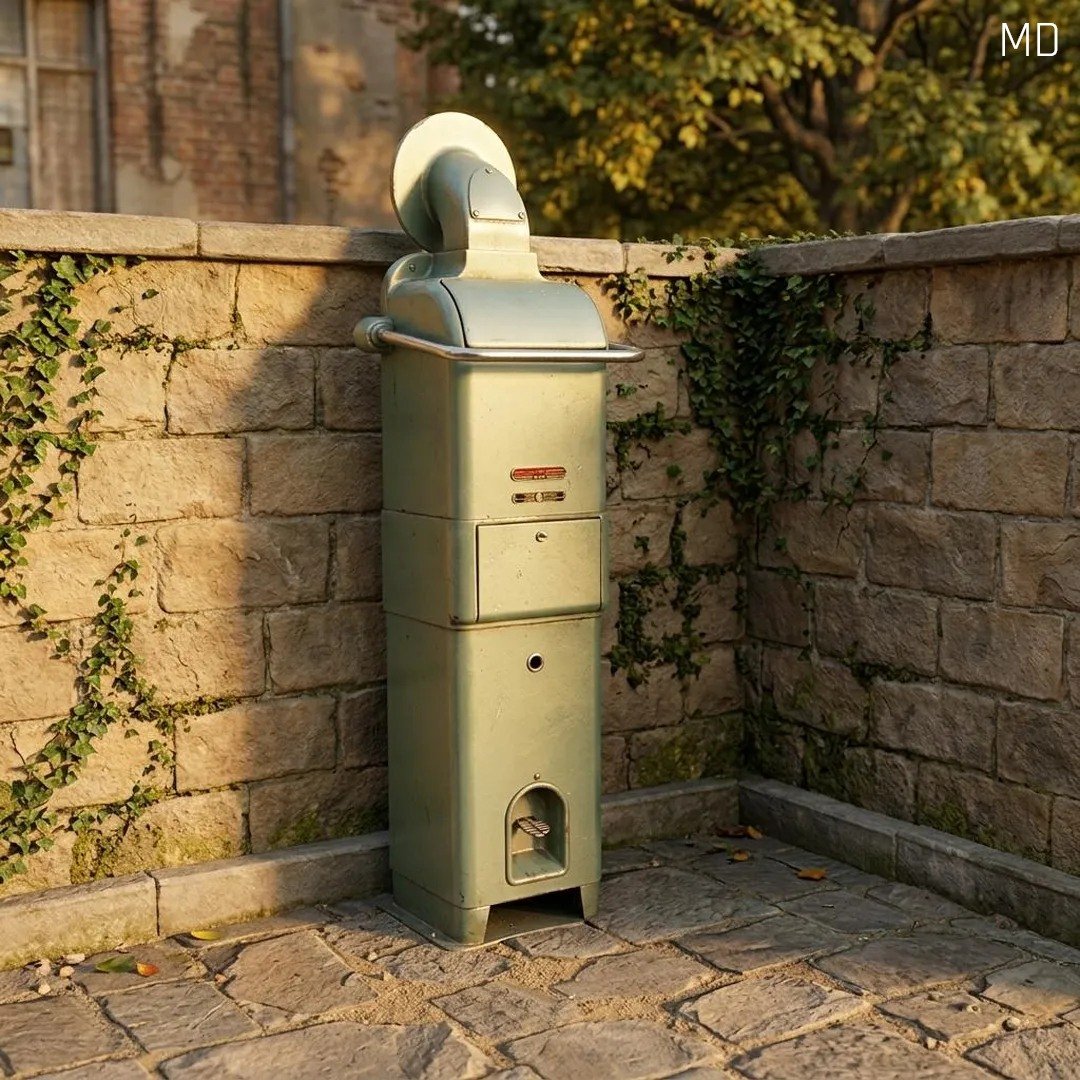
Sometimes, the most ordinary places quietly preserve pieces of history. A simple moment inside an older school restroom can reveal an unexpected reminder of how daily life once worked. An old metal incinerator mounted on the wall—easy to overlook and no longer in use—tells a story far beyond its appearance. Though it may seem like a forgotten fixture, it once played a practical role in how buildings managed waste, reflecting a time when convenience and systems were very different from what we know today.
These built-in incinerators were commonly found in schools, hospitals, and apartment buildings. They were designed to burn waste on-site, offering what people of the time believed to be a clean and efficient solution. Long before organized waste collection became widespread, individuals and institutions often handled disposal themselves. Burning trash was seen as simple and effective, reducing large amounts of waste to ash without the need for transportation or storage. In many communities, this practice was routine, and the presence of smoke or the smell of burning waste was considered a normal part of everyday life.
Inside public buildings, incinerators provided a more contained version of this approach. They were often used for specific types of waste, offering a sense of privacy and cleanliness according to the standards of the era. At the same time, people tended to reuse what they could—glass containers, fabrics, and food scraps were often repurposed rather than discarded. Waste management was more personal and immediate, closely tied to daily habits and available resources rather than large-scale systems.
Over time, as consumer products changed and awareness of environmental and health concerns grew, these practices began to shift. The rise of modern materials and increased waste led to the development of organized collection systems, recycling programs, and stricter regulations. Today, an old restroom incinerator stands as more than just an outdated object—it represents a period shaped by practicality, limited infrastructure, and evolving knowledge. It reminds us that progress happens gradually, and that even the simplest objects can offer meaningful insight into how society adapts and improves over time.
Website Disclaimer
The information provided on this website is for general informational and educational purposes only. While we strive to ensure that all content is accurate and up to date, we make no guarantees regarding the completeness, reliability, or accuracy of any information published.
The views and opinions expressed in articles belong to their respective authors and do not necessarily reflect the views of this website. Any action you take based on the information found on this website is strictly at your own risk. We will not be liable for any losses, damages, or inconveniences arising from the use of our content.
Some articles may contain opinions, third-party information, or external links. We do not endorse or guarantee the accuracy of content on external websites and are not responsible for their practices or policies.
All content on this website is provided in good faith and is intended for informational purposes only. Readers are encouraged to verify information independently and seek professional advice where appropriate.