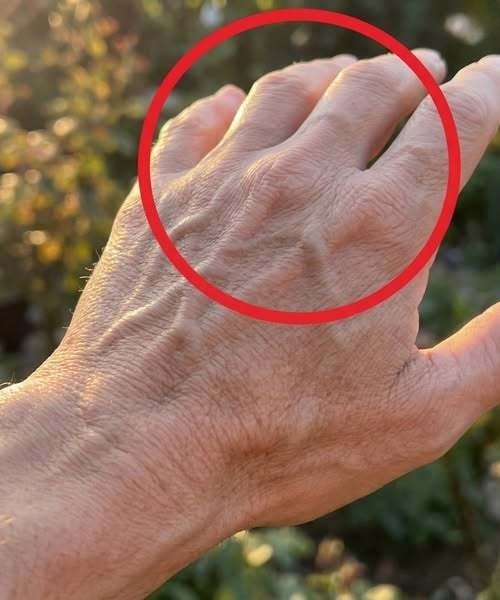
Noticing prominent or bluish veins on your hands can naturally raise questions about your health. Online discussions sometimes suggest that visible hand veins may signal hidden kidney problems. However, medical evidence does not support this claim. In most cases, noticeable veins are a normal physical feature rather than a warning sign of disease. Understanding why veins become more visible — and what kidney conditions actually look like — can help separate fact from speculation.
There are several common reasons why veins on the hands stand out. As we age, the skin gradually becomes thinner and loses some of its natural collagen, making veins easier to see. People with lower body fat may also notice more visible veins because there is less tissue covering them. Genetics, regular exercise, warm temperatures, and even mild dehydration can temporarily enhance vein visibility. These factors are considered normal variations in appearance. On their own, prominent hand veins are not recognized in medical guidelines as a symptom of kidney disease.
Kidney conditions affect the body in different ways. The kidneys are responsible for filtering waste from the blood, balancing fluids, regulating blood pressure, and maintaining healthy electrolyte levels. When kidney function declines, symptoms typically relate to fluid retention or changes in urination. People may experience swelling in the hands, feet, or around the eyes, fatigue, high blood pressure, nausea, or foamy urine caused by protein loss. Notably, increased vein visibility is not part of the usual symptom pattern. In fact, when the body retains fluid due to kidney problems, swelling often makes veins less noticeable rather than more pronounced.
There are limited situations in which veins and kidney treatment intersect. For example, individuals with advanced kidney failure who require dialysis may undergo a procedure to create an arteriovenous (AV) fistula in the arm. This medical access point intentionally enlarges a vein to allow repeated treatments. In such cases, the vein may appear thicker or more raised — but this is related to therapy, not a natural sign of kidney disease. If you are concerned about kidney health, the most reliable evaluation involves blood tests, urine analysis, and blood pressure monitoring conducted by a healthcare professional. Visible veins alone are typically a harmless anatomical variation and not a dependable indicator of kidney function.
Website Disclaimer
The information provided on this website is for general informational and educational purposes only. While we strive to ensure that all content is accurate and up to date, we make no guarantees regarding the completeness, reliability, or accuracy of any information published.
The views and opinions expressed in articles belong to their respective authors and do not necessarily reflect the views of this website. Any action you take based on the information found on this website is strictly at your own risk. We will not be liable for any losses, damages, or inconveniences arising from the use of our content.
Some articles may contain opinions, third-party information, or external links. We do not endorse or guarantee the accuracy of content on external websites and are not responsible for their practices or policies.
All content on this website is provided in good faith and is intended for informational purposes only. Readers are encouraged to verify information independently and seek professional advice where appropriate.