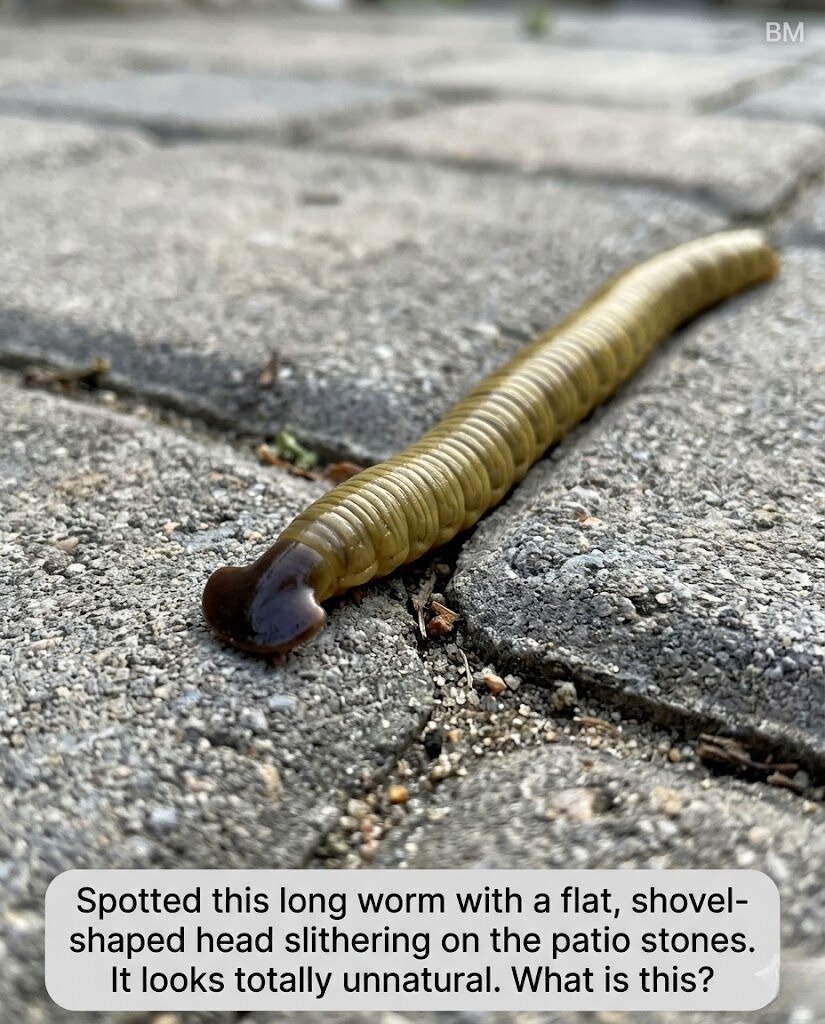
Spotted a Strange Worm With a Shovel-Shaped Head? Here’s What It Really Is It looks like something out of a sci-fi movie. A long, flat worm with a strange, shovel-shaped head slowly moving across your patio or garden.
If you’ve seen one, you’re not alone. More and more people are encountering this unusual creature—and wondering what it is. This hammerhead worm what is it guide will explain everything you need to know, including whether it’s dangerous and what you should do if you find one.
What Is a Hammerhead Worm?
The creature you’re seeing is called a hammerhead worm, a type of land flatworm known for its unique head shape.
It belongs to the Bipalium genus and is easily recognized by:
A wide, flattened head (like a hammer or shovel)
A long, slimy body
Dark stripes or brown/gray coloring
These worms are not native to many regions—they originate from Southeast Asia and have spread globally through plant and soil transport.
Why Do They Look So Strange?
Hammerhead worms stand out because they don’t look like typical earthworms.
Instead of segmented bodies, they have:
Smooth, flat surfaces
A glossy, almost “alien” appearance
A gliding movement instead of wriggling
They move using tiny hair-like structures called cilia, allowing them to slide smoothly across surfaces.
That’s why many people describe them as unnatural or even unsettling.
Are Hammerhead Worms Dangerous?
This is one of the most common questions.
The answer:
👉 They are not dangerous in the traditional sense (they don’t bite or attack humans).
However:
They produce a toxic mucus
The toxin (tetrodotoxin) can irritate skin
You should avoid touching them directly
While they won’t harm you seriously, handling them without protection is not recommended.
The Real Problem: They Kill Earthworms
The biggest concern isn’t human safety—it’s environmental impact.
Hammerhead worms are predators.
They feed on:
Earthworms
Other small soil organisms
Earthworms are essential for:
Soil health
Plant growth
Nutrient cycling
When hammerhead worms spread, they can damage entire garden ecosystems.
Why They Spread So Fast
One of the most surprising things about hammerhead worms is how they reproduce.
They can multiply through fragmentation.
That means:
👉 If you cut one worm into pieces… each piece can grow into a new worm.
This is why improper handling can make the problem worse instead of better.
Where You Might Find Them
Hammerhead worms prefer:
Damp environments
Gardens
Under rocks
Patios after rain
They are most active in moist conditions, which is why many people notice them after rainfall.
What You Should NOT Do
If you find one, avoid these mistakes:
❌ Don’t touch it with bare hands
❌ Don’t cut it into pieces
❌ Don’t ignore it
Cutting the worm can actually cause it to multiply.
What You SHOULD Do Instead
To safely remove a hammerhead worm:
✔ Use gloves or tools
✔ Apply salt or vinegar directly
✔ Place it in a sealed bag
✔ Dispose of it properly
These methods prevent regeneration and stop further spread.
How to Prevent Them From Coming Back
Prevention is key.
You can reduce the chances of infestation by:
Checking new plants and soil
Keeping your garden clean
Reducing excess moisture
Monitoring damp areas regularly
Small steps can help protect your garden ecosystem.
Why This Matters More Than You Think
At first glance, it’s just a strange worm.
But it represents something bigger:
👉 The impact of invasive species.
When non-native organisms spread, they can disrupt entire ecosystems.
This is similar to other hidden environmental risks discussed in 👉 why older people wake up at 3am—where small signs often point to bigger underlying changes.
Final Thoughts
If you ever spot a worm with a shovel-shaped head…
Now you know what it is.
The hammerhead worm may look unusual, but understanding it helps you respond correctly.
Because sometimes, the strangest things we see…
Carry the most important warnings.
Website Disclaimer
The information provided on this website is for general informational and educational purposes only. While we strive to ensure that all content is accurate and up to date, we make no guarantees regarding the completeness, reliability, or accuracy of any information published.
The views and opinions expressed in articles belong to their respective authors and do not necessarily reflect the views of this website. Any action you take based on the information found on this website is strictly at your own risk. We will not be liable for any losses, damages, or inconveniences arising from the use of our content.
Some articles may contain opinions, third-party information, or external links. We do not endorse or guarantee the accuracy of content on external websites and are not responsible for their practices or policies.
All content on this website is provided in good faith and is intended for informational purposes only. Readers are encouraged to verify information independently and seek professional advice where appropriate.