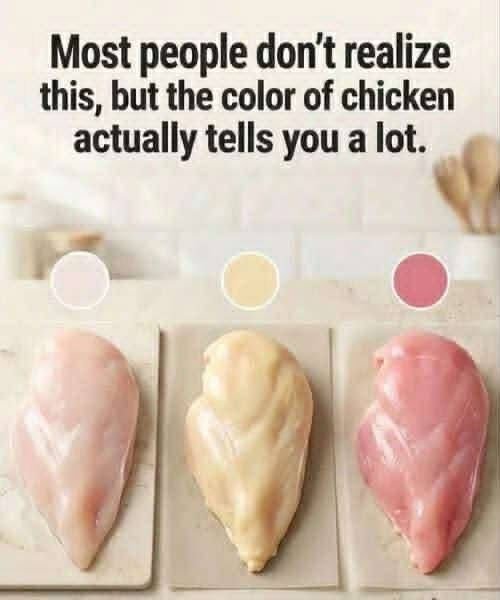
If you regularly eat chicken, you may have noticed that some pieces appear pale or slightly pink, while others have a deeper yellow tone. This difference often raises questions about quality, taste, and whether certain types are more natural or healthier than others. At first glance, color seems like an easy way to judge food.
However, the color of chicken meat is not a reliable indicator of quality or freshness. Instead, it reflects factors such as the bird’s diet, living conditions, and farming practices. While appearance can influence perception, it does not necessarily determine taste or safety.
Pale chicken is commonly linked to industrial farming methods. These chickens are raised indoors, fed controlled diets, and bred to grow quickly. This system allows for large-scale production at lower costs, which is why lighter-colored meat is widely available in supermarkets.
Yellow chicken, on the other hand, is often associated with birds that consume diets rich in natural pigments like carotenoids, found in corn, grass, and plants. Chickens raised in more natural environments tend to move more, resulting in firmer meat and often richer flavor.
That said, color can sometimes be misleading. Some producers intentionally adjust feed to give chicken a yellow hue, even if the birds are raised under intensive conditions. This makes the meat appear more natural than it actually is.
Because of this, labels provide more useful information than color alone. Terms like “organic,” “free-range,” or “pasture-raised” offer insight into how the chicken was raised. Freshness should be judged by smell and texture—neutral scent and firm meat are key indicators. Ultimately, the best choice depends on your priorities, whether that’s cost, flavor, or ethical farming practices.
Website Disclaimer
The information provided on this website is for general informational and educational purposes only. While we strive to ensure that all content is accurate and up to date, we make no guarantees regarding the completeness, reliability, or accuracy of any information published.
The views and opinions expressed in articles belong to their respective authors and do not necessarily reflect the views of this website. Any action you take based on the information found on this website is strictly at your own risk. We will not be liable for any losses, damages, or inconveniences arising from the use of our content.
Some articles may contain opinions, third-party information, or external links. We do not endorse or guarantee the accuracy of content on external websites and are not responsible for their practices or policies.
All content on this website is provided in good faith and is intended for informational purposes only. Readers are encouraged to verify information independently and seek professional advice where appropriate.