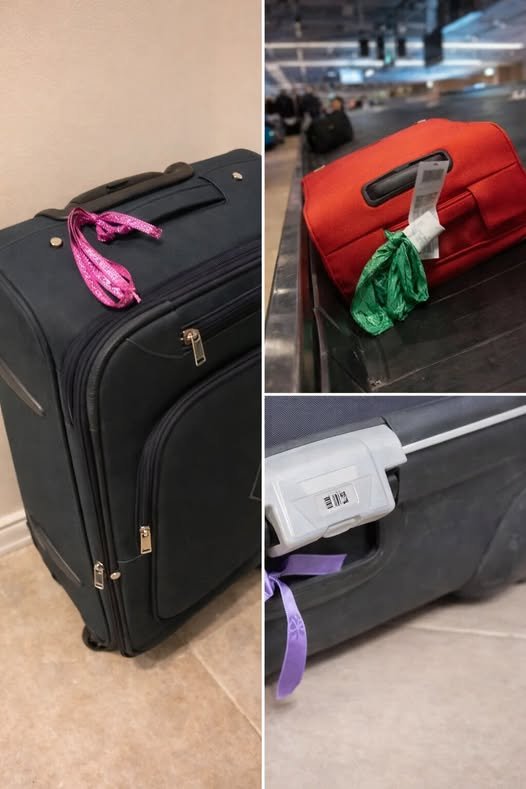
Travelers often look for simple tricks to make spotting their luggage easier at the baggage carousel. One common tip is tying a colorful ribbon, scarf, or tag to a suitcase so it stands out among dozens of similar bags.
At first, this seems practical, especially when many suitcases look nearly identical after a long flight. However, airport baggage handlers warn that it can sometimes create unexpected problems.
Modern airports rely on automated systems that scan barcodes and route luggage through complex conveyor networks. Extra items like ribbons or dangling decorations can interfere with these scanners or get caught in machinery.
If a barcode cannot be read properly, the suitcase may need manual inspection, slowing the process and increasing the chance of delays.
Handlers also advise removing old airline stickers and leftover labels. These markings may confuse scanners and create sorting errors as bags move rapidly through automated lines.
Certain food items, such as dense treats like marzipan, can appear unusual on security scanners, triggering additional screening. While not prohibited, they can slow your journey.
To protect luggage, handlers suggest placing suitcases wheels-up when sending them onto the conveyor belt, reducing the risk of damage during handling.
Instead of tying ribbons, experts recommend choosing luggage with a distinctive color, pattern, or built-in identifier. This makes your suitcase easier to recognize while keeping the baggage system running smoothly.
Website Disclaimer
The information provided on this website is for general informational and educational purposes only. While we strive to ensure that all content is accurate and up to date, we make no guarantees regarding the completeness, reliability, or accuracy of any information published.
The views and opinions expressed in articles belong to their respective authors and do not necessarily reflect the views of this website. Any action you take based on the information found on this website is strictly at your own risk. We will not be liable for any losses, damages, or inconveniences arising from the use of our content.
Some articles may contain opinions, third-party information, or external links. We do not endorse or guarantee the accuracy of content on external websites and are not responsible for their practices or policies.
All content on this website is provided in good faith and is intended for informational purposes only. Readers are encouraged to verify information independently and seek professional advice where appropriate.