My name is Juliet Vaughn, and I walked into my sister’s wedding alone. Not fashionably alone. Not mysteriously alone. Completely, unmistakably alone. No arm to hold, no reassuring presence at my side, no shield against the glances that followed me the moment I stepped through the ballroom doors. I did it on purpose. Not because I had no one, but because I needed to remember what it felt like to stand without apology, without protection, without performing for anyone. Still, the second I crossed that threshold, it felt like I’d entered a courtroom where the verdict had already been decided: over thirty, unmarried, too accomplished, and therefore suspect.
The room was magnificent in the way only money and intention can make something magnificent. Crystal chandeliers scattered warm light across marble floors. White roses climbed the walls in thick, expensive arrangements. Every detail whispered exclusivity. And yet, as heads turned toward me, that beauty sharpened into something colder. I caught the whispers before I saw the faces. A tilt of a head. A hand covering a mouth that didn’t quite conceal a smile. Eyes flicking to my hands, lingering there, searching for a ring that wasn’t present.
“Poor thing,” someone murmured, not quietly enough. “Still can’t find anyone to bring.”
I didn’t look to see who said it. I already knew the tone. It was the same one I’d heard my entire adult life, the kind reserved for women who failed to follow the expected timeline. I scanned the room and found my sister Vanessa near the front, glowing, flawless, surrounded by the groom and his family like a carefully curated centerpiece. Diamonds at her throat. White silk hugging her frame. She didn’t look my way. Not even once. I was not part of the picture she was presenting today.
For a moment, I considered turning around. Walking back out through those doors and into anonymity. It would have been easy. But something steadied inside me, something stubborn and old. So I lifted my chin and kept walking, every step deliberate, every whisper absorbed without reaction. If they wanted a spectacle, I would deny them the satisfaction.
Growing up in the Vaughn household always felt like living in the wings of a play I never auditioned for. Vanessa was the star from the beginning. Blue-eyed, golden-haired, effortlessly charming. Relatives adored her. Teachers praised her. Strangers commented on her smile. I was the serious one. The quiet one. The child who dismantled appliances just to see how they worked and asked questions adults didn’t know how to answer.
While Vanessa practiced cheer routines in the backyard, I spent my evenings buried in books, sketching designs, solving problems for the sheer joy of it. I took apart our microwave at ten and rebuilt it with a timing mechanism by fourteen. My parents didn’t stop me, but they didn’t celebrate me either. “You’ll grow out of it,” my mother said once, right before grounding me for skipping a school dance to attend a robotics camp. Vanessa was rewarded for being pretty. I was tolerated for being unusual.
As adults, the gap only widened. Vanessa married young. Big wedding. Big smiles. That marriage ended quietly. The second ended faster. But the third—Logan—was different. His family owned things people recognized. Land. Businesses. Names that opened doors. Vanessa didn’t just marry a man this time. She married into a legacy.
Our parents were thrilled. Dinners were hosted. Neighbors were informed. New family portraits were commissioned. My name came up occasionally, usually followed by a pause. I was invited to the wedding because I was her sister, but there was an unspoken warning beneath it. Don’t draw attention. Don’t embarrass us. Don’t make it about you. As if I ever had.
The morning of the wedding, my mother called to remind me not to wear anything “too businessy.” “You’re not presenting at a summit, Juliet,” she laughed. “Try to blend in.” I smiled into the phone and agreed, knowing full well I never blended in, no matter what I wore.
I chose black. Clean lines. No sparkle. My hair pulled into a low knot. Minimal jewelry. I looked like myself. And in a room designed to glorify Vanessa, that alone made me stand out.
The ceremony was immaculate, bordering on theatrical. Vanessa and Logan exchanged vows beneath a floral arch large enough to cast a shadow. There were cameras everywhere, discreet but ever-present. A string quartet played something classical and emotional on cue. The flower girl looked like she’d stepped out of a catalog. Perfection, staged down to the second.
I clapped when everyone clapped. Smiled when everyone smiled. I said nothing unnecessary. It wasn’t until the reception that the tension sharpened. The ballroom transformed into an evening spectacle—chandeliers glowing lower, tables set in hierarchical precision, name cards directing people exactly where they belonged.
I was seated near the back.
Two distant cousins flanked me, both polite in the way that disguises judgment. One glanced at the empty chair beside me. “I thought you’d have someone by now,” she said, stirring her drink. “A woman like you.” The compliment died in the air between us, heavy and incomplete.
Vanessa sat at the front with Logan’s family, surrounded by people who looked like they’d never been told no. Her new mother-in-law, Gloria, observed the room with calculated interest, her expression fixed in a way that suggested expert intervention. She hadn’t spoken to me directly, but I caught her glance more than once. At one point, she leaned toward another guest and said, “She’s the sister, right? The one who’s always working.” The reply was a soft laugh. Just enough to sting.
I excused myself and went to the bar, needing space. Halfway through a ginger ale, Vanessa appeared beside me, her smile tight, rehearsed. “Just checking in,” she said. “Making sure you’re okay.” I studied her face, searching for familiarity. “We haven’t had a real conversation in years,” I said quietly. She laughed, brushed it off. “You’re here. That’s what matters.” And then she was gone again, absorbed back into her new world.
I returned to my seat just in time to hear Logan’s uncle and cousin behind me. “Pretty, but cold,” one said. “One of those women who marries her career,” the other added, amused. I froze. My coat was within reach. I could leave. No one would stop me. No one would care.
Then the air shifted.
A chair scraped against the floor at the main table. Slow. Intentional. The sound carried farther than it should have. Conversations faltered. I turned, following the ripple of attention, and saw Edward Sinclair rising to his feet.
He wasn’t like the others. No flashy accessories. No forced smile. Just a tailored navy suit, silver hair neatly combed back, and eyes that seemed to take in everything without effort. A man whose name appeared in headlines, whose influence was discussed in boardrooms, whose approval carried weight most people never experienced.
He stepped away from the table. Past Logan. Past Vanessa. Past Gloria, whose confidence visibly faltered. The room was silent now, every whisper swallowed whole.
Edward Sinclair stopped in front of me.
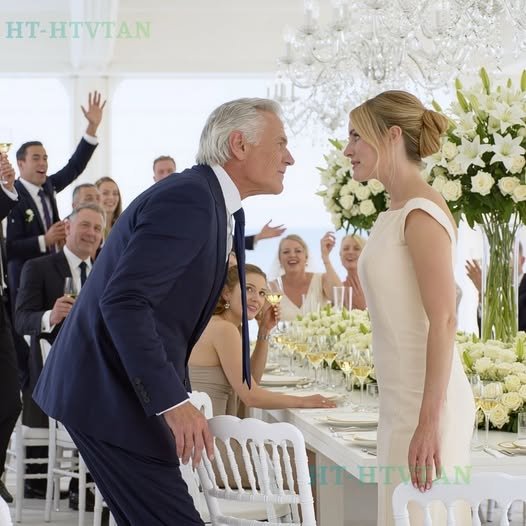
And then he bowed.
Not a nod. Not a polite dip of the head. A full, deliberate bow, formal and unmistakable. The kind reserved for someone you honor. Or fear.
Gasps rippled through the room.
Continue in C0mment 👇👇
My name is Juliet Vaughn, and I walked into my sister’s wedding alone, completely alone. Not because I didn’t have someone to bring, but because I wanted to remember what it felt like to stand tall without anyone shielding me. That moment, that walk, it was like stepping into a courtroom where everyone had already decided I was guilty of being a woman past 30, unmarried, and too successful for her own good.
As I entered the grand ballroom, heads turned, mostly for the wrong reasons. I caught whispers. I saw the subtle smirks from my sister’s new in-laws. The women leaned toward each other, eyes scanning my dress, my hands, and the obvious absence of a ring. One of them muttered loud enough for the people behind her to hear.
Poor thing, still can’t find anyone to bring. Vanessa, my sister, didn’t even glance my way. She was too busy posing, all teeth and diamonds next to the groom and his very proud family. And I, well, I wasn’t part of the display. I was the afterthought they hoped would blend into the back row. I could have left. I should have, maybe, but something in me said to stay, to face every mocking stare without flinching.
Then something strange happened. An older man seated at the center table stood up slowly. His hair was silver, his presence unmistakably commanding. I recognized him from headlines. Edward Sinclair, the groom’s uncle, a man with more corporate power than most governments. He looked straight at me and then he bowed. A full deliberate bow right there in front of everyone.
And in that instant, every sneer, every whisper, every judgment in the room stopped cold. Growing up in the Vaughn household was like living on a stage you never auditioned for. My sister Vanessa was the star from the moment she could walk. Blue-eyed, goldenhaired, effortlessly charming. She was the kind of child relatives fond over at barbecues, while I, with my serious eyes and endless questions, was gently told to let Vanessa have her moment.
I learned early that being quiet was easier than explaining myself. My world was numbers, ideas, inventions. I took apart the microwave when I was 10 and built a self-timing oven by 14. While Vanessa practiced cheer routines, I studied advanced calculus under my blanket with a flashlight. My parents didn’t discourage me exactly.
They just didn’t understand me. You’ll grow out of that tech stuff, my mom said once, right before grounding me for skipping a school dance to attend a robotics camp. Vanessa was rewarded for being pretty. I was tolerated for being strange. By the time we reached adulthood, the gap between us had grown into a canyon.
She married young, first love, big white wedding, house in the suburbs. It didn’t last. Neither did the second one. But the third, Logan, he was a different tier. His family owned land, business chains, and connections that turned heads at the country club. Vanessa saw in him not just love, but legacy.
And as always, our parents were thrilled. They hosted dinners, gushed to neighbors, printed new family portraits. My name came up. I was invited to the wedding because, well, I am her sister, but I was warned. Don’t make it about you. As if I ever had. I booked a flight, RSVPd for one, and cleared my schedule.
I didn’t have the time, but I went. Not for them, but for myself. The morning of the wedding, my mother called just to remind me not to wear anything too loud or too businessy. “You’re not presenting at a summit, Juliet,” she said, laughing. “This is a family event. Try to blend in, okay?” I smiled through the phone. Sure, I’ll do my best.
Of course, I didn’t blend in. I wore black, clean lines, no sparkles, my hair in a low knot, minimal jewelry. I looked like myself, and I suppose in a room designed to spotlight Vanessa, looking like myself was already too much. I arrived on time, alone. I caught the looks, some surprised, some amused.
Vanessa’s new in-laws gathered near the altar, sipping champagne and throwing glances my way. One of the aunts nudged another and whispered, “Is that the one who’s single?” With the same tone one might use for unemployed or recently parrolled. I didn’t flinch. I’ve built startups under pressure no one here could fathom, but I’d be lying if I said it didn’t sting.
There’s a particular kind of ache that comes from being alien in your own family. like you’re the ghost at the banquet table. Vanessa walked past me during the pre-eremony photos. She didn’t even stop. “Hi, Juliet,” she said quickly, not waiting for a response. So, I found my seat quietly alone, just like they expected me to, except what none of them expected was Edward Sinclair.
The ceremony itself was standard, overproduced, expensive, curated for social media. Logan and Vanessa said their vows beneath a floral arch the size of a carport. There were drone cameras, a string quartet, and a flower girl flown in from some family friend’s child modeling agency. It was the kind of display that screamed perfection right down to the guests selected for symmetry in the aisle seats.
I stayed quiet, clapped politely, smiled when expected. It wasn’t until the reception that the real show began. The venue had been transformed into a glittering evening affair, chandeliers, signature cocktails, and monogrammed napkins everywhere. The guests were assigned to long banquet tables arranged like corporate hierarchies.
I was placed near the back, flanked by two distant cousins, who both seemed shocked I hadn’t brought a plus one. “I figured you’d have someone by now,” one of them said, stirring her martini with a gold cocktail pick. “A woman like you all accomplished. It was meant as a compliment. The pause between her words made it anything but.
Vanessa was seated up front with Logan’s family. Her in-laws hovered around her like she was a prize they’d just secured at auction. The mother-in-law, Gloria, had a face that didn’t move when she smiled, likely the result of a good surgeon. She hadn’t spoken to me directly, but I caught her glancing over several times. Once she leaned into another guest and said, “She’s the sister, right? The one who’s always working.
” They laughed, “Not loudly. Just enough.” I excused myself, headed toward the bar. “I was halfway through a ginger ale when I saw Vanessa walking toward me. Her smile was tight. I just wanted to check in,” she said. “Make sure you’re okay.” “I’m fine. You seem, I don’t know, distant. I blinked. Vanessa, we haven’t had a real conversation in 5 years.
She gave a little laugh, the kind that begged forgiveness without saying the words. Well, you’re here now. That counts. I almost replied, almost asked if she even knew where I lived now. What I did, but I didn’t. What would be the point? She was already gone before I could say anything. I turned back to my table. That’s when I heard them again.
Logan’s uncle and cousin sitting not far behind me. Pretty but cold, one said. You can tell she’s one of those women who marries her career. Probably expects us to applaud her for showing up alone, the other added, chuckling. I stood still. For a moment, I considered walking out. I had my coat. My car wasn’t far.
I could disappear, leave them with their champagne and their self-satisfaction. I owed no one here anything. But then came the pause, that subtle shift in the air. From the main table, a chair scraped back, slow, purposeful. I turned. Edward Sinclair was rising to his feet. He wasn’t flashy like the rest of the family.
No polished cufflinks, no exaggerated tan, just a tailored navy suit, silver hair swept back, and eyes that belong to a man who saw everything without needing to comment. The room quieted. He took a step forward, past Logan and Vanessa, past Gloria, who looked suddenly unsure, and then right there he bowed. A clean, full bow, formal, unmistakable.
The kind of gesture reserved for people you respect or fear. Gasps. A few camera shutters clicked. Someone dropped a fork. I didn’t move. I couldn’t. Edward straightened and walked to me. Miss Vaughn, he said, voice low but clear. It’s a privilege to finally meet you. Your keynote at the Zurich Summit changed how we handle tech transitions across three subsidiaries.
I owe you a thank you. I felt every eye in the room shift, recalculating, reweighing. The woman they had written off was now being honored by the most powerful man at the wedding. I smiled then, small, reserved, deliberate. “Thank you, Mr. Sinclair,” I said. “It’s mutual.” For the first time all night, the room wasn’t laughing.
It was listening. Edward Sinclair didn’t return to his seat right away. Instead, he gestured to the nearest waiter, requested a glass of club soda, and asked if I would mind walking with him for a moment. I said yes, not because I was flattered, but because I could sense the ripple that moment had caused, and I wanted it to settle exactly the way it should.
We stepped out onto the venue’s stone terrace, away from the staring eyes, and whispered questions. Edward moved slowly but with the calm assurance of a man used to people waiting for him. I meant what I said in there, he began. I recognized you the moment you entered. That’s funny, I replied. Because most of your family didn’t seem to. He chuckled.
They wouldn’t. They only know what they’ve been told. Vanessa’s family, correct? They’ve always struck me as focused on surface value. I didn’t answer that. I didn’t need to. Edward continued, “Three years ago, your firm launched the integration model for decentralized AI data recovery.
My company, Winchester Group, was set to invest $180 million in a competitor. But your presentation in Zurich changed everything.” I blinked. That wasn’t public information. It wasn’t. But I make it my business to know who’s actually changing the world behind the scenes. I studied him. His eyes weren’t just watching. They were weighing.
I assume you didn’t mention this to Logan, I said. Edward smiled faintly. Logan barely knows how to check his own email. He’s a decent enough boy, but he inherited everything. He’s never built anything. You, Miss Vaughn, built from the ground up. That phrase stuck with me because he was right. While Vanessa curated her image, I was building systems, pitching to investors, eating cheap takeout in rented offices.
I was up at 3:00 a.m. writing code with no health insurance and no guarantee the next round of funding would land. I didn’t just survive the market, I shaped parts of it. But to my family, that wasn’t impressive. It wasn’t visible. It wasn’t photogenic. Back inside the ballroom, the atmosphere had changed. People who had spent the evening dismissing me now shifted in their seats.
A few even stood when I returned, unsure of the proper response. Gloria looked like she’d swallowed a lemon. Logan was pale. Vanessa was furious. She approached as I sat down. What was that about? She hissed, the polite smile frozen across her face. I looked up at her, calm, cold. That I said was someone recognizing what you never did.
Her jaw clenched. You couldn’t let me have one day, could you? I almost laughed. One day, Vanessa, you’ve had a lifetime. All I did was show up. She didn’t answer. She turned and walked away, heels clicking too fast. Bouquet trembling in her hand. The speeches began shortly after. Toasts, jokes, anecdotes. I stayed silent.
Edward remained seated at my table, offering quiet remarks now and then, most of which went over the heads of everyone else. Then came the final toast, Logan’s father. He rambled through the usual love, marriage, family, but at the end he made the mistake of glancing toward me. And of course, he said, raising his glass, to all the family members who joined us tonight, even those who prefer the boardroom to the ballroom.
There were a few chuckles. Edward didn’t laugh. He set down his drink and stood once more. “I’d like to add something to that,” he said. “It takes very little talent to inherit wealth. It takes even less to marry into it. But the woman sitting beside me tonight, Juliet Vaughn, has done neither.
She’s created value where there was none. She’s earned respect in rooms none of you will ever be invited into. So if we’re raising glasses tonight, mine is to her. The room went silent again, and this time no one dared look amused. When Edward made that toast, I didn’t smile. I didn’t look around for validation or acknowledgement.
I kept my gaze steady on the table in front of me, one hand resting on the stem of my glass, the other still. There’s something more powerful than being praised. It’s being understood. And in that moment, I knew someone in this room finally saw me. But it wasn’t my family. They still shifted in their seats. Avoided eye contact. Vanessa looked like she wanted to scream, but was too afraid to ruin her wedding photos.
My parents were frozen, both clinging to polite expressions that didn’t reach their eyes. They didn’t know whether to feel proud or ashamed. I could see it. my father trying to remember what I’d told him 5 years ago about my business. My mother recalling that article someone forwarded her, but she never read.
They had spent so long reducing me to a cautionary tale. Don’t be like Juliet. She’s too cold, too ambitious, too alone, that they couldn’t recalibrate fast enough now that the world was applauding. But I wasn’t there for their applause. Truth is, for years I had carried the weight of wanting them to see me, wanting my mother to brag about me like she bragged about Vanessa’s handbags, wanting my father to ask me about my latest project instead of whether I had finally met someone.
I wanted them to care, but on their own terms, not out of obligation or embarrassment. Eventually, I stopped trying. I worked, I traveled, I failed, succeeded, failed again. I lived a life with edges, with risk, with meaning. And in doing that, I stopped waiting for their approval. This wedding was supposed to be another chapter in their curated family story.
The beautiful daughter marrying into wealth, the other one attending in black like a ghost from a different book. But I’m not a ghost. I’m the architect of my own story. And if they couldn’t see that, I was done handing them the blueprint. Later that evening, after the music resumed and the noise returned, my mother approached me.
Her steps were hesitant. The way you walk across a frozen lake you’re not sure will hold. You look beautiful tonight, she said softly. Thank you, I replied. She paused, then added. We didn’t know about all that. About Zurich, about Mr. Sinclair. I know, I said. We’re proud of you, Juliet. I met her eyes. Why now? She blinked. Excuse me.
Why are you proud now, Mom? Because someone powerful said I mattered or because you finally believe I do? She didn’t answer. Just reached for my hand and squeezed it as if that would undo decades of silence. I let her hold it for a second. Then I let go. As I turned to leave the reception, Vanessa caught up with me.
“I didn’t know he knew you,” she said. Uncle Edward, I had no idea. You never asked, I replied. About my life, my work, anything. That’s not fair. No, it’s just accurate. She looked away. You always made me feel like I wasn’t enough. I tilted my head. Funny. You and mom always made me feel like I was too much. That was the last thing we said to each other that night.
I left alone just as I had arrived. But this time, not a single person laughed. I didn’t go back inside. While the party stretched late into the night, people dancing, glasses clinking, laughter echoing in that manufactured fairy tale, I stood outside beneath the darkening sky and watched the lights flicker across the windows.
For the first time, I didn’t feel like the outsider. I felt like the one who had left the stage before the show turned tacky. A few guests passed by me on their way to the valet. A couple of them nodded overly polite. One man, a junior executive from a firm I’d acquired years ago, approached me nervously and said, “I didn’t know you were that Juliet Vaughn.” I just looked at him.
“You still don’t.” He walked off with his wife, fumbling an apology. Edward Sinclair came out a little later, his hands in his coat pockets, his tie slightly loosened. He didn’t speak for a moment, just stood beside me. The silence was surprisingly comfortable, more honest than anything said in that room.
“I wasn’t trying to make a scene,” he said finally. “I know,” I replied. “You were trying to make a correction.” He smiled. “Some illusions deserve to be broken.” Then he offered something I didn’t expect, a partnership, not just a courtesy or favor, but a concrete opportunity. He told me about a new initiative he was launching. He wanted my insight, my name on the founding charter.
And more than anything, he wanted someone who didn’t just know how to build, but how to rebuild from nothing with vision and clarity. I didn’t answer right away. Not out of pride, just reflection. Because for the first time in a very long time, I realized I had a choice. One not shaped by resentment, but by self-respect. Eventually, I said, “Let’s talk Monday.
” He nodded once and left. That was it. No fanfare, no fireworks, just mutual respect sealed in quiet. I drove home alone that night with the music off and the window half down. The wind was cold against my face, but I welcomed it. It reminded me that I was real, that I was here not because someone allowed me to be, but because I carved out a space that couldn’t be ignored and never needed their approval to exist.
I never got the kind of family that clapped for me at graduations or showed up at product launches. But that night, I stopped needing them to. I stopped trying to earn what they were never willing to give. And maybe that’s the lesson I didn’t know I needed to learn. Sometimes the most powerful moment isn’t when the world finally applauds you.
It’s when you realize you don’t need them to. And that freedom, quiet, unscentimental, absolute, was the most valuable thing I had ever claimed for
Website Disclaimer
The information provided on this website is for general informational and educational purposes only. While we strive to ensure that all content is accurate and up to date, we make no guarantees regarding the completeness, reliability, or accuracy of any information published.
The views and opinions expressed in articles belong to their respective authors and do not necessarily reflect the views of this website. Any action you take based on the information found on this website is strictly at your own risk. We will not be liable for any losses, damages, or inconveniences arising from the use of our content.
Some articles may contain opinions, third-party information, or external links. We do not endorse or guarantee the accuracy of content on external websites and are not responsible for their practices or policies.
All content on this website is provided in good faith and is intended for informational purposes only. Readers are encouraged to verify information independently and seek professional advice where appropriate.