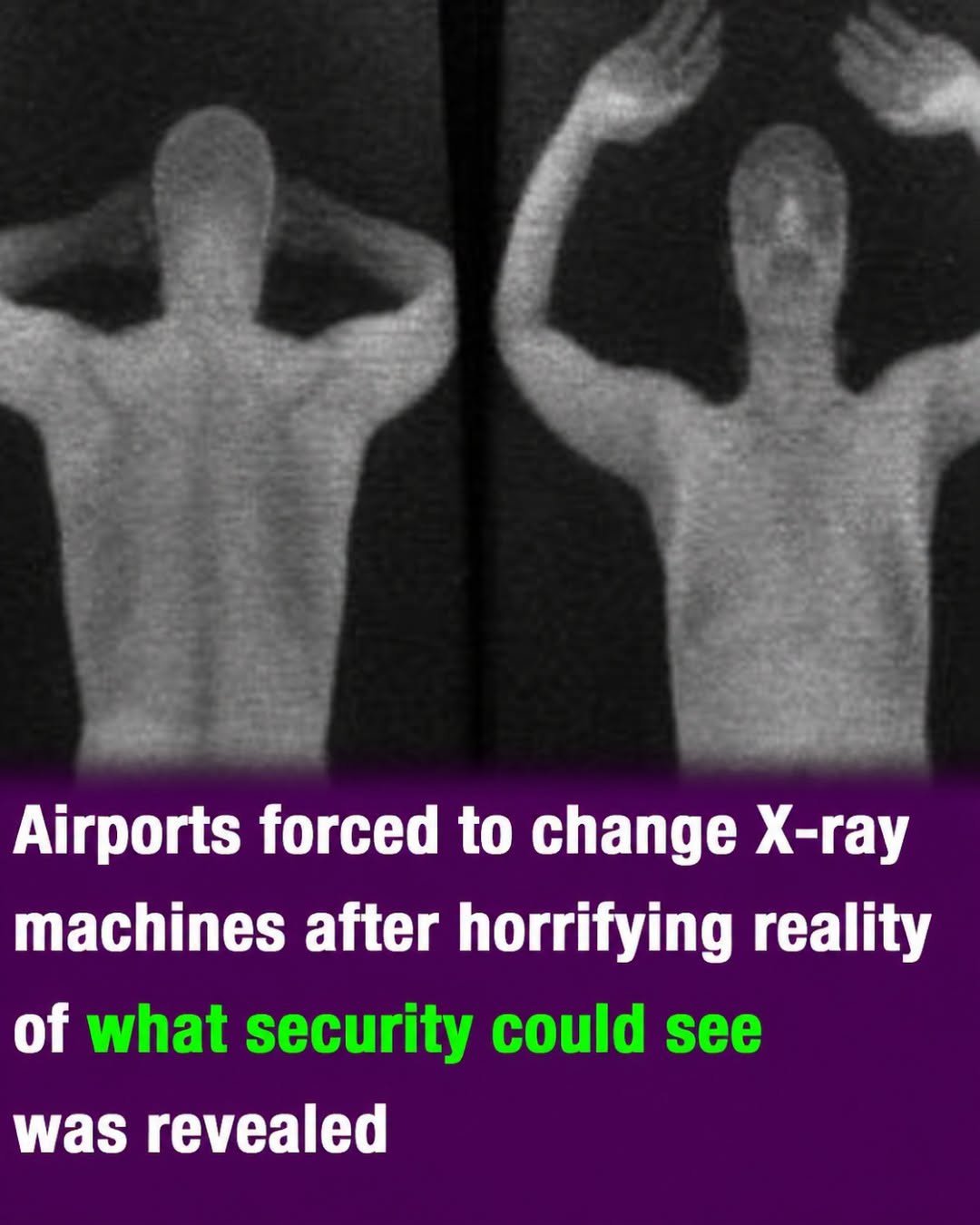
Imagine standing in a crowded airport security line, removing your shoes, placing your belongings in a plastic bin, and stepping into a scanner without knowing exactly what happens next. For millions of American travelers, this became a familiar routine after airports introduced advanced screening technology in 2010. The machines were intended to strengthen security following a failed terrorist attack aboard a flight bound for Detroit in December 2009. Government agencies invested in equipment designed to identify dangerous objects that traditional metal detectors might miss. Passengers were told the new screening process would make flying safer, but many had questions about how the technology worked. What initially appeared to be another security improvement soon developed into a nationwide controversy involving personal privacy, passenger dignity, and government oversight. The most troubling concern involved information that travelers never expected airport employees to see.
Unlike ordinary metal detectors, these scanners could identify objects concealed beneath clothing, including certain nonmetallic threats. That capability represented an important advancement in aviation security, but it also created an unexpected problem. Privacy advocates began questioning whether the technology collected more personal information than necessary. Travelers with medical devices, disabilities, or other sensitive circumstances expressed particular concerns. As criticism grew, civil liberties organizations demanded stronger protections and greater transparency. Then the public learned just how revealing the original scanner images could be, prompting a dispute that would eventually force major changes at American airports.
The controversial machines were Rapiscan backscatter X-ray scanners, introduced at U.S. airports beginning in 2010. Unlike the simplified images associated with today’s screening systems, the original technology could generate detailed representations of passengers’ bodies beneath their clothing. Those images could reveal intimate anatomical features and sensitive medical information, including prosthetics, catheters, and other personal devices. The American Civil Liberties Union strongly criticized the scanners, arguing that the technology created an unacceptable invasion of privacy. Its objections focused on the possibility that passengers would effectively undergo a highly revealing examination simply to board an aircraft. The controversy also raised broader questions about government contracts, technology investment, and legal protections. While an attorney might examine privacy rights or potential court challenges, travelers were primarily concerned about who could view their images and how that information would be handled. Unlike everyday financial matters involving mortgage payments, insurance coverage, or estate planning, this issue affected people during an ordinary activity: traveling. The Transportation Security Administration responded by pursuing privacy-enhancing software designed to replace detailed anatomical images with generic human outlines. However, implementing those protections across the screening equipment proved difficult, and the dispute continued.
The decisive development came in 2013, when the TSA moved to remove Rapiscan’s backscatter scanners from airport checkpoints after the company failed to meet the agency’s requirements for privacy-protecting software within the specified deadline. The agency also terminated the relevant portion of its contract. The removal did not mean airports abandoned advanced body screening altogether. Instead, modern U.S. airport body scanners use millimeter-wave technology with automated detection systems that display potential concerns on a generic body outline rather than presenting detailed images of individual passengers. Security personnel can identify areas requiring additional inspection without viewing the revealing anatomical images associated with the earlier machines. The controversy became an important example of how security technology can evolve when public concerns lead to stricter standards. For travelers, the lasting lesson is that airport safety and personal privacy do not necessarily have to compete. Technology can protect passengers while placing meaningful limits on what security staff are able to see.
Website Disclaimer
The information provided on this website is for general informational and educational purposes only. While we strive to ensure that all content is accurate and up to date, we make no guarantees regarding the completeness, reliability, or accuracy of any information published.
The views and opinions expressed in articles belong to their respective authors and do not necessarily reflect the views of this website. Any action you take based on the information found on this website is strictly at your own risk. We will not be liable for any losses, damages, or inconveniences arising from the use of our content.
Some articles may contain opinions, third-party information, or external links. We do not endorse or guarantee the accuracy of content on external websites and are not responsible for their practices or policies.
All content on this website is provided in good faith and is intended for informational purposes only. Readers are encouraged to verify information independently and seek professional advice where appropriate.