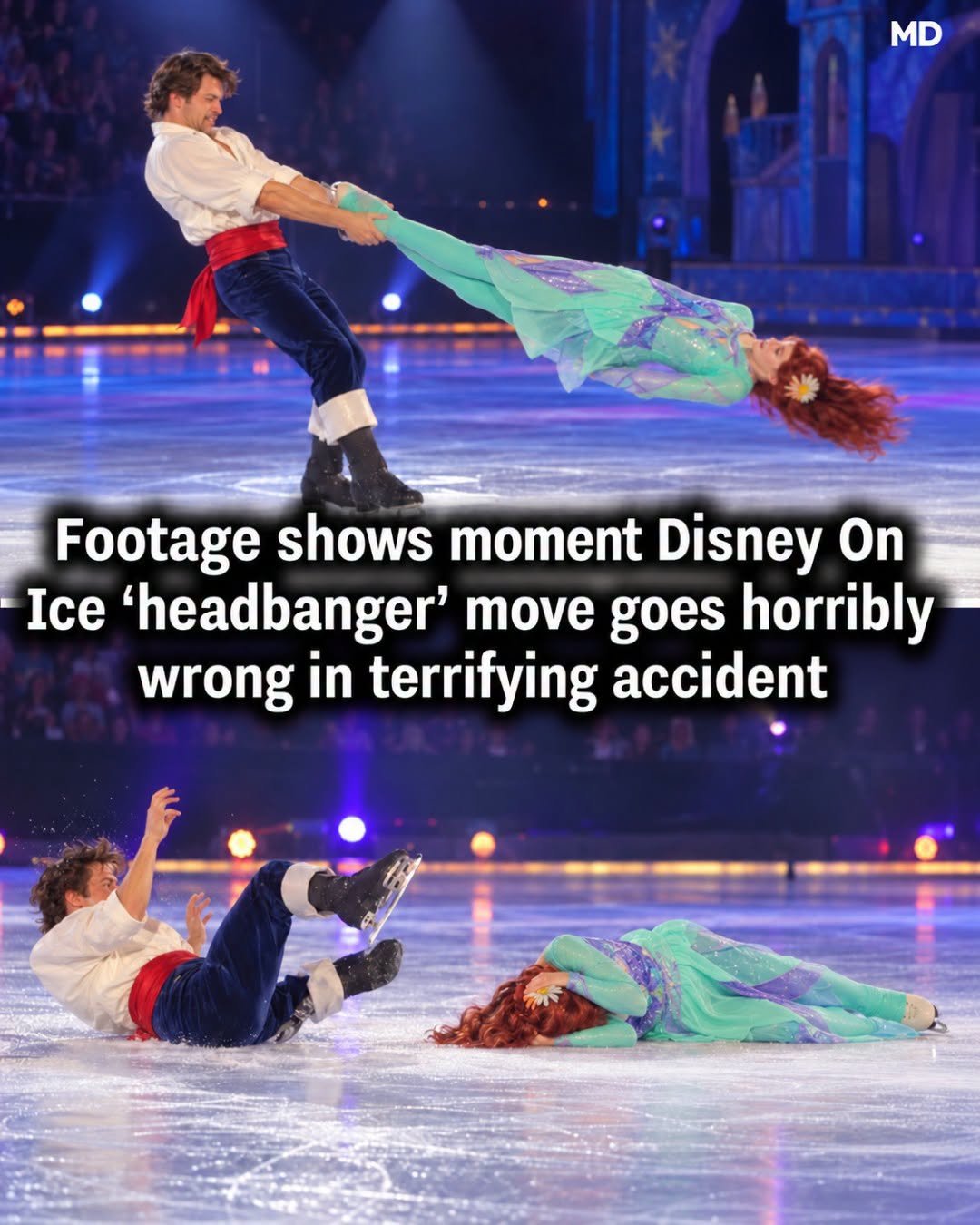
A Disney On Ice show built around The Little Mermaid took a frightening turn when a high-risk lift went wrong in front of a stunned arena crowd. The two skaters, dressed as Ariel and Prince Eric, were performing to “Part of Your World” when the move suddenly collapsed and both of them ended up on the ice.
The move was the “headbanger”, a demanding lift in which the male skater holds his partner by one ankle and swings her in a fast circle close to the ice. It is nicknamed the “Iron Lotus” after the 2007 film Blades of Glory, and it is banned in competitive figure skating because of how dangerous it is. The pair appeared to struggle through the final moments of the lift before they both went down.
After the fall, the woman was seen holding her head while her partner rushed to check on her. Both skaters eventually got back to their feet, bowed to the audience, and left the rink. Whether either of them was actually hurt was never publicly confirmed.
A spectator’s video of the fall spread widely on TikTok, drawing around 8.7 million views, with viewers torn between fear that the skater had hurt her head and praise for the pair’s composure in standing and bowing after such a frightening moment. The clip also revived debate about whether such risky routines belong in family entertainment. Feld Entertainment, the company behind Disney On Ice, was contacted for comment, and a former Dancing on Ice contestant has previously spoken about the care the move demands.
Website Disclaimer
The information provided on this website is for general informational and educational purposes only. While we strive to ensure that all content is accurate and up to date, we make no guarantees regarding the completeness, reliability, or accuracy of any information published.
The views and opinions expressed in articles belong to their respective authors and do not necessarily reflect the views of this website. Any action you take based on the information found on this website is strictly at your own risk. We will not be liable for any losses, damages, or inconveniences arising from the use of our content.
Some articles may contain opinions, third-party information, or external links. We do not endorse or guarantee the accuracy of content on external websites and are not responsible for their practices or policies.
All content on this website is provided in good faith and is intended for informational purposes only. Readers are encouraged to verify information independently and seek professional advice where appropriate.