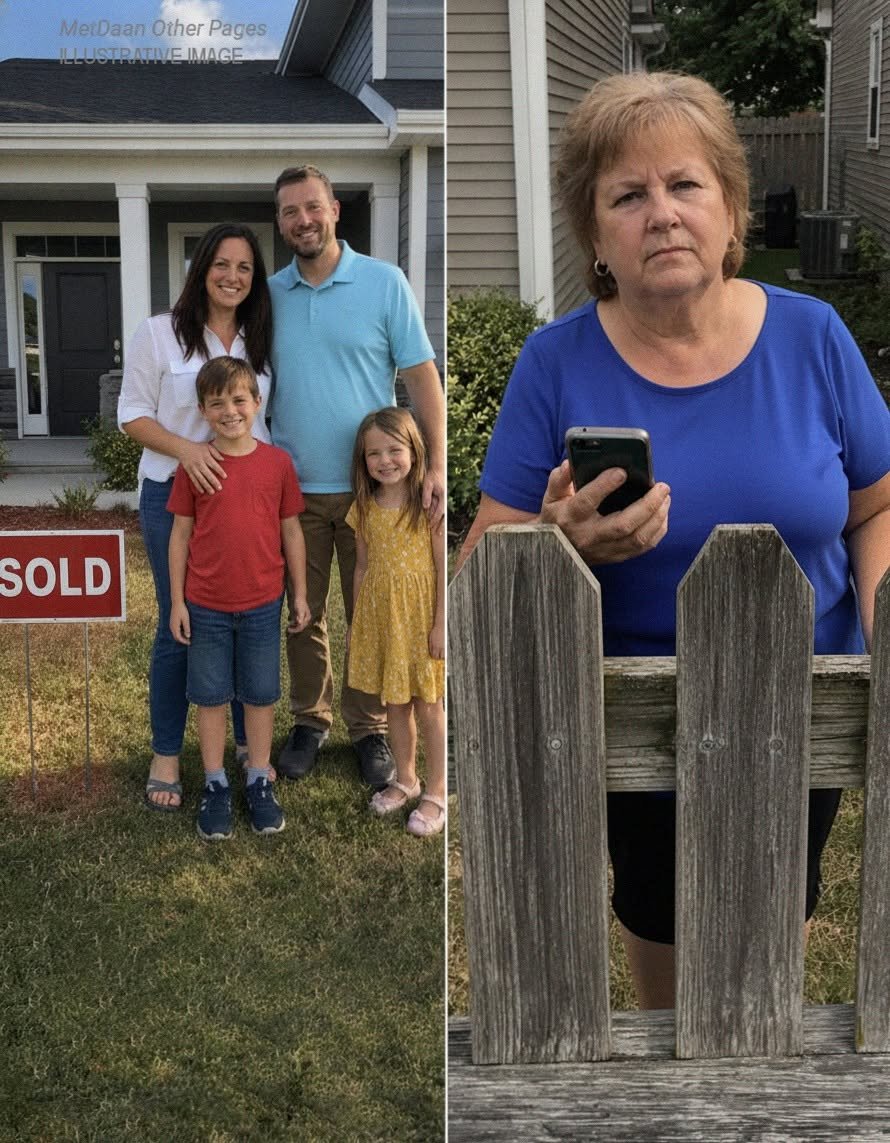
Three days after we moved into our dream home, the police knocked on our door for the first time. Someone had complained that our children were too loud and our dog was disturbing the neighborhood. I remember standing in the doorway, confused and embarrassed, while my husband, Daniel, tried to explain that we had only just moved in and were still settling down.
We had spent years saving for that house. It had a beautiful backyard, a white picket fence, and enough space for our two children to run around freely. Our eight-year-old son, Ethan, had already claimed the biggest tree in the yard as his secret fort, while our five-year-old daughter, Lily, loved chasing our golden retriever, Buddy, across the grass. To us, it was everything we had ever wanted.
At first, we assumed the complaint was a misunderstanding. Children played, dogs barked, and moving day was naturally a little noisy. We apologized to the officers and promised to be mindful of our neighbors. But a week later, another complaint arrived. Then another. Sometimes it was about Buddy barking in the afternoon. Other times, it was about the children laughing outside, riding their bicycles on the driveway, or playing in the backyard on a Saturday morning.
Before long, the complaints became a regular part of our lives.
Whenever someone knocked at the door, my stomach tightened. Sometimes it was the police. Other times, it was a neighborhood representative delivering another warning. We started keeping the windows closed, bringing Buddy inside earlier than usual, and reminding the children to lower their voices even when they were simply playing.
“Please don’t shout, sweetheart,” I would tell Lily whenever her excitement got the better of her.
“Buddy, quiet,” Daniel would whisper, even when the dog was only greeting someone passing the fence.
Ethan was the first to notice that something had changed.
One afternoon, he ran toward the backyard with his favorite ball, then stopped and looked at me through the kitchen window.
“Mom, can I play outside?”
The question seemed harmless, but something about the way he asked it broke my heart. He wasn’t asking whether he could play for an hour or whether a friend could come over. He was asking permission to do something that had once felt completely natural.
“Of course you can,” I replied, forcing a smile.
He nodded, but instead of running outside, he quietly returned to his room.
Over the following months, our house became strangely silent. The bicycles remained in the garage. The backyard swing stood empty. Ethan stopped inviting his friends over because he was afraid someone would complain. Lily began playing with her stuffed animals indoors, and Buddy spent most of his days lying beside the sofa instead of exploring the yard.
We had bought a home where our children could grow, laugh, and make memories. Yet we were teaching them to make themselves smaller just to keep strangers happy.
Daniel tried to handle the situation calmly. He spoke to the homeowners’ association, reviewed the neighborhood rules, and even asked whether there were specific quiet hours we needed to follow. We weren’t throwing parties or playing loud music late at night. We were simply living our lives.
Still, the complaints continued.
Six months after we moved in, I found Ethan sitting alone at the kitchen table. His school backpack rested beside his chair, and his untouched snack sat in front of him. He was staring through the window at the backyard.
I sat beside him and gently brushed his hair away from his forehead.
“What’s wrong, sweetheart?”
He hesitated before looking up at me. His eyes were filled with a sadness I had never seen in him before.
“Mom,” he asked quietly, “did we do something bad by moving here?”
For a moment, I couldn’t speak.
He continued, his voice trembling. “Because every time we laugh, someone gets angry. Every time Buddy barks, someone complains. And whenever the police come, you and Dad look scared. I thought this was our dream house. But why does it feel like we’re not allowed to be a family here?”
Those words shattered something inside me.
I pulled him into my arms, trying to hold back my tears, but he had already noticed them.
“No, sweetheart,” I whispered. “You haven’t done anything wrong. Not you, not your sister, and not Buddy. You deserve to laugh. You deserve to play. You deserve to feel at home.”
He rested his head against my shoulder.
“Then why can’t we?”
I had no answer that could make sense to an eight-year-old child.
That evening, after the children went to bed, Daniel and I sat at the kitchen table in silence. For months, we had focused on avoiding the next complaint. We had changed our routines, restricted our children’s playtime, and worried constantly about upsetting people who had never even tried to get to know us.
Somewhere along the way, we had stopped asking ourselves the most important question: Were we actually happy here?
Daniel finally broke the silence.
“We bought this house so the kids could have a childhood,” he said. “Instead, we’re teaching them to be afraid of making noise.”
I looked toward the backyard. The swing was motionless beneath the porch light, and Ethan’s ball lay forgotten beside the fence.
“We can’t keep living like this,” I whispered.
The next morning, we made a decision. We documented every complaint, reviewed the local noise regulations, and arranged a meeting with the homeowners’ association. We wanted clear answers, not another argument. We also began encouraging the children to use their backyard again, while remaining considerate of reasonable neighborhood quiet hours.
At the meeting, we explained how the repeated complaints had affected our family. We asked for specific evidence of any actual rule violations and requested that future concerns be handled fairly and consistently.
Not everyone agreed with us, and the situation didn’t magically disappear overnight. But we finally stopped treating every complaint as proof that we were doing something wrong.
We also began looking at our options. If the neighborhood continued to make ordinary family life feel impossible, we would consider moving—even if that meant giving up the house we had worked so hard to buy.
A few days later, Ethan asked if he could invite two school friends over.
I smiled and told him yes.
That Saturday, the boys played in the backyard. They laughed, chased the dog, and argued over whose turn it was to kick the ball. Lily joined them, her laughter ringing across the grass.
I watched from the kitchen window, tears gathering in my eyes again. This time, they weren’t tears of heartbreak. They were tears of relief.
For the first time in months, our home sounded like a home.
We learned that buying a beautiful house doesn’t guarantee a peaceful life. A dream home is not simply about the rooms, the garden, or the neighborhood’s reputation. It’s about the people inside it feeling safe enough to be themselves.
We still believe in being considerate neighbors. We still teach our children to respect other people’s space and to understand that shared communities require compromise. But we no longer want them to believe that kindness means disappearing, or that keeping the peace requires surrendering every little piece of their happiness.
Sometimes, the most heartbreaking thing isn’t losing a house.
It’s realizing that, while trying so hard to protect the dream you worked for, you accidentally taught your children to be afraid inside it.
And sometimes, the first step toward getting your home back isn’t changing the house at all.
It’s reminding your family that they belong there.
Website Disclaimer
The information provided on this website is for general informational and educational purposes only. While we strive to ensure that all content is accurate and up to date, we make no guarantees regarding the completeness, reliability, or accuracy of any information published.
The views and opinions expressed in articles belong to their respective authors and do not necessarily reflect the views of this website. Any action you take based on the information found on this website is strictly at your own risk. We will not be liable for any losses, damages, or inconveniences arising from the use of our content.
Some articles may contain opinions, third-party information, or external links. We do not endorse or guarantee the accuracy of content on external websites and are not responsible for their practices or policies.
All content on this website is provided in good faith and is intended for informational purposes only. Readers are encouraged to verify information independently and seek professional advice where appropriate.