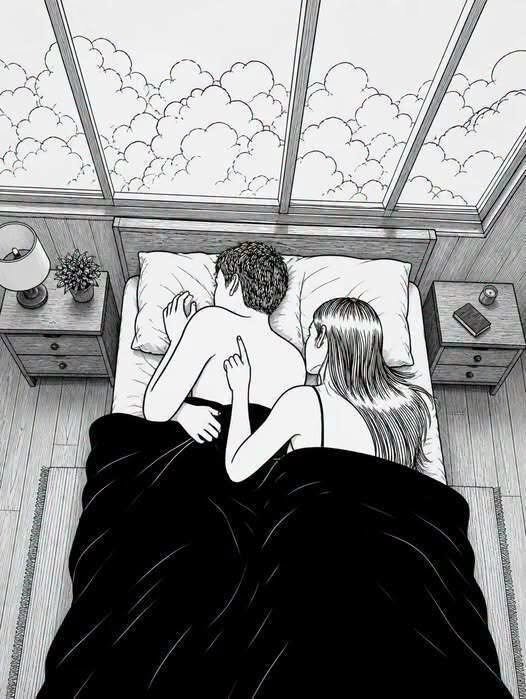
When your partner rolls over and sleeps with their back facing you, it can be easy to interpret the gesture as rejection. You might wonder whether they’re angry, emotionally distant, or simply no longer interested in being close. But sleeping back-to-back doesn’t automatically signal trouble in a relationship.
For many couples, the explanation is surprisingly simple: comfort. Once people fall asleep, they naturally move into positions that allow them to relax most easily. Turning away can provide more room, reduce body heat, and make it easier to settle into a preferred sleeping position without disturbing the other person.
In fact, partners can feel extremely close emotionally while still wanting physical space during sleep. Someone who feels secure in a relationship may not need constant touching or cuddling throughout the night to feel connected. Couples may cuddle before falling asleep and then separate naturally once they’re ready for deeper sleep.
The situation can mean something different when the sleeping position accompanies noticeable changes outside the bedroom. If a partner suddenly avoids affection, stops communicating, regularly seems angry, and begins creating emotional distance during the day as well, turning away at night could simply be another reflection of that broader tension.
Ultimately, one sleeping position cannot reveal the state of an entire relationship. If everything between two people remains affectionate and comfortable during waking hours, a partner turning their back at bedtime probably means exactly what it looks like: they’ve found the position in which they sleep best.
Website Disclaimer
The information provided on this website is for general informational and educational purposes only. While we strive to ensure that all content is accurate and up to date, we make no guarantees regarding the completeness, reliability, or accuracy of any information published.
The views and opinions expressed in articles belong to their respective authors and do not necessarily reflect the views of this website. Any action you take based on the information found on this website is strictly at your own risk. We will not be liable for any losses, damages, or inconveniences arising from the use of our content.
Some articles may contain opinions, third-party information, or external links. We do not endorse or guarantee the accuracy of content on external websites and are not responsible for their practices or policies.
All content on this website is provided in good faith and is intended for informational purposes only. Readers are encouraged to verify information independently and seek professional advice where appropriate.