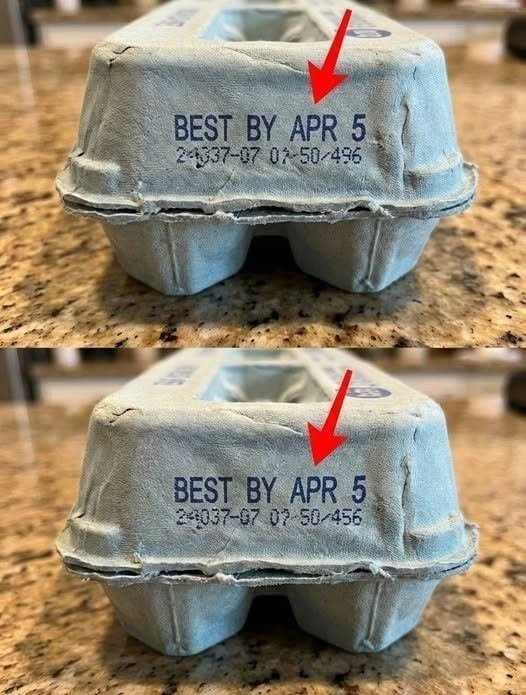
Of course, fresh is best, but is there an issue with older eggs that are still good? Technically no, you can still eat eggs that aren’t rotten, and it’s always a shame to waste food. However, eggs deteriorate over time, and lose moisture and carbon dioxide, which makes the yolks more breakable and the whites runnier. Plus, older eggs pose a greater risk of food-borne illnesses.
Eggs are a staple in many households. They are versatile sources of protein suited for any meal. They could be scrambled, fried, poached, baked, etc. and paired with an assortment of other foods. However, the expiration date on egg cartons isn’t as clear-cut as the dates on other items. There’s an additional code on an egg carton called the Julian date. Once you decode it, you can ensure you are purchasing fresh eggs.
You can find this code on the side of the egg carton, near the sell by date. It looks like a three digit serial number but it’s actually a date. If you are unfamiliar, Julian dates range from 001 to 365, counting every day of the year, one at a time. For example, 001 is January 1st and 365 is December 31.
This code refers to the day the eggs were washed, graded, and loaded into their cartons. Eggs are freshest four to five weeks after being packaged so keep that in mind while shopping. Because the United States Department of Agriculture allows eggs to be sold for up to 30 days after their packaging, you may find cartons that are weeks old on store shelves.
Website Disclaimer
The information provided on this website is for general informational and educational purposes only. While we strive to ensure that all content is accurate and up to date, we make no guarantees regarding the completeness, reliability, or accuracy of any information published.
The views and opinions expressed in articles belong to their respective authors and do not necessarily reflect the views of this website. Any action you take based on the information found on this website is strictly at your own risk. We will not be liable for any losses, damages, or inconveniences arising from the use of our content.
Some articles may contain opinions, third-party information, or external links. We do not endorse or guarantee the accuracy of content on external websites and are not responsible for their practices or policies.
All content on this website is provided in good faith and is intended for informational purposes only. Readers are encouraged to verify information independently and seek professional advice where appropriate.