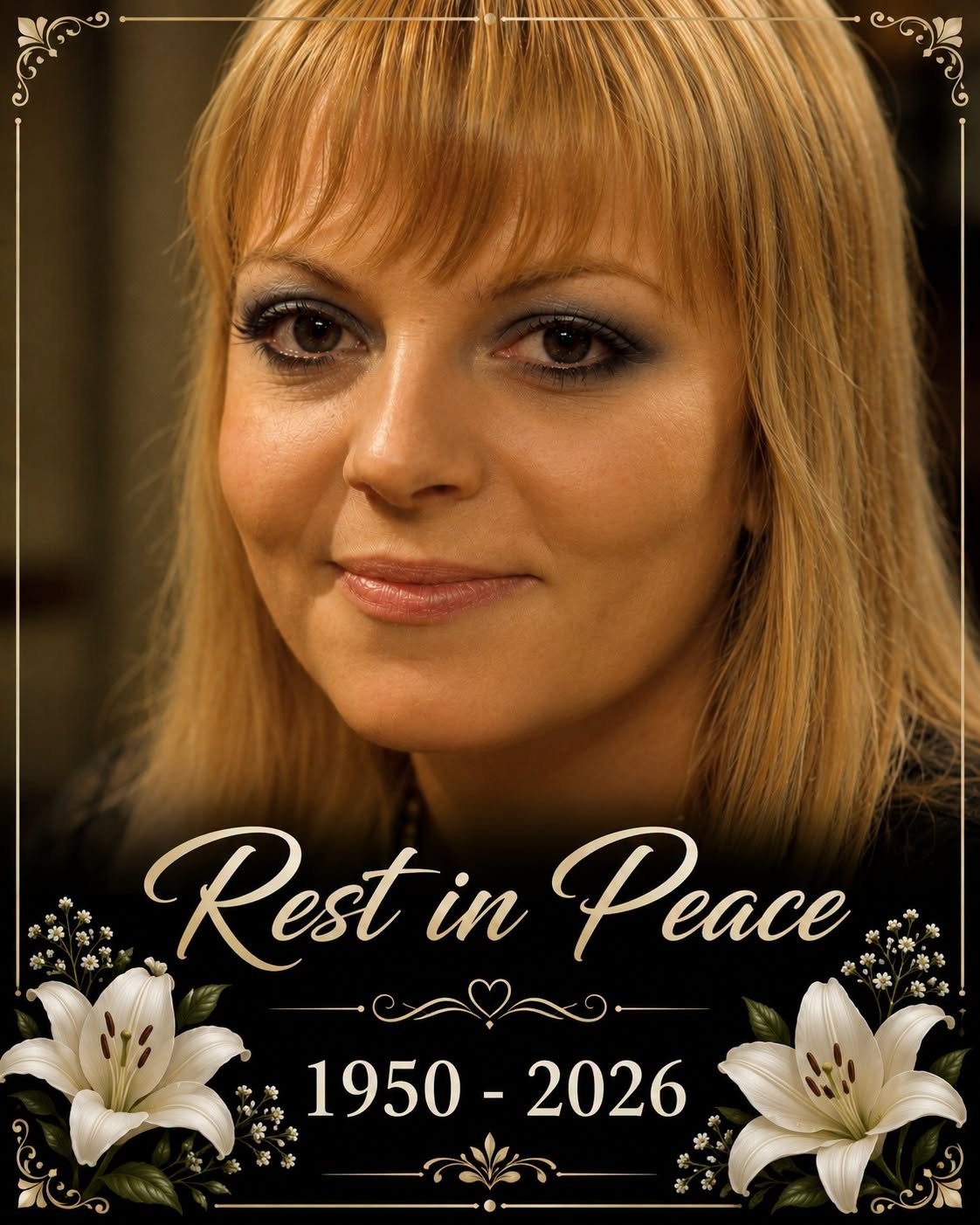
A familiar face from British television has died, bringing renewed attention to a career that stretched across several decades and included appearances in some of the country’s best-known television programmes. Actress Cheryl Hall, remembered especially for her work in Citizen Smith and Doctor Who, has died at the age of 76. News of her death prompted tributes celebrating not only the characters she portrayed but also the distinctive presence she brought to British television during a long and varied career.
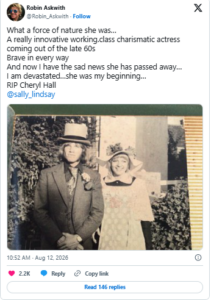
For viewers who grew up watching television in the 1970s and subsequent decades, Hall was a performer whose face became familiar through comedy, drama and guest appearances. Actor Robin Askwith, who had a relationship with Hall during the early 1970s, was among those paying tribute following news of her death. Askwith remembered her as a charismatic and courageous working-class actress who emerged during a period of considerable change in British entertainment. His tribute also reflected the important personal place Hall had occupied in his early life and career.
The two were partners from approximately 1970 until 1973, before their lives eventually took different directions. Decades later, his response to her death demonstrated that the memories of their time together had remained meaningful to him. Hall’s professional career began around the end of the 1960s, and television soon became an important part of her work. One of her early appearances came in the popular sitcom On the Buses, where she played Eileen, a bus conductress, in the 1971 episode “The Epidemic.” It was one of numerous roles that gradually established Hall as a recognizable performer.
Her career developed during an especially active period for British television, when sitcoms, police dramas and serialized programmes were attracting enormous audiences and creating characters that remained familiar long after their original broadcasts. Hall proved able to move between different genres rather than becoming restricted to one particular type of performance.
One of the most enduring entries on Hall’s résumé arrived with Doctor Who. She appeared as Shirna in the four-part 1973 adventure Carnival of Monsters, opposite Jon Pertwee as the Third Doctor and Katy Manning as companion Jo Grant. Shirna works alongside travelling showman Vorg, played by Leslie Dwyer, as they operate a remarkable device known as the Scope. The serial was written by Robert Holmes, produced and directed by Barry Letts, and originally aired across four Saturdays between January 27 and February 17, 1973. Hall’s participation connected her permanently with one of Britain’s longest-running and most recognizable science-fiction franchises.
Her connection with Doctor Who, however, had begun even before she played Shirna. Hall had previously been considered for the important role of Jo Grant, who became the Third Doctor’s companion. She was among the actresses shortlisted during the casting process, although Katy Manning ultimately secured the part. Hall and actress Jenny McCracken later recalled that producer Barry Letts had indicated that he wanted to find other opportunities for them. Both women subsequently appeared in Carnival of Monsters, with McCracken playing Claire Daly and Hall portraying Shirna. It is an intriguing piece of casting history showing how close Hall came to having an even larger place in the programme’s history.
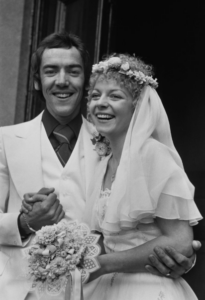
Hall became especially familiar to comedy audiences through Shirley Johnson in Citizen Smith. The BBC sitcom, created by John Sullivan, centered on Wolfie Smith, an idealistic and frequently unsuccessful revolutionary played by Robert Lindsay. Shirley was Wolfie’s girlfriend, and Hall’s performance became an important part of the programme’s comic world. The relationship between Hall and Lindsay extended beyond the television studio: the actors were also married in real life during the 1970s before eventually separating. Their professional association nevertheless remains part of the history of a sitcom that became closely identified with British television comedy of that era.
Hall’s career was considerably broader than any single sitcom. Over the years, she accumulated appearances across comedy, crime drama, soap opera and other television formats. Her credits included The Bill, in which she appeared multiple times, as well as programmes such as EastEnders, Poirot, Silent Witness and As Time Goes By. She also worked with David Jason in the 1976 sitcom Lucky Feller. This range illustrates the adaptability required of a working television actor: rather than depending exclusively on one famous character, Hall continued appearing in different productions and reaching new audiences as British television changed around her.
Her work extended to cinema as well. Film credits associated with Hall include Deep End, Villain, To Catch a Spy and The Magnificent Seven Deadly Sins. Although television ultimately provided many of the performances for which audiences remember her most clearly, her film work formed another part of a career spanning numerous productions. Hall belonged to a generation of British performers who frequently moved between television, cinema and other acting work rather than following a single path. That versatility helped her remain active for decades and gave audiences multiple opportunities to encounter her performances in very different settings.
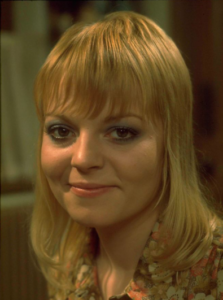
Her influence on British comedy also went beyond the roles visible on screen. Reports following her death recalled an interesting connection between Hall and writer John Sullivan. Hall’s criticism of the way Sullivan had written female characters reportedly helped inspire him to develop Just Good Friends, the successful sitcom starring Jan Francis and Paul Nicholas. The story adds another dimension to Hall’s legacy: she was not simply someone who delivered lines written for her, but a performer willing to express opinions about characterization and the opportunities available to women in television.
Later in her life, Hall also became involved in public service and politics. She stood as the Labour candidate for Canterbury in the 1997 UK general election, receiving 16,949 votes, or approximately 31.3 percent of the constituency vote. Conservative candidate Julian Brazier retained the seat. Hall subsequently served in local government in Kent and became associated with efforts to increase women’s representation. This part of her life represented a significant departure from acting, while demonstrating her willingness to participate directly in civic and public affairs. Her political activity is part of her biography rather than the focus of her entertainment legacy.
News of Hall’s death therefore marks the passing of someone whose professional life cannot easily be reduced to a single television appearance. To some viewers she will always be Shirley Johnson from Citizen Smith. To Doctor Who enthusiasts, she remains Shirna from Carnival of Monsters, as well as one of the actresses who came close to becoming Jo Grant. Other audiences encountered her through police dramas, soaps, comedies or films. Each of those appearances contributed to a body of work that stretched from the late 1960s into the twenty-first century and reflected several different eras of British television.
The tributes following her death also emphasize the person remembered by those who actually knew and worked with her. Robin Askwith described Hall as courageous, charismatic and a powerful presence, while others have recalled her warmth and engaging personality. Those recollections complement the television archive that remains available to audiences today. Performances preserve only one part of an actor’s life; memories from colleagues, friends and loved ones provide another. Together, they offer a fuller picture of a woman whose influence extended beyond the characters appearing on screen.
For admirers of classic British television, Cheryl Hall leaves behind a varied and distinctive legacy. Her journey took her from early television appearances to Doctor Who, from the comedy of Citizen Smith to numerous dramatic roles, and eventually into public service. Her death at 76 closes a remarkable chapter, but the programmes and performances she contributed to remain part of Britain’s television history. As audiences revisit those productions, Hall will continue to be remembered for the confidence, personality and versatility she brought to her work across decades in front of the camera.
Website Disclaimer
The information provided on this website is for general informational and educational purposes only. While we strive to ensure that all content is accurate and up to date, we make no guarantees regarding the completeness, reliability, or accuracy of any information published.
The views and opinions expressed in articles belong to their respective authors and do not necessarily reflect the views of this website. Any action you take based on the information found on this website is strictly at your own risk. We will not be liable for any losses, damages, or inconveniences arising from the use of our content.
Some articles may contain opinions, third-party information, or external links. We do not endorse or guarantee the accuracy of content on external websites and are not responsible for their practices or policies.
All content on this website is provided in good faith and is intended for informational purposes only. Readers are encouraged to verify information independently and seek professional advice where appropriate.