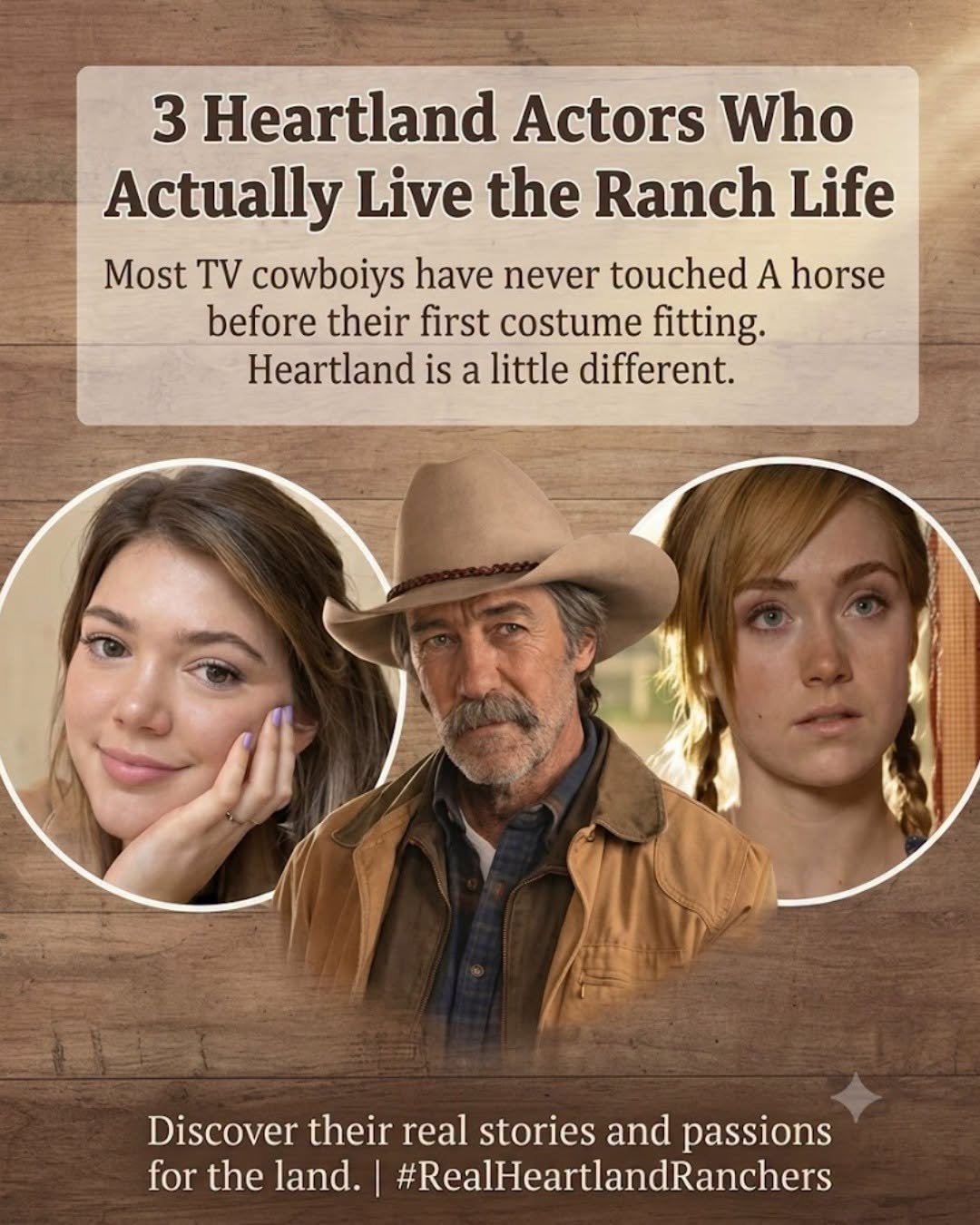
Heartland is closing in on two decades on air. That longevity gets attributed to a lot of things—the Alberta landscape, the family dynamics, the horse-human relationships at the show’s center—but the more you look at the cast, the more the real explanation becomes obvious. A few of the actors aren’t performing ranch life. They’re commuting from it.
Amber Marshall’s 6:00 AM Reality
Amber Marshall owns a 100-acre homestead near Calgary. Not a weekend retreat or a place with a couple of photogenic horses out front. A working farm where she’s up at six in the morning milking her Jersey cow—a management necessity, not a lifestyle choice, since unmilked cows develop mastitis—and running frozen hay bales out to the animals before most of her castmates have had breakfast.
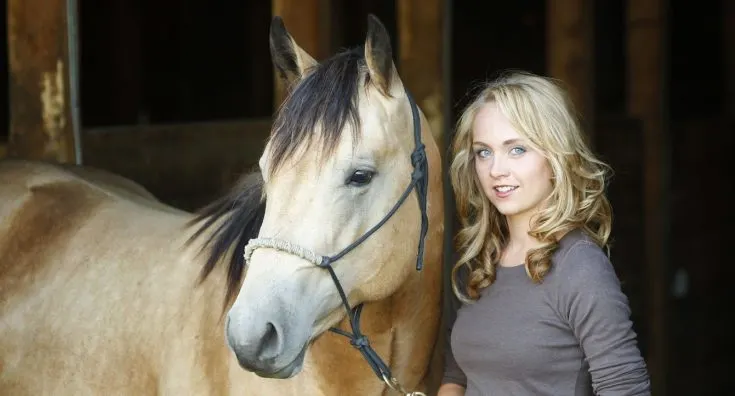
Amber Marshall as Amy Fleming, standing next to a horse in a rustic barn setting
It’s always been hard to tell where Marshall ends and her character, Amy Fleming, begins. s. She’s talked openly about how incidents on her farm have a way of turning up in scripts a few months later, which makes the show’s more grounded storylines feel less like writers’ room invention and more like documentary lag. When the original Spartan—a gelding named Stormy—began showing signs of arthritis and couldn’t sustain the physical demands of filming, Marshall didn’t go looking for a lookalike. She brought her own horse, Hawk, onto the set. Every scene you’ve watched since where Amy works with her lead horse has been Marshall with an animal she rides at home. That’s not casting. That’s just her life with better lighting.
Alisha Newton: Actually Competitive
Alisha Newton joined Heartland as a kid, and she grew up in the jumper ring as much as on set. In the horse world, ‘TV riding’ is shorthand for the stiff, overcautious style that results from actors who’ve had a few weeks of coaching and are terrified of the horse beneath them. Newton never had that problem.
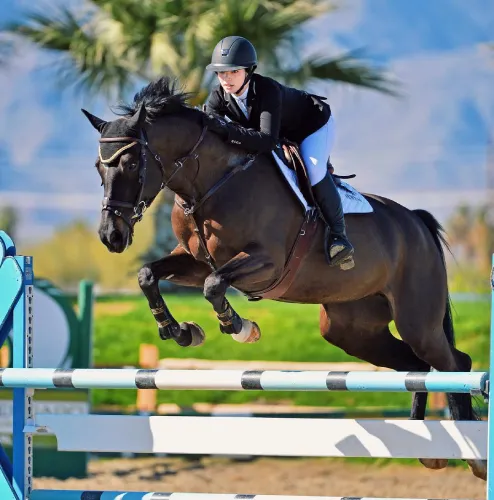
Alisha Newton as Georgie, jumping a horse over a fence in a competitive riding outfit
She competes off-season at venues like Thunderbird Show Park and owns a mare she calls Diva—nicknamed ‘the dragon’ for her speed and temperament, which is the kind of detail only a real rider would find charming instead of alarming.
On screen, this means you almost never see a stunt double in Georgie’s saddle, whether she’s doing mounted archery or a full jumping course. A few years back she broke her arm when a horse went fresh on her during a ride—the exact kind of accident that happens to working riders and almost never to actors performing a version of riding for cameras. She came back. Nobody involved seemed especially surprised.
Shaun Johnston: The Real Thing Under the Makeup
Shaun Johnston is about twenty years younger than Jack Bartlett. The weathered face, the gray hair, and the slow authority of a man who has lived through decades of hard winters all come with help from makeup, costume, and performance.
But makeup cannot create the way Johnston moves around horses and ranch equipment. That comes from growing up on a farm near Ponoka, Alberta.
Johnston has said he was never thrown from a horse during the show’s long production run, not bragging, but as something that follows naturally from a lifetime in the saddle.
He also wrote and performed the songs Jack plays across the series, adding something deeply personal to a character whose inner life he truly understands.
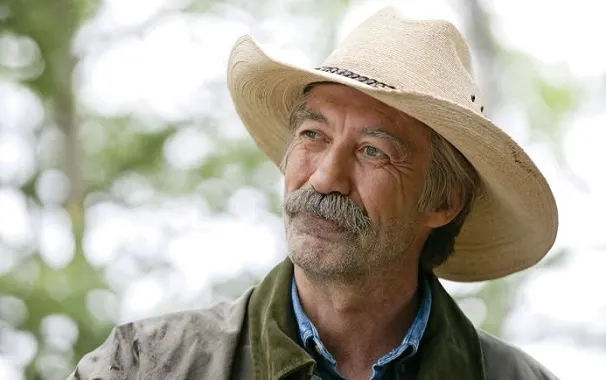
Shaun Johnston as Jack Bartlett, leaning on a fence post with a cowboy hat and typical rancher attire
For Johnston, playing Jack isn’t just studying a character; it’s like looking in a mirror. He grew up watching men who worked and carried themselves like Jack does. The performance is believable because the reference points are real.
19 seasons is a long time for a show about horses and family to keep an audience without becoming silly or so sentimental that it becomes unwatchable. Heartland has managed it partly because Marshall, Newton, and Johnston bring something to their performances that no amount of riding lessons or research trips can fake.
You can see it in the way they handle a lead rope, lean on a fence, read a horse’s body language before the animal does anything dramatic.
The ranch works as a setting because, for these three actors, it is not just scenery. It is context.
Website Disclaimer
The information provided on this website is for general informational and educational purposes only. While we strive to ensure that all content is accurate and up to date, we make no guarantees regarding the completeness, reliability, or accuracy of any information published.
The views and opinions expressed in articles belong to their respective authors and do not necessarily reflect the views of this website. Any action you take based on the information found on this website is strictly at your own risk. We will not be liable for any losses, damages, or inconveniences arising from the use of our content.
Some articles may contain opinions, third-party information, or external links. We do not endorse or guarantee the accuracy of content on external websites and are not responsible for their practices or policies.
All content on this website is provided in good faith and is intended for informational purposes only. Readers are encouraged to verify information independently and seek professional advice where appropriate.