Some relationships leave an impression that lasts far beyond the years in which they first began. Teachers, in particular, can become an important part of a person’s life, helping students discover abilities they did not know they possessed. For Mary Redmond and Joshua Woodard, a connection that began through music eventually came full circle in an unexpectedly moving way. Years after Mary had taught Joshua, the former student found himself standing beside his old teacher again. This time, however, they were meeting under very different circumstances, during the final chapter of Mary’s life.
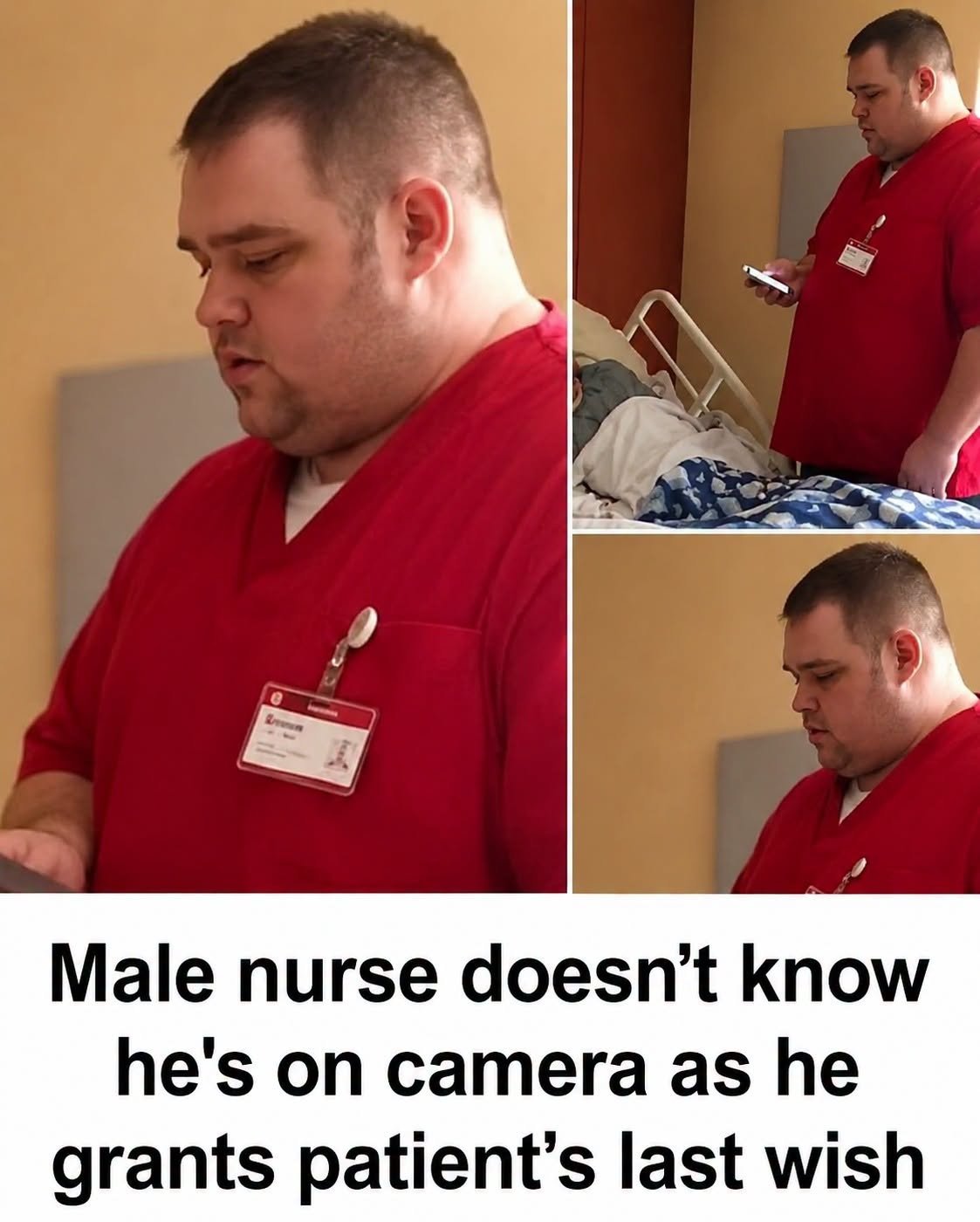
Mary had spent years teaching voice and piano, sharing her knowledge of music with younger generations. Among the children she taught was Joshua Woodard, who reportedly knew Mary from the time he was around nine years old. Years passed, Joshua grew up, and the relationship between teacher and student became part of their shared history. Eventually, their paths crossed again at the Austinburg Nursing & Rehab Center in Ohio, where Joshua was working and Mary was receiving care. The reunion created an opportunity for the former student to give something meaningful back to the woman who had once taught him.
During Mary’s final days, music remained connected to the life she had spent teaching others. One hymn in particular became part of the moment that would later reach people far beyond the care facility: “How Great Thou Art.” Rather than creating an elaborate performance, Joshua stood near his former teacher and sang for her. Accounts of the encounter describe him using his phone while performing the hymn. The simplicity of the scene was part of what made it memorable — a former student singing to the teacher who had once helped introduce music into his life.
The encounter was recorded, preserving something that otherwise might have remained a private memory shared only by Mary, Joshua and their families. Marti Adkins Redmond wrote about the relationship between them when the footage was shared online. She explained that Mary had taught voice and piano and that Joshua had been one of her students when he was young. In her comments accompanying the video, Marti also expressed admiration for hospice workers and highlighted Joshua’s connection to Mary. The footage subsequently circulated widely online after being shared on social media.
Knowing their history gives the performance an additional meaning. Joshua was not simply singing to someone he had recently met through his work. He was performing for a person who had played a role in his childhood and musical education. Decades earlier, the roles had effectively been reversed: Mary had been the teacher and Joshua the young student listening and learning. During this later encounter, Joshua was the one providing the music while Mary listened. It became an unusual example of how relationships formed through teaching can endure, sometimes resurfacing many years later in completely unexpected circumstances.
The video also illustrates why music can become such a meaningful part of personal memories. A familiar hymn can carry associations with family, faith, community or earlier periods of life, although the precise emotions Mary experienced during Joshua’s performance are hers alone and should not be assumed. What can be seen and documented is much simpler: a former student took time to sing a familiar hymn for his former music teacher while she was receiving end-of-life care. That documented reality is powerful enough without adding dramatic details that cannot be independently established.
Mary later died, making the recording a lasting reminder of one of the interactions from her final period of life. Reports published shortly after the video circulated identified her as Mary Redmond and described Joshua as a hospice aide who had previously been her student. The story attracted attention precisely because of that remarkable reversal between teacher and pupil. The person who had spent years giving others the gift of music was eventually given music in return by someone she had taught many years before.
There is also a broader story here about caregiving. End-of-life care involves practical responsibilities, but moments of individual attention can matter greatly to patients and families. Joshua’s performance did not require a stage, professional equipment or a large audience. It consisted largely of a familiar song, an existing relationship and the willingness to spend time with someone nearing the end of her life. Marti’s comments specifically praised hospice workers while describing Joshua as particularly special because of his history with Mary.
Years after the recording first circulated, the story continues to be rediscovered online. That longevity may have less to do with spectacle than with the recognizable human experience at its center. Many people remember a teacher who encouraged them, challenged them or introduced them to something they eventually loved. Most students never receive an opportunity quite like Joshua’s to return that influence in such a direct way. His encounter with Mary therefore represents something both unusual and familiar: gratitude toward someone who contributed to an earlier chapter of life.
Ultimately, Mary Redmond’s story does not need exaggeration to be moving. She was a voice and piano teacher. Joshua Woodard had been one of her students as a child. Many years later, while Mary was receiving care in Ohio near the end of her life, Joshua stood beside his former teacher and sang “How Great Thou Art.” Someone close to the family preserved the encounter on video, allowing a deeply personal moment to reach a much wider audience. It remains a simple reminder that the influence of a good teacher can continue long after the lessons themselves have ended.
Website Disclaimer
The information provided on this website is for general informational and educational purposes only. While we strive to ensure that all content is accurate and up to date, we make no guarantees regarding the completeness, reliability, or accuracy of any information published.
The views and opinions expressed in articles belong to their respective authors and do not necessarily reflect the views of this website. Any action you take based on the information found on this website is strictly at your own risk. We will not be liable for any losses, damages, or inconveniences arising from the use of our content.
Some articles may contain opinions, third-party information, or external links. We do not endorse or guarantee the accuracy of content on external websites and are not responsible for their practices or policies.
All content on this website is provided in good faith and is intended for informational purposes only. Readers are encouraged to verify information independently and seek professional advice where appropriate.