Lauren Whitcomb heard her mother’s secret while standing in the kitchen doorway with a glass of cranberry punch in her hand. “Don’t tell Lauren yet,” Diane whispered, proudly explaining that the Cape Cod cottage had already been renovated for Lauren’s younger sister, Megan. From the dining room, her father added that they had changed the locks because Lauren barely used the property during winter. Her fingers tightened around the cold glass as relatives suddenly found reasons to stare at their plates. The cottage was the only home Lauren had ever purchased entirely with her own money, yet her family was discussing it as though she were merely delaying their plans. Instead of confronting them, she smiled, praised the Christmas dinner, and quietly left before dessert. Sitting in her frozen car minutes later, she opened the security application and discovered that both cameras had been disconnected nearly a month earlier.
Lauren had bought the weathered blue cottage in Eastham at thirty-six after working two jobs and saving her down payment in deposits as small as $140. The property cost $318,000, and although the shutters leaned slightly and the kitchen window stuck during humid weather, every imperfect room represented ten years of discipline. Her family had long treated her stability as available income: Lauren paid holiday grocery bills, covered expensive birthday dinners, and sent her parents nearly $17,000 during various “temporary emergencies.” Meanwhile, Megan was always described as fragile because she had two children and struggled to manage rising rent, while Lauren was told she did not need help because she was capable. Richard and Diane gradually began calling the cottage “the Cape Cod place,” as though repeating the phrase could turn private property into a family asset. Lauren had mistaken that language for harmless affection until she realized her parents had spent $30,000 remodeling her home without permission.
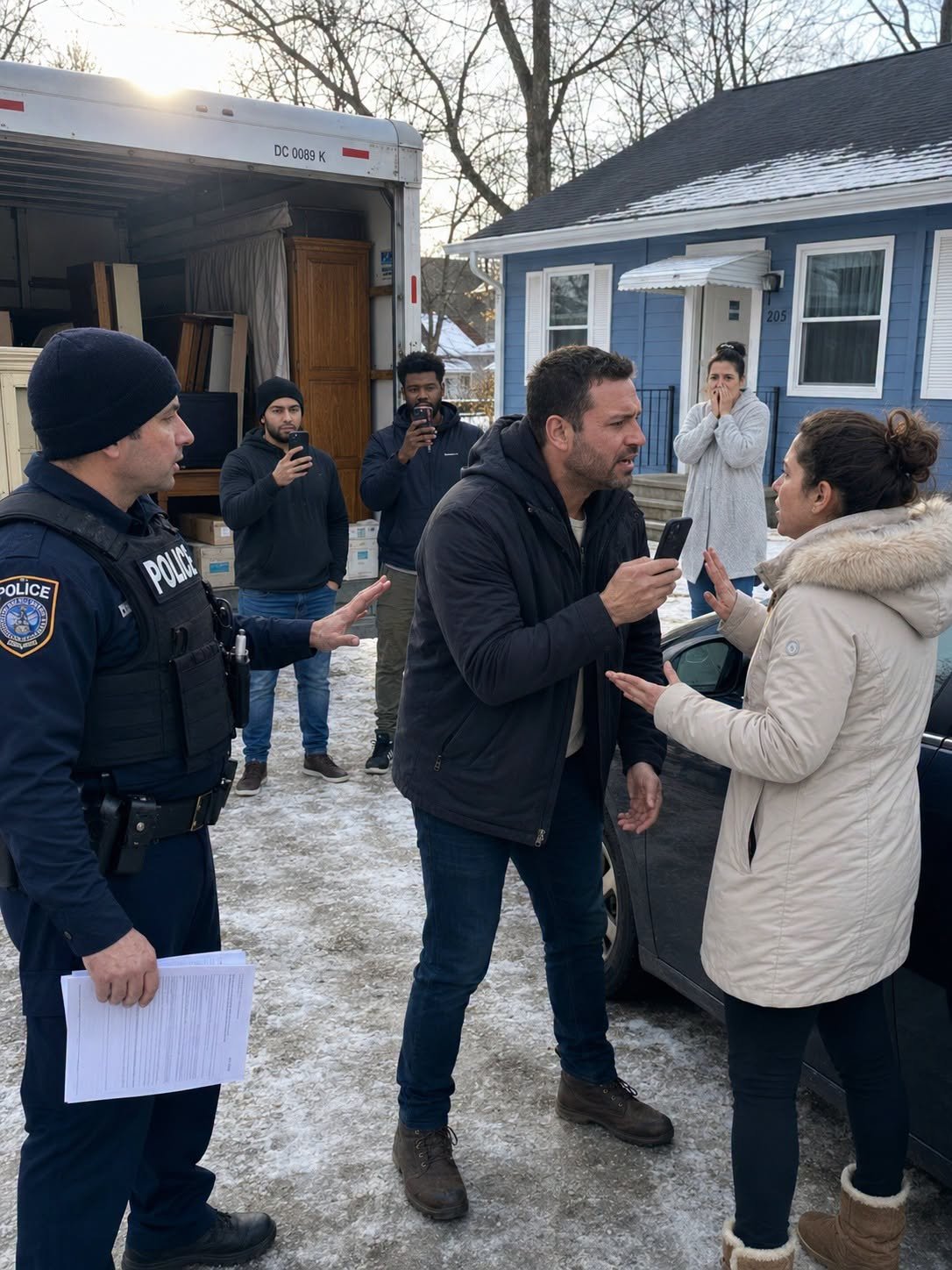
Property manager Ben Carter drove to the cottage that Christmas night and found a moving truck, contractor debris, new curtains, and Richard’s SUV parked beside the garage. Through the window, he could see that Lauren’s original hardwood floors had been removed and a pale-yellow nursery was being prepared in the back bedroom. Ben photographed the altered locks, the discarded boards, the truck’s license plate, and a construction permit carrying Lauren’s forged signature—and even her surname was misspelled. Lauren gathered the deed, tax records, ownership documents, and camera history, then contacted the Barnstable County Sheriff’s Office shortly after midnight. By sunrise, Richard, Diane, Megan, and the movers were standing in the snowy driveway while a deputy reviewed the records. When Diane called demanding that Lauren describe the situation as a misunderstanding, Lauren calmly confirmed that no one had ever received permission to enter, renovate, or occupy the property. Then the sheriff asked whether she wanted everyone removed—and whether she intended to pursue the forged document.
Lauren’s attorney, Priya Raghavan, filed claims covering unauthorized entry, discarded belongings, property damage, and fraudulent use of Lauren’s identity. The homeowner’s insurance company reviewed the timeline, but the policy could not erase the fact that family members had deliberately removed security equipment before entering. Mortgage records, tax payments, title documents, and the original real-estate investment all carried Lauren’s name alone, leaving her parents without a legitimate ownership or estate claim. The contractor produced emails showing that Richard had represented himself as authorized to act for his daughter and had supplied a signature she never wrote. Once those records reached court, the family’s explanation shifted from an alleged verbal agreement to a clerical error, then to the claim that the improvements had increased the cottage’s value. The judge rejected those arguments and ordered Richard and Diane to pay for the restoration, replacement of Lauren’s missing property, legal expenses, and the damage created by their unauthorized renovations.
Nearly a year later, the cottage again had gray-green walls, warm hardwood floors, and the same slightly crooked blue shutters Lauren had loved from the beginning. She kept the groaning back step because some imperfections belonged to the home’s history, but she installed new locks and cameras whose access codes were shared with no relatives. Her parents and sister continued describing her response as harsh, yet none of them plainly admitted that they had taken a home that was not theirs. On the first warm afternoon after the repairs, Lauren carried iced tea onto the porch and listened to the ocean beyond the yard. The house was quiet, but it was no longer the uneasy silence of someone waiting for another boundary to be crossed. It was the peaceful sound of a woman sitting inside the life she had built—and finally understood she had every right to protect.
Website Disclaimer
The information provided on this website is for general informational and educational purposes only. While we strive to ensure that all content is accurate and up to date, we make no guarantees regarding the completeness, reliability, or accuracy of any information published.
The views and opinions expressed in articles belong to their respective authors and do not necessarily reflect the views of this website. Any action you take based on the information found on this website is strictly at your own risk. We will not be liable for any losses, damages, or inconveniences arising from the use of our content.
Some articles may contain opinions, third-party information, or external links. We do not endorse or guarantee the accuracy of content on external websites and are not responsible for their practices or policies.
All content on this website is provided in good faith and is intended for informational purposes only. Readers are encouraged to verify information independently and seek professional advice where appropriate.