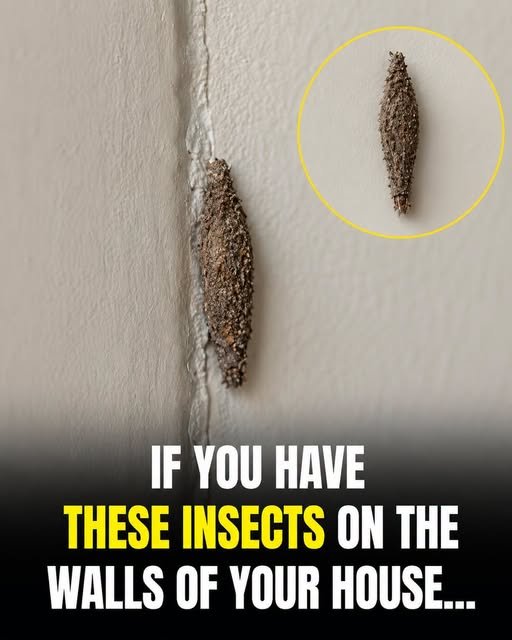
Bagworms, also known as case-bearing moth larvae, are small insects that often go unnoticed because of their natural camouflage. They create tiny protective cases from dust, fibers, and debris, allowing them to blend easily into indoor spaces. While they are not harmful to people, their presence indoors can feel unpleasant and may indicate excess dust, humidity, or poor airflow. Understanding where they hide is an important step in preventing them from spreading.
A common place to find bagworms is along walls and ceiling corners. These high, hard-to-reach areas are frequently missed during routine cleaning and tend to collect dust and cobwebs. Bagworms use these materials to build and reinforce their cases, attaching themselves to surfaces where they can remain undisturbed.
They often appear as small gray or brown tube-shaped specks stuck to walls. Because they resemble lint or debris, many people overlook them. Careful inspection of corners and vertical surfaces can help identify them early before numbers increase.
Bedrooms are another frequent hiding spot. These rooms contain fabrics, carpets, and soft furnishings that shed fibers, providing ideal materials for bagworms. Quiet areas that are rarely disturbed allow them to remain unnoticed for long periods.
You may find them behind beds, around headboards, along baseboards, or near furniture that is rarely moved. Accumulated dust and fibers in these areas make the environment more attractive for them to settle.
Closets and storage spaces can also harbor bagworms. Clothing, linens, and stored textiles create a steady supply of fibers, especially when spaces lack airflow or regular cleaning.
Reducing indoor bagworms starts with consistent cleaning. Vacuum carpets, wipe surfaces, and pay special attention to high corners, baseboards, and hidden spaces behind furniture. Washing bedding and cleaning fabrics regularly removes the materials they rely on.
Improving ventilation and lowering humidity can make your home less appealing to bagworms. Using fans, opening windows, or running a dehumidifier helps keep spaces dry. When surfaces stay clean and airflow improves, bagworms are far less likely to establish themselves indoors.
Website Disclaimer
The information provided on this website is for general informational and educational purposes only. While we strive to ensure that all content is accurate and up to date, we make no guarantees regarding the completeness, reliability, or accuracy of any information published.
The views and opinions expressed in articles belong to their respective authors and do not necessarily reflect the views of this website. Any action you take based on the information found on this website is strictly at your own risk. We will not be liable for any losses, damages, or inconveniences arising from the use of our content.
Some articles may contain opinions, third-party information, or external links. We do not endorse or guarantee the accuracy of content on external websites and are not responsible for their practices or policies.
All content on this website is provided in good faith and is intended for informational purposes only. Readers are encouraged to verify information independently and seek professional advice where appropriate.